Triangular dumplings from Jian'ou in northern Fujian, where mashed taro is blended with sweet potato starch to form a translucent, chewy wrapper around seasoned pork. Known locally as jiā-dá-zǎi, their elastic skin seals the broth inside — each bite releases a burst of filling juice.
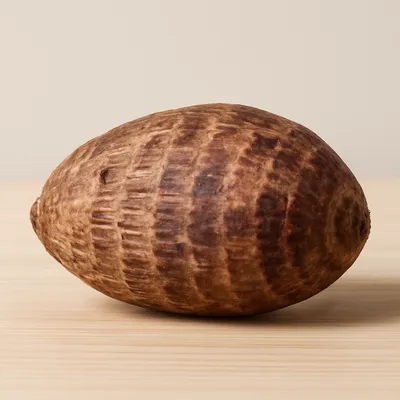



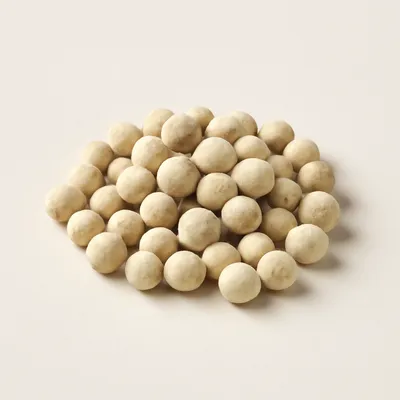
Jian'ou taro dumplings originate from the mountain townships of northern Jian'ou — especially Dongyou, Shuiyuan, and Chuanshi. Folk tradition most widely holds they were devised in the Yuan dynasty when Mongol troops entered Fujian: locals crafted three-sided dumplings from wild taro and sweet potato starch and named them jiā-dá-zǎi (enchain the Tartars) as a mark of resistance, a name said to be more than seven hundred years old. An alternative account places their creation in the early Qing, when refugees improvised with foraged taro and starch after the sack of Jian'ou. Both stories point to a food tradition rooted in the mountain region's practice of substituting taro and sweet potato for wheat.
The skin yields in two stages: a silky, faintly starchy snap on the outside, then a burst of hot pork broth held tight within. Taro adds a faint natural sweetness that softens the savoriness of the filling.
The wrapper's elasticity comes from two starches working in tandem: taro's amylose gels on cooling into a firm supportive matrix, while sweet potato starch — rich in phosphorylated amylopectin — retains flexibility and resists retrogradation, keeping the skin pliable. A classic technique adds a small pre-cooked, fully gelatinized piece of dough back into the raw dough (the hot-starch method): the pre-gelatinized starch acts as a plasticizer, sealing micropores and preventing cracks when the dumplings re-enter boiling water.
Variations
Dongyou township versions use a higher proportion of sweet potato starch for a chewier, more translucent wrapper. Fillings vary seasonally: fresh bamboo shoots in spring, dried shrimp in coastal variants, shiitake mushroom in vegetarian preparations. Some households add a pinch of baking soda to the filling for a lighter texture.
On the Palate
Where Jian'ou Taro Dumplings sits in the Chinese flavor cloud
Ingredients
Serves 4

How it's made
8 steps · 40 min
- 120 min
Peel and steam 500 g red-sprout taro over high heat for about 20 minutes until fully tender; mash while hot into a smooth, lump-free paste.
- 210 min
Knead in 180 g sweet potato starch in two additions while the taro is still warm, working until a pliable dough forms that holds its shape without sticking to the hands.
Watch outKnead in the sweet-potato starch while the taro's still warm until the dough holds shape without sticking — worked cold or too wet, it cracks in the boil.
- 35 min
Pinch off a small piece of dough and boil it until fully translucent; knead the cooked piece back into the raw dough while hot (hot-starch step) to prevent cracks during the final cooking.
Watch outBoil a scrap of dough translucent and knead it back in hot — that gelatinized 'hot starch' seals the dough so it won't crack when it hits boiling water.
- 410 min
Prepare pork filling: finely dice 250 g pork leg, mix with 1 tsp salt, 1 tbsp rice wine, half a tsp white pepper, and a splash of pork bone broth; stir until the mixture firms slightly.
- 520 min
Divide dough into ping-pong-ball pieces; press each into a thin round, place 1 tbsp of filling in the centre, and fold edges up into a tight triangle, pinching firmly at each corner to seal.
- 62 min
Bring a wide pot of water to a vigorous boil; slide in dumplings in batches, stirring gently once to prevent sticking to the base.
- 710 min
Cook 8–10 minutes until the skin turns translucent and dumplings float; remove with a slotted spoon.
Watch outCook until the skins turn translucent and the dumplings float — that's the signal they're done through.
- 82 min
Serve in clear pork broth with chopped scallion, white pepper, and a drizzle of sesame oil.
Archive tool suggestions — not reviewed
These legacy suggestions have not been evidence-reviewed and are not presented as required tools.


