Boiled noodles pressed into a flat cake and pan-fried golden on both sides until shatteringly crisp outside and still yielding within, then drenched in a silky braised pork-and-shrimp gravy that softens the crust as you eat.
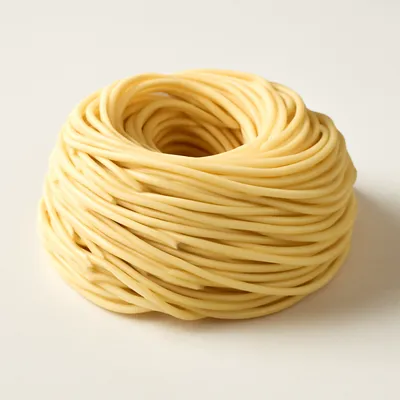

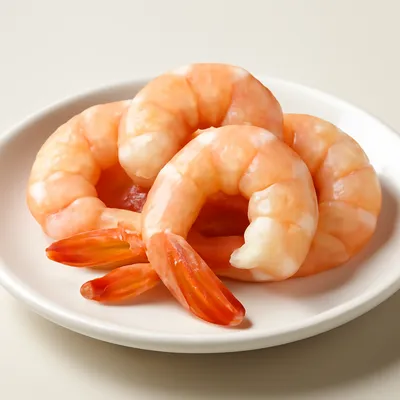


Double-sided golden noodles trace their culinary lineage to Suzhou, the city that for centuries exerted the most powerful influence on Shanghai's food culture. Suzhou's noodle tradition emphasised skilled wok technique over raw ingredients, and two-sided golden noodles — formed by pressing boiled noodles into a pancake and frying both surfaces — became a showpiece of that technical virtuosity. As Suzhou chefs and residents moved into Shanghai's growing restaurant districts during the nineteenth and early twentieth centuries, the dish migrated with them and became a fixture of Shanghai noodle shops alongside braised pork noodles and eel noodles. The shredded-pork variant — 肉丝两面黄 — was recognised by the Shanghai Catering Association (上海饮食协会) as a Shanghai Specialty Noodle (上海特色面). The dish is traditionally accompanied by a bowl of egg-thread soup (蛋丝汤), the pairing considered a complete and balanced meal in old Shanghai noodle culture.
You receive a disc that is audibly crisp on the outside — tapping the surface with a chopstick produces a hollow sound. The first bite through the crust yields to a soft, noodle-textured interior. As the braised gravy soaks in from above, the crust transitions through stages of texture from crackling to chewy to silky, offering a three-act experience in a single bowl.
The crisp shell forms through a two-stage process. First, boiling denatures the surface gluten of the noodles, causing them to stick together into a cohesive cake. When pressed onto a lightly oiled pan at around 160–170°C, the moisture in the outer noodle layer rapidly evaporates, and the denatured gluten sets into a rigid, dry crust — analogous to the crust formation in a frittata or potato rösti. The Maillard reaction between gluten proteins and sugars in the noodle dough contributes the golden colour and toasted flavour. The interior, shielded by the crust from direct heat, retains enough moisture to stay soft. When the starch-thickened gravy is poured over, the hydrophilic starch coating on the crust surface absorbs the sauce rapidly through capillary action, which is why the transition from crisp to soft proceeds from the top surface inward — diners who eat quickly get more crunch; those who linger get a more unified, sauce-soaked result.
Variations
Shrimp-only topping (虾仁两面黄) omits the pork for a lighter, sweeter result favoured in summer; an all-vegetarian version uses wood-ear mushroom, bamboo shoot, and tofu strips in a vegetable stock gravy. Some Suzhou versions add a spoonful of lard to the pan when frying for a richer, more fragrant crust. The noodle cake can also be deep-fried rather than pan-fried for a thinner, uniformly crispier shell.
On the Palate
Where Double-Sided Golden Fried Noodles sits in the Chinese flavor cloud
Ingredients
Serves 2
How it's made
8 steps · 15 min
- 15 min
Boil fresh thin noodles in unsalted water for 1.5–2 minutes until just done; drain thoroughly and toss with a few drops of oil to prevent sticking; spread in two separate, flat mounds on a plate to cool slightly.
- 210 min
Prepare the topping: slice pork loin into matchstick strips and marinate with cornstarch, soy sauce, and Shaoxing wine for 10 minutes; clean and devein shrimp.
- 33 min
Make the gravy base: mix chicken stock, light soy sauce, oyster sauce, white pepper, sugar, and cornstarch in a bowl and set aside.
- 44 min
Heat a flat-bottomed pan over medium heat; add 2 tablespoons of oil; place one noodle mound in the pan and press firmly into an even disc about 2cm thick; fry undisturbed for 3–4 minutes until the underside is deep golden.
Watch outPress the noodle mound into an even disc and fry undisturbed until the underside is deep golden and crusted — moving it breaks the cake before the crust sets.
- 54 min
Carefully flip the noodle cake with a wide spatula; fry the second side for another 3–4 minutes until equally golden; transfer to a serving plate. Repeat with the second portion.
- 63 min
In a wok, heat 1 tablespoon oil over high heat; stir-fry pork strips until just cooked; add shrimp and stir-fry 30 seconds; add sliced scallion and bamboo shoot slivers.
- 73 min
Pour in the gravy base; stir constantly over medium heat until the sauce thickens and becomes glossy; taste and adjust seasoning.
Watch outStir the gravy constantly until it thickens glossy — a thin gravy slides off and the crisp cake goes soggy uneven.
- 81 min
Pour the hot gravy immediately over the two noodle cakes; serve at once with a bowl of egg-thread soup alongside.
Watch outPour the hot gravy over the cakes at the last moment so the shell stays crisp under the sauce.


