Mantua's festive filled egg-pasta, served in rich capon or mixed-meat broth: small, firm parcels enclosing a filling of wine-braised stracotto beef, salamella sausage, Grana Padano, and nutmeg — the city's Christmas minestra, first documented in 1662 at the Gonzaga ducal court.

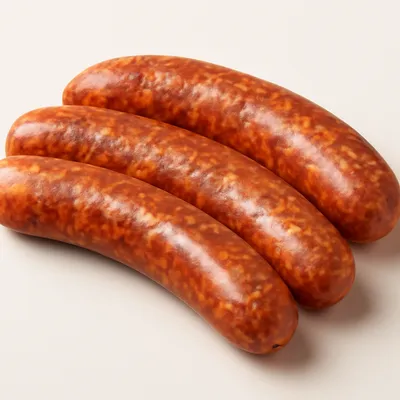


Bartolomeo Stefani, head cook to the Gonzaga at Mantua, published the agnolini recipe in his 1662 compendium L'arte di ben cucinare, dedicated to Ottavio I Gonzaga, Prince of Vescovato. The same book documents the Christmas Eve 1655 banquet for Queen Christina of Sweden, with broth-served filled pasta among its courses. Mantuan families have carried the recipe unbroken since: on Christmas Day the broth is opened as sorbir d'agnoli — a glass of the cooking broth laced generously with Lambrusco Mantovano DOC — before the main meal. The agnolini are distinct from Emilian tortellini (smaller, navel-shaped) and Cremonese marubini (disc-sealed, richer broth).
The thin egg-pasta shell gives way to a moist, wine-perfumed filling that melts against the gelatin-rich broth — nutmeg and Grana sharpness threading through the meaty warmth of each parcel.
The high-yolk egg pasta dough builds a dense, pliable gluten network that rolls thin without tearing and seals firmly around filling. The stracotto filling is pre-cooked by long braising — collagen converts to gelatin and Maillard crust compounds deepen the flavour. When agnolini cook in broth, the pasta swells slightly while the filling's gelatin re-liquefies from heat, keeping the interior moist. Capon broth contributes bone-leached gelatin (silky mouthfeel) and inosinate that synergises with the Grana Padano glutamates to amplify umami.
Variations
Sorbir d'agnoli: broth with agnolini is ladled into a glass, topped with Lambrusco Mantovano DOC, and drunk hot as a pre-lunch opener. In summer, agnolini are occasionally served drained and dressed with browned butter and sage. Some families substitute a chicken and veal blend for the stracotto beef filling.
On the Palate
Where Agnolini mantovani sits in the Italian flavor cloud
Ingredients
Serves 4


How it's made
7 steps · 1 hour
- 1240 min
Prepare the stracotto filling: sear a piece of beef chuck in oil until deeply browned on all sides; add diced salamella, diced pancetta, and a splash of red wine; braise covered on the lowest heat for 3-4 hours until very tender; cool completely, then mince finely and combine with grated Grana Padano, freshly grated nutmeg, and soaked breadcrumbs to bind.
Watch outSear the chuck till deeply browned on every side before braising — that dark crust is where the filling's depth comes from; braise so low it barely bubbles for the full 3–4 hours or the meat won't shred soft.
- 242 min
Make the egg pasta: mound flour on a board, make a well, add eggs and extra yolks; work from the centre outward until a rough dough forms; knead 10-12 minutes until smooth and elastic; wrap and rest 30 minutes.
- 310 min
Roll pasta dough through a machine to setting 5-6 (approx. 1.5 mm); cut into 4 cm squares.
- 420 min
Place a small mound of filling at the centre of each square; fold diagonally to form a triangle, pressing firmly along the edges to seal; wrap the two far corners around a finger and pinch together to form the classic agnolino shape.
Watch outPress the edges firmly all around — any gap and the agnolini burst in the broth and leak their filling; the seam has to be sealed tight.
- 510 min
Bring capon or beef-capon broth to a gentle simmer; taste and adjust seasoning.
- 64 min
Cook agnolini in the simmering broth for 3-4 minutes until pasta is cooked through and filling is piping hot.
Watch outKeep the broth at a bare simmer, not a rolling boil — three to four minutes is enough; a hard boil knocks the delicate pasta apart before the filling heats through.
- 75 min
Ladle generously into warmed bowls with plenty of broth; finish with grated Grana Padano; for sorbir d'agnoli, add a splash of Lambrusco Mantovano to the glass before serving.
Archive tool suggestions — not reviewed
These legacy suggestions have not been evidence-reviewed and are not presented as required tools.


