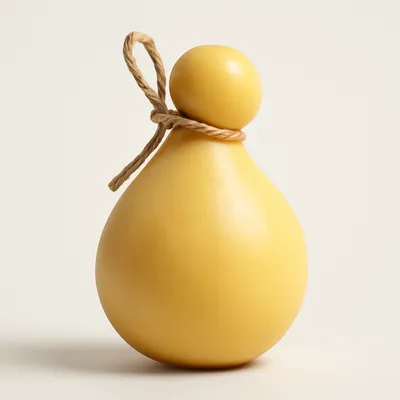
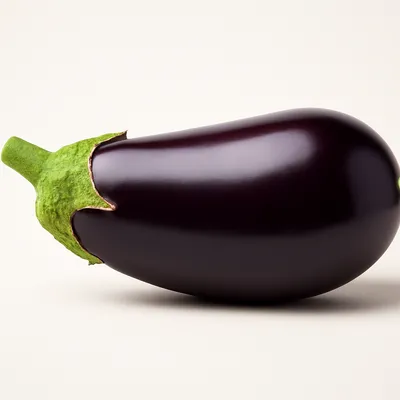
Palermo's great baked pasta timballo, known in dialect as 'a pasta 'u furnu'. Small ring-shaped anelletti are boiled very al dente, dressed in a slow meat ragù with peas and diced caciocavallo, layered with slices of fried eggplant, packed into a breadcrumb-lined mould and baked until the top crusts and the whole sets into a sliceable dome. A festive Sunday and holiday centrepiece across the city, it is also sold by the wedge as street food, eaten warm or at room temperature.
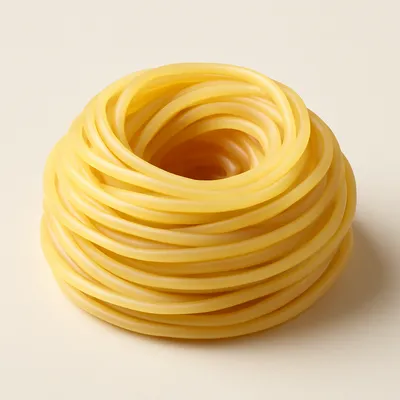



A dish built on the deep Arab imprint on Sicilian cooking. In 1154 the geographer al-Idrisi, writing his Book of Roger for the Norman king Roger II, described the town of Trabia east of Palermo, where water-mills turned out great quantities of itriyya, dried string pasta shipped across the Mediterranean to Calabria and beyond, the earliest record of dried pasta in Italy and a full century before Marco Polo. The ring-shaped anelletti are said to have been made in the Saracen mills between Trabia and Termini Imerese; popular legend likens their form to the earrings of Arab women, though the sturdy ring was more likely perfected over centuries to hold its shape in a moulded dish. The baked timballo itself descends from Arab cookery, its name from the Arabic timmala, a drum-shaped vessel. Between the eighteenth and nineteenth centuries the Monsù, French-trained chefs of the Sicilian aristocracy, refined it with game and black truffle; twentieth-century industrial pasta made it the everyday festive dish it is today.
Cut into a wedge, it shows clean layers: tender rings bound in a dark, sweet-savoury ragù, soft sweet peas, ribbons of silky fried eggplant and pockets of molten caciocavallo, all under a crisp, toasted breadcrumb crust. Rich and full-flavoured, it holds together on the fork yet stays moist, as good warm as at room temperature.
The timballo holds its shape thanks to starch and cheese. Boiling the anelletti only to a firm bite leaves them starchy enough to keep absorbing sauce in the oven without turning to mush. As it bakes, starch that has leached from the pasta and the melting caciocavallo, whose casein network loosens and releases fat above roughly 60°C, knit the filling together; on cooling the starch retrogrades and the cheese proteins re-set, so the dome firms enough to unmould and slice. The exposed breadcrumbs and pasta brown through the Maillard reaction for a crisp crust. The ragù's long braise converts tough collagen to gelatin, giving body that coats every ring, while frying the eggplant collapses its spongy tissue, drives off water and caramelises its sugars, so it melts rather than stewing to a watery pulp.
Variations
Cheese and additions vary from house to house: caciocavallo is standard, but tuma, primosale, mozzarella and grated pecorino all appear, sometimes with hard-boiled eggs, diced prosciutto or salami folded in. Some cooks line the mould with the eggplant slices for a domed finish, others simply layer everything loose. Beyond the baked form, the same anelletti and ragù are served straight from the pot, and in the grand houses of the past the Monsù enriched the filling with game, chicken livers and black truffle.
On the Palate
Where Anelletti al Forno sits in the Italian flavor cloud
Ingredients
Serves 6

How it's made
8 steps · 40 min
- 115 min
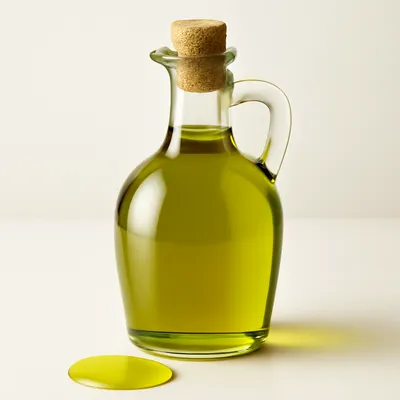
Soften a soffritto of onion in olive oil, add the minced beef and pork and brown well, then pour in the red wine and let it evaporate.
- 290 min
Stir in the tomato passata, season, and simmer the ragù gently for at least an hour and a half, adding the peas in the last ten minutes.
Watch outGive the ragù a long slow hour and a half — that's what melts the tough meat tender; add the peas only in the last ten minutes so they stay green.
- 320 min
Meanwhile salt the sliced eggplant, pat dry and fry in hot oil until golden, then drain on paper.
- 412 min
Boil the anelletti in well-salted water until very al dente, drain and toss with the ragù and most of the diced caciocavallo.
Watch outBoil the anelletti to very firm-al dente — they keep drinking sauce in the oven, and cooked soft here they turn to mush in the timballo.
- 55 min
Oil a deep mould or tin and coat it all over with breadcrumbs.
- 610 min
Fill with the dressed pasta, layering in the fried eggplant and the remaining cheese, and press down firmly.
Watch outPress the filled mould down hard so there are no gaps — a loose pack collapses when you unmould it.
- 740 min
Scatter breadcrumbs over the top and bake at 180°C until set with a deep golden crust, about 40 minutes.
- 815 min
Let it rest 15 minutes, then turn out of the mould and cut into wedges to serve.
Archive tool suggestions — not reviewed
These legacy suggestions have not been evidence-reviewed and are not presented as required tools.


