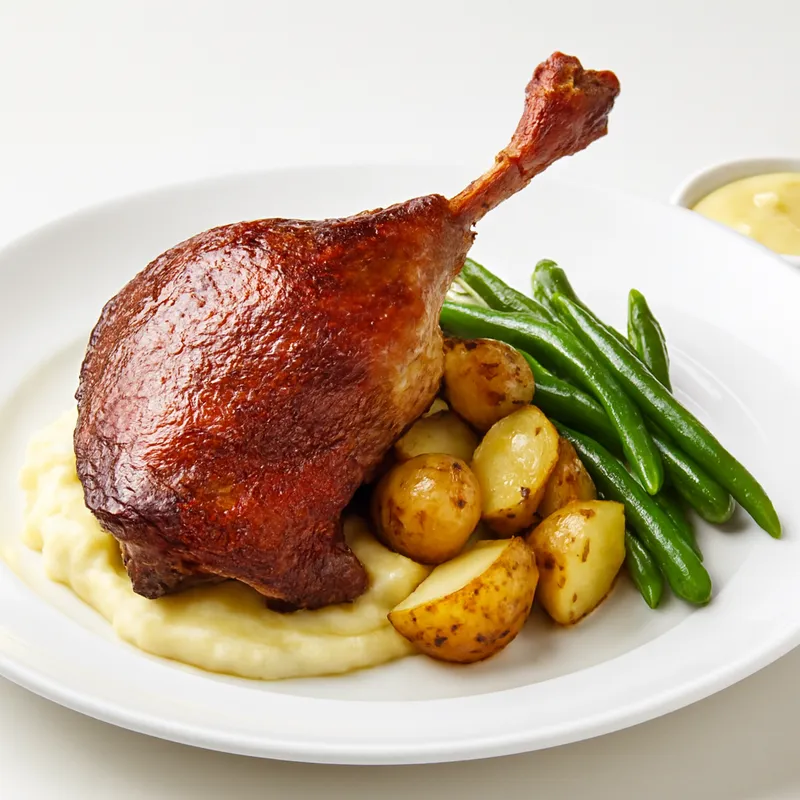
Sliced potatoes pan-fried in pork lard until golden, then folded with thin slices of fresh tomme until the cheese melts in strands through the potato — Cantal mountain food.


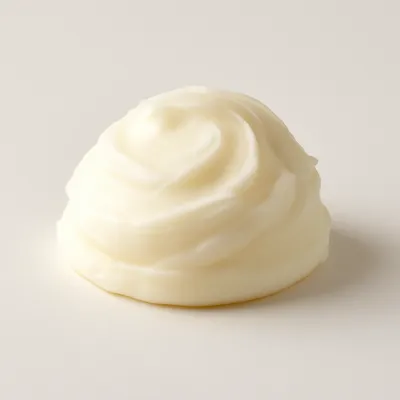



Truffade is everyday Cantal farmhouse food from the Massif Central — the name comes from Occitan trufa, meaning potato. It belongs to the same Aubrac-Cantal cheese-and-potato family as aligot but is the older and simpler form: potatoes were affordable everyday starch, and any farm with a milk cow could press the day-old curds. Aligot uses whipped puree for the dramatic stretch; truffade keeps the potato as slices for a more rustic everyday meal. Eaten with cured ham at midday or supper.
Cantal farmhouse food from the Massif Central — older and simpler than aligot. Young tomme fraîche (pH 5.2-5.4, hours to days old) is the load-bearing variable; aged Cantal won't melt-stretch and the dish becomes a baked-cheese gratin instead. Pork lard, not butter — higher smoke point, savoury bottom note.
Golden potato slices, soft inside with crisp brown faces, bound by short stringy pulls of melted young cheese. Pork lard saturates the bottom layer. Less elastic than aligot — the potato slices are intact, not whipped to puree, so the cheese pulls 10-15cm rather than a metre. Tangy lactic bite from the fresh tomme cuts the fat. If the cheese is rubbery rather than soft, it was aged too long; truffade demands curd that's only days old.
Same casein-stretch chemistry as aligot but constrained — because the potato is in slices not puree, the cheese has only narrow gaps to bridge. The young tomme (pH 5.2-5.4, hours to days old) is the load-bearing variable; aged Cantal won't melt-stretch the same way and the dish becomes a baked-cheese gratin instead. Pork lard, not butter or olive oil, because lard sits at higher temperatures without smoking and carries a savoury pork note that vegetable oils can't replicate.
Variations
Cantal farmhouse version (sliced potato, short pulls); Aubrac aligot (whipped potato, metre-long pulls); Lozère variant adds garlic confit; Auvergne brasseries plate it with cured ham (jambon d'Auvergne).
On the Palate
Where Truffade sits in the French flavor cloud
Everything hinges on very young tomme fraîche (days old, pH ~5.2–5.4) — that fresh curd is the only cheese that stretches into ribbons, while aged Cantal just seizes into an oily baked-cheese gratin.
Ingredients
Serves 4
How it's made
5 steps · 40 min active + 10 min waiting
- 18 min
Peel 1kg waxy potatoes (Charlotte or Bintje); slice 5mm thick. Pat dry — wet slices steam instead of frying.
Watch outThe slices must feel dry to the touch before they go in — any surface water and they'll steam, not fry.
- 25 min
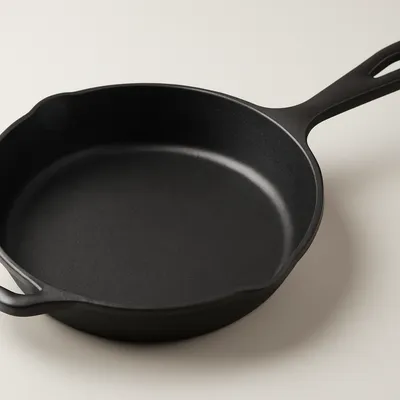
Render 80g diced pork belly or salt pork in a heavy 28cm skillet over medium heat for 5 minutes. Add 2 tbsp pork lard. The fat should be 3-4mm deep.
- 325 min
Add potatoes in an even layer. Cook 25 minutes over medium-low, turning every 5 minutes with a wide spatula — they should be tender inside and golden on multiple faces, not crisp like fries.
Watch outYou want them tender inside and golden on several faces, soft not crisp like fries.
- 44 min
Crush 1 garlic clove and stir through. Tear 250g tomme fraîche du Cantal (very young, days-old) into 2cm pieces and scatter across the potatoes. Cover the pan, off heat, for 3 minutes — the residual heat melts the cheese.
Watch outOff the heat, covered — the cheese should just slump and melt from residual warmth, no active bubbling.
- 52 min
Fold once with the spatula — the cheese stretches into ribbons through the potato. Slide onto a warm plate. Salt and crack pepper. Serve with cured ham, sausage, or a green salad.
Watch outFold once and watch for the cheese pulling into ribbons through the potato — that's the doneness cue.
Archive tool suggestions — not reviewed
These legacy suggestions have not been evidence-reviewed and are not presented as required tools.