Vietnamese steamed honeycomb cake: rice flour, tapioca starch, coconut milk and sugar fermented with yeast then steamed — the cross-section reveals vertical honeycomb tunnels through the cake.
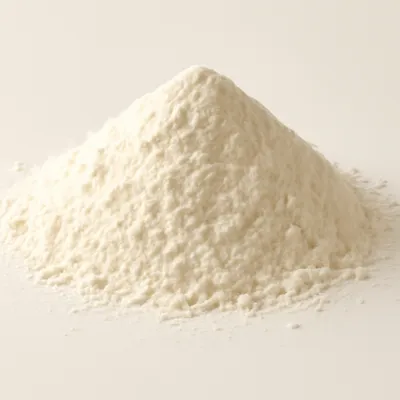


The name's meaning is disputed: «bò» can mean «cow» (said to evoke the batter rising and falling during fermentation, like a cow's belly) but equally means «to crawl/climb», referring to the way the batter creeps upward as it ferments. It exists across southern China, Vietnam and Cambodia in related forms; the Vietnamese southern version is set apart by coconut milk and the honeycomb cross-section made famous by Mekong Delta street stalls. Banh bo hap is the steamed version (vs. banh bo nuong, baked, which has a different open-crumb structure). Pandan-leaf juice is sometimes added for green colour and aroma.
Cow cake — name from the way the batter rises and falls during fermentation, said to look like a cow's belly breathing. The vertical-tunnel honeycomb takes 8+ hours of yeast ferment plus ferocious steam pressure on entry, no lid-lifting in the first 12 minutes.
Bone-white at the top, golden-tinted at the base from sugar settling, soft as wet bread but with surprising chew from the tapioca. Tear it open and the honeycomb is what you came for: vertical, even, every tunnel running top to bottom like a slice of bread crust held vertically — Vietnamese calls this honeycomb pattern «rễ tre», bamboo roots. Coconut milk gives it a milky-sweet finish; the long ferment leaves a faint sourness underneath, almost yogurt-like. A failed banh bo is dense, gummy, or its tunnels are flat horizontal pockets — meaning the ferment was rushed or steam dropped.
The vertical-tunnel honeycomb is engineering, not luck. Three things produce it: (1) a long slow yeast ferment of 8+ hours, which builds dense uniform CO₂ pockets through the batter; (2) a hot mold and ferocious steam pressure on entry — the bubbles rise straight up before the batter sets, drilling vertical channels; (3) no lid-lifting in the first 12 minutes — every pressure drop softens the bubble walls and they tilt or collapse. Tapioca starch in the recipe is what gives the tunnel walls enough elasticity to stay open.
Variations
Banh bo hap is the steamed version with vertical tunnels; banh bo nuong is the baked version with random open crumb; pandan-tinted (la dua) is the southern signature; some Cantonese 白糖糕 share the recipe family but skip the coconut; Cambodian num pet has a closer flavor profile.
On the Palate
Where Banh Bo Hap sits in the Vietnamese flavor cloud
Ingredients
Serves 8

How it's made
7 steps · 30 min active + 8 hours 30 min waiting
- 16 min
Toast 200g rice flour in a dry pan over low heat 5 minutes — until just warm and aromatic, never browning. This dries trapped moisture and is what southern banh bo recipes call for.
- 211 min
Dissolve 1 tsp instant dry yeast and 1 tsp sugar in 100ml warm (38°C) water; rest 10 minutes until foamy. If no foam, the yeast is dead — start over.
Watch outGive the yeast ten minutes — it must foam up thick and creamy; no foam means the yeast is dead and the cake will steam up flat with no tunnels, so start over.
- 35 min
In a wide bowl whisk the toasted rice flour, 50g tapioca starch, 200g sugar, pinch of salt with 350ml warm coconut milk until smooth. Stir in the yeast slurry. The batter is thinner than pancake batter — pourable like cream.
- 4480 min
Cover with a cloth; ferment at warm room temperature (28-30°C) for 8 hours, or overnight. Batter will rise, bubble actively, and smell faintly sour-sweet — this slow ferment is what creates the honeycomb tunnels later.
Watch outAfter the long ferment the batter should be risen, actively bubbling, and smell faintly sour-sweet — that slow gas-build is exactly what drills the honeycomb tunnels later.
- 57 min
Set up a large steamer; bring to a hard rolling boil — strong steam pressure is required for the tunnels to form vertical, not collapsed. Lightly oil 8 small ramekins or aluminum cups. Heat the cups in the steamer 5 minutes — the batter must hit a hot surface.
Watch outPreheat the cups in the steamer until they're properly hot before pouring — batter hitting a cold cup sets slow and the bubbles tilt sideways instead of shooting straight up.
- 622 min
Stir the batter gently to release some foam, not all. Pour into preheated cups, three-quarters full. Steam over high heat 18-20 minutes — do NOT lift the lid in the first 12 minutes; pressure drop collapses the honeycomb. A skewer should come out clean.
Watch outDo not crack the lid in the first twelve minutes — one drop in steam pressure and the rising bubble walls soften and collapse, and the honeycomb caves in.
- 76 min
Cool 5 minutes, run a knife around, invert. Slice one in half — the cross-section should show vertical channels running top to bottom like a honeycomb. If pattern is irregular, the heat dropped during steaming.
Watch outIf the cross-section is irregular, it may indicate that the steaming temperature was not maintained.
Archive tool suggestions — not reviewed
These legacy suggestions have not been evidence-reviewed and are not presented as required tools.