
Franconian small finger-sized grilled pork sausages (7-9cm long) flavored with marjoram, pan-grilled or charcoal-grilled until golden-brown, served in sets of 6, 8, or 12 with sauerkraut and Bavarian potato salad — Nuremberg's PGI-protected specialty.



Nürnberger Rostbratwurst is one of Germany's most famous sausages — protected by EU PGI designation since 2003 (the name 'Nürnberger Bratwurst' can only be used for sausages made within Nuremberg city limits). The sausage is documented in Nuremberg city records since 1313 — making it one of the oldest extant sausage recipes in Europe. The small size (7-9cm long, ~25g each) is unusual among German sausages; the canonical explanation is that Nuremberg city council restricted sausage size to prevent over-eating, but the more practical reason is that the small size allows quick cooking on small charcoal grills (the Bratwurstpfanne) common in medieval Nuremberg taverns. The sausages must contain 23-26% fat and be flavored with marjoram (the defining herb). Today Nürnberger Bratwürstchen are eaten by the dozen in beer-garden settings, three to a bread roll as 'Drei im Weggla' (3 in a bun), or 6-12 served with sauerkraut as a Bavarian dinner.
A plate of 8 Nürnberger Bratwürstchen on sauerkraut: the sausages are golden-brown, thin and slightly curved, releasing a marjoram-pork fragrance the moment you cut into them. The first bite: snappy casing, juicy fine-textured pork, marjoram's herbal-floral character coming through clearly (this is the dish's defining flavor), faint caraway. Pick up the warm bread roll, swipe through mustard, layer 3 sausages inside ('Drei im Weggla' style), eat in 2 bites. Drink Franconian Rotbier (red beer). Eat 8 more. Order another beer. This is Nuremberg dinner the way the city has done it for 700 years.
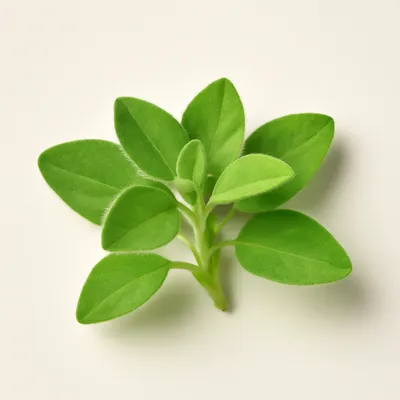
The small diameter (22-24mm sheep casing) is functional, not just historical — it allows the sausage to cook through in 10-12 min on a moderate heat without the casing splitting. The marjoram (Origanum majorana) is non-substitutable — oregano has different terpene profile (more carvacrol vs marjoram's sweeter sabinene/terpinene); pre-ground marjoram loses 50% of aromatics in 6 months, so fresh-rubbed marjoram between palms is critical. The 23-26% fat ratio is also PGI-defined — less fat gives dry sausage, more makes it greasy.
Variations
Nuremberg PGI canonical with sheep casing + marjoram + 23-26% fat; Coburger Bratwurst (also Franconian) is similar but uses raw egg in the mix; Thüringer Rostbratwurst is a related Eastern German cousin (longer sausages, similar marjoram seasoning); commercial frozen Nürnberger Bratwürstchen are widely sold but never as good as butcher-fresh; vegetarian 'Nürnberger Bratwurst' alternatives using soy or seitan exist (decent but not the same); the dish requires charcoal/wood-fire grilling for full flavor — pan-cooked versions are acceptable but inferior.
On the Palate
Where Nürnberger Bratwürstchen sits in the German flavor cloud
Fresh-rubbed marjoram is the non-negotiable soul of the sausage — rub it between your palms to release its oils, and don't substitute oregano, whose sharper terpenes taste wrong here.
Ingredients
Serves 4


How it's made
8 steps · 50 min active + 40 min waiting
- 14 min
Note: Making authentic Nürnberger Bratwürstchen at home requires a meat grinder, sausage stuffer, and sheep casings (canonical — they give the characteristic small diameter). The recipe below makes ~24 sausages (6 portions).
- 235 min
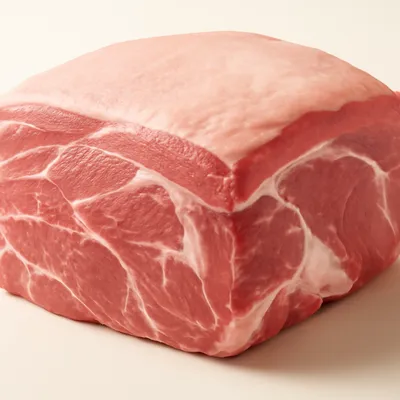
Cut 750g pork shoulder + 250g pork belly (for fat) into 2cm cubes. Place in freezer 30 min until very firm.
- 310 min
Grind the chilled meat through a coarse plate (5mm) once, then a fine plate (3mm) once. The texture should be uniform but not paste — still recognizable as ground meat.
- 411 min
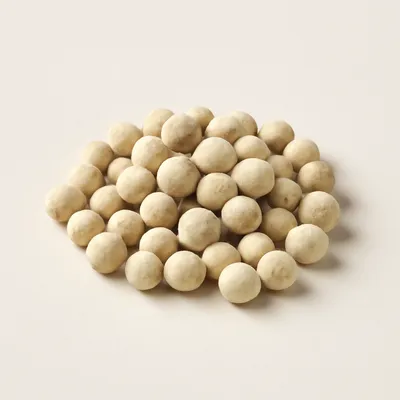
Season: in a chilled bowl, combine the ground meat + 1.5 tbsp sea salt + 1 tbsp ground white pepper + 1.5 tbsp dried marjoram (rubbed between palms to release oils) + 1 tsp ground caraway + 1 tsp grated lemon zest + 50ml very cold water. Mix vigorously by hand 5 min until the mixture becomes tacky and forms a smooth bind.
Watch outMix until the meat feels sticky and tacky and forms a smooth, cohesive bind, about 5 minutes.
- 565 min
Soak natural sheep casings (about 6m of 22-24mm casings) in cool water 30 min; thread onto a sausage stuffer. Stuff the meat mixture into the casings, forming a long rope. Twist into 8cm links by rotating alternating links in opposite directions.
- 660 min
Air-dry the sausages on a rack at room temperature 1 hour (or refrigerate 4 hours) to firm the casings.
- 712 min
Cook on a heavy cast-iron skillet or charcoal grill: place sausages over medium-low heat; cook 10-12 min, turning frequently with tongs, until evenly golden-brown all over and the internal temperature is 70°C / 158°F. Don't crowd the pan — work in batches.
Watch outAir-dry until the casing surface feels dry and taut to the touch — that firms them for cooking.
- 85 min
Serve: traditional presentation is 6, 8, or 12 sausages per plate, arranged in parallel lines on top of warm sauerkraut, with a bread roll, a dollop of Bavarian sweet mustard, and a small bowl of Kartoffelsalat on the side. Alternative: 3 sausages in a crusty roll ('Drei im Weggla') with mustard, as Nuremberg street food. Pair with Franconian beer.
Watch outTurn frequently to an even golden-brown all over; they're done at 70 度 internal.
Archive tool suggestions — not reviewed
These legacy suggestions have not been evidence-reviewed and are not presented as required tools.

A heavy, single-piece cast iron pan, 25-30 cm across, weighing 1.5-2.5 kg. Once preheated, the thick mass holds 230°C+ even when a cold steak hits the surface — that's the secret to a deep crust. A well-seasoned skillet (multiple thin layers of polymerized oil baked into the iron) is essentially nonstick, gets better with use, and lasts a century. Lodge skillets from Tennessee have been in continuous production since 1896.
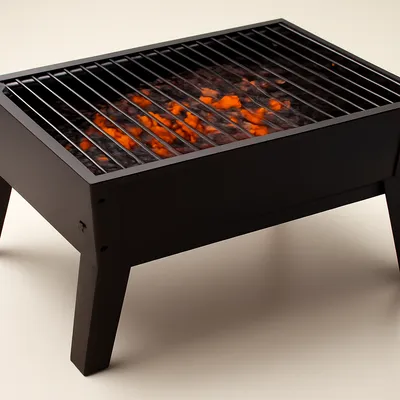
An open or hooded metal frame holding a bed of glowing charcoal embers, with a grate above. Charcoal burns at 700°C+ on the surface and emits short-wave infrared, which cooks proteins faster and with deeper Maillard browning than gas. Hardwood lump charcoal (oak, mesquite, fruitwood) lends its own smoke; cheap briquettes do not. Mastery is mostly heat zoning — direct over coals for searing, indirect off-coals for slow-roasting.


