
Hamburg-style pan-fried fish in mustard cream — flour-dusted fillets of cod, haddock or pollock pan-fried golden, served on top of pan-fried potatoes and creamy mustard sauce — the canonical North Sea-Baltic working-class dinner.
Pannfisch ('pan-fish' in Low German) is the everyday fish dinner of Hamburg, Bremen, Kiel, and the Baltic-North Sea coast — found in every working-class Imbiss (snack stand), every fish restaurant, and every coastal home kitchen. The dish was traditionally made with whatever the day's fishing catch wasn't sold — small mixed white fish that couldn't be sold whole became Pannfisch fillets. The Hamburg version uses cod, haddock, or pollock; the Baltic coast version adds herring or plaice. The dish is intentionally simple: flour-dusted fish + pan-fry + mustard cream sauce + pan-fried potatoes. The mustard cream (Senfsauce) is the dish's defining touch — Düsseldorf-style or Hamburg-style mustard mixed with cream creates a sharp-creamy contrast to the mild fish. The dish is so popular that 'Pannfisch' is its own dish category — every Hamburg fish restaurant has 1-3 Pannfisch variations on the menu.
Pannfisch is North German pragmatism on a plate: a golden-crispy fish fillet on top, a heap of golden Bratkartoffeln underneath, a creamy yellow mustard sauce spread between and around. The first bite — fish + mustard cream + Bratkartoffel chunk — is the canonical Hamburg taste: mild flaky fish, sharp-creamy mustard sauce, savory crispy-edged potato. The dill and chives provide herbal-fresh punctuation. There's no fancy technique, no luxury ingredient, just well-cooked fish + thoughtful mustard sauce + Bratkartoffeln. North Germans eat this 2x a month easily. Pair with cold Pilsner. After Pannfisch, you've had Hamburg lunch.
Flour-dusting the fish creates a thin Maillard crust that's structurally important: it seals in moisture during pan-frying and provides the crispness contrast against the soft fish flesh. Without flour, the fish would steam-cook and be soggy. Mustard cream sauce uses two mustards (medium-spicy German + Dijon) because they have different volatile compounds — German mustard provides warmth, Dijon provides sharpness. Bratkartoffeln work best with day-old boiled potatoes because their pre-cooked starch structure is more stable during pan-frying; fresh potatoes break down into mush.
Variations
Hamburg canonical with cod or haddock + mustard cream + Bratkartoffeln; Kiel-Baltic variant uses herring or plaice; Lübeck version adds capers to the mustard sauce; modern Hamburg restaurants offer 'Pannfisch Royal' with sole and a champagne-mustard sauce (expensive but excellent); commercial frozen Pannfisch exists as ready-meal but the texture suffers; vegetarian alternatives with pan-fried tofu or seitan exist (called 'Pann-Vegan') but the mustard cream sauce isn't the same; the dish is naturally pescatarian but not vegetarian.
On the Palate
Where Pannfisch sits in the German flavor cloud
Ingredients
Serves 4






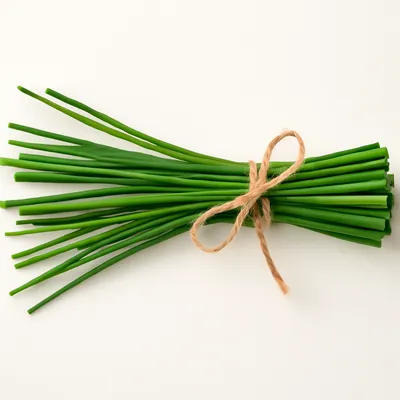
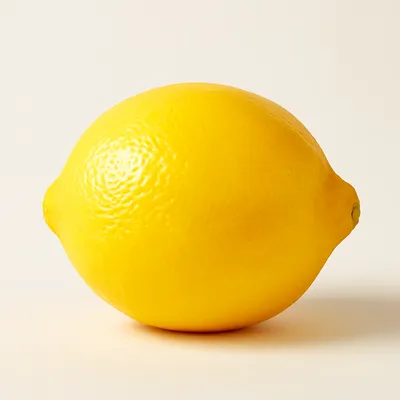


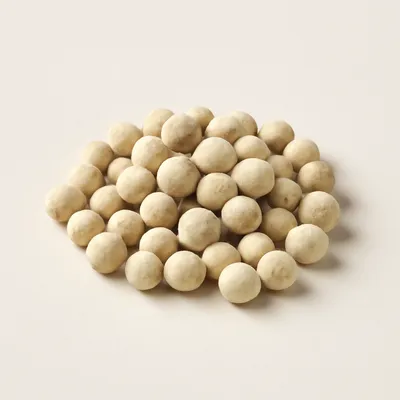
How it's made
5 steps · 25 min active + 5 min waiting
- 14 min
Pat dry 600g fish fillets (cod, haddock, or pollock — boneless and skinless or skin-on, your choice). Cut into 4 portion-sized pieces (~150g each). Season both sides with 1 tsp salt + 1/2 tsp white pepper + the juice of 1/2 lemon.
- 213 min
Prepare pan-fried potatoes (Bratkartoffeln): peel and slice 600g waxy potatoes (boiled the day before is ideal) into 5mm rounds. In a wide cast-iron skillet, heat 2 tbsp neutral oil + 1 tbsp butter over medium-high heat. Add the potato slices in a single layer; fry 6 min per side, turning gently, until deep golden-brown and crispy on both sides. Add 1 finely diced onion in the last 3 min; cook with the potatoes. Salt + pepper to taste. Remove to a warm plate.
Watch outFry the potato rounds undisturbed until a deep golden crust sets before you flip — poke too early and they tear and stick instead of crisping.
- 38 min
Prepare mustard cream sauce: in a small saucepan, combine 250ml heavy cream + 100ml dry white wine + 2 tbsp medium-spicy German mustard (Düsseldorf-style or Hamburg Senf) + 1 tbsp Dijon mustard + 1 tsp honey + 1/2 tsp white pepper + a pinch of nutmeg. Bring to a gentle simmer; cook 5 min until slightly thickened. Off heat; stir in 1 tbsp chopped fresh dill + 1 tbsp chopped chives + a squeeze of lemon juice. Adjust mustard and salt to taste.
Watch outSimmer the cream gently just until it coats the back of a spoon — push it too far and the sauce turns grainy and the mustard goes bitter.
- 46 min
Pan-fry the fish: dust each fillet on both sides with all-purpose flour, shaking off excess. Heat 3 tbsp butter + 1 tbsp neutral oil in a wide skillet over medium-high heat. Place fillets skin-side-down (or any side first if skinless); fry 3 min until golden-crisp. Flip; fry 2 min more for thin fillets, 3 min for thicker. The fish should flake easily when tested with a fork.
Watch outDust the fish, shake off the loose flour, then don't move it — 3 minutes till the edge goes golden-crisp, then one flip; it's done when a fork parts the flakes.
- 52 min
Plate: divide the pan-fried potatoes among 4 warm plates. Place a fish fillet on top of the potatoes. Spoon the mustard cream sauce generously over the fish (or to the side, depending on preference). Garnish with extra fresh dill and a wedge of lemon. Serve immediately, with a glass of cold dry Riesling or a Pilsner beer. Eat with knife and fork — sometimes a few green peas or a small salad on the side.
Archive tool suggestions — not reviewed
These legacy suggestions have not been evidence-reviewed and are not presented as required tools.
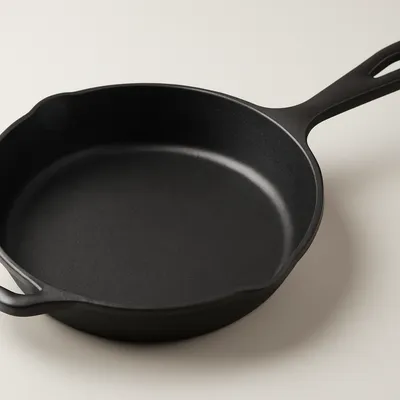
A heavy, single-piece cast iron pan, 25-30 cm across, weighing 1.5-2.5 kg. Once preheated, the thick mass holds 230°C+ even when a cold steak hits the surface — that's the secret to a deep crust. A well-seasoned skillet (multiple thin layers of polymerized oil baked into the iron) is essentially nonstick, gets better with use, and lasts a century. Lodge skillets from Tennessee have been in continuous production since 1896.

Round metal pot, 14-26 cm diameter, with vertical walls and a long handle, designed for sauces, soups, oatmeal, rice, boiled vegetables. The vertical walls minimize evaporation (vs. a sauté pan). Sizes: 1 qt for melting butter, 2-3 qt for sauces, 4 qt for soups. Stainless-steel-clad aluminum or copper is best for conduction; cast-iron is too thick for delicate sauces.


