
Azerbaijan's celebration sweet (pakhlava is the Azerbaijani spelling of baklava). Unlike Turkey's many-layered tissue-thin phyllo version, the Baku style rolls out about 8–10 sheets of a soft enriched yeast dough (egg yolk and butter), stacks them with finely-chopped walnuts — often with almonds or hazelnuts too — and cardamom, then cuts the whole tray into diamonds with a walnut half pressed into each before baking and soaking in saffron-and-rose-water syrup. The cross-section shows golden dough layers alternating with darker nut filling; the taste leans sweet-tart with restrained spice. Served at every wedding, Novruz, and family celebration with strong black tea.



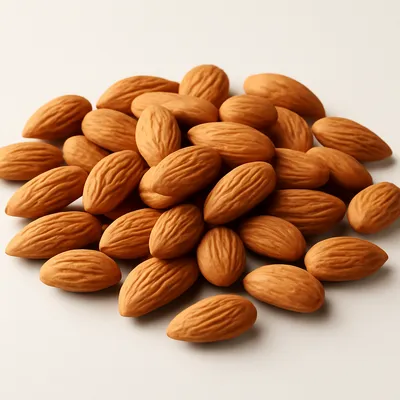
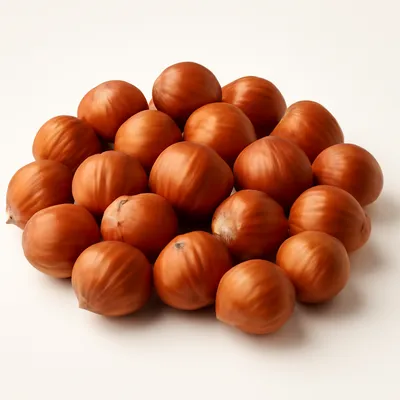

Pakhlava (the Azerbaijani spelling of what's called baklava in Turkey, and by various names in Iran, Armenia, and across the Middle East) is the celebration sweet of the Caucasus and Middle East, each region claiming its own variation as the original. The Azerbaijani version distinguishes itself with a saffron-yellow tint from saffron-bloomed syrup, generous rose water, and three nuts (walnut, almond, hazelnut) rather than one. The technique — rolling dough thin, layering it with butter and nuts, then soaking in syrup after baking — has been refined over centuries. The northern city of Sheki gives its name to a different, famous sweet often grouped under "pakhlava": a rice-flour batter piped in a fine lattice and stacked in towers with crushed nuts, said to originate with the cooks of the Sheki khan's court. Today every Baku patisserie and Azerbaijani household makes pakhlava for celebrations, and the diaspora in Russia, Iran, and Europe maintains the tradition.
Pick up a piece of pakhlava — a diamond of layered golden pastry, deeply saturated with saffron-and-rose syrup, a walnut half pressed into the center. Bite: the butter-soaked dough layers shatter, then the nut filling explodes with walnut-almond-hazelnut crunch and cardamom-rose perfume, then the saffron syrup floods with floral sweetness. The texture journey is distinctive — crispy, then nutty, then saturated-syrupy. Sip strong black Azerbaijani tea; the slight bitterness cuts the intense sweetness. The dish that crowns every Azerbaijani celebration.
The Baku style uses a soft enriched yeast dough (egg yolk added) — not Turkey's translucent stretched phyllo, and not a folded-and-laminated croissant dough. The sheets are rolled thin and stacked about 8–10 high, brushed with melted butter between layers; in the oven the butter pushes the layers apart into flaky tiers, and the egg yolks add richness. The key is the final syrup: hot saffron-and-rose syrup must be poured over the pakhlava the moment it comes out of the oven, while still piping hot, so thermal contraction draws the syrup evenly into the pastry's air pockets. If the syrup is cold or the pastry has cooled, the syrup just sits on top.
Variations
Sheki has its own famous sweet of the same name made differently: a rice-flour batter piped into a fine lattice and stacked in towers with crushed nuts — a different technique from Baku's layered diamonds. Wedding pakhlava is cut into smaller diamonds so each guest gets several pieces. Walnut-only pakhlava is more rustic and homestyle; a honey version replaces some sugar with honey. A modern variation adds dried sour cherries to the filling. In the southern Lankaran region, the dough-and-nut is rolled into a log rather than layered flat.
On the Palate
Where Pakhlava Azerbaijani sits in the Azerbaijani flavor cloud
Ingredients
Serves 12




How it's made
16 steps · 2 hours active + 2 hours waiting
- 175 min
Make dough: combine 500 g all-purpose flour + 1/2 tsp salt + 200 ml warm water + 4 egg yolks + 2 tbsp white vinegar + 100 g melted butter. Mix into a soft dough. Knead 15 min until very smooth and elastic. Cover; rest 60 min.
- 28 min
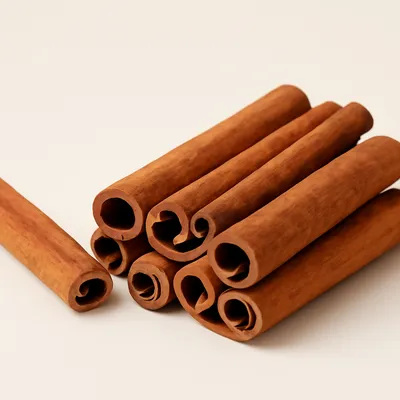
Make nut filling: in a food processor, pulse 200 g walnuts + 150 g almonds + 150 g hazelnuts (skinned) until coarsely ground. Add 100 g sugar + 1 tsp ground cardamom + 1/2 tsp ground cinnamon + 2 tbsp rose water. Pulse to combine.
- 38 min
Melt 300 g butter and skim off the foam to get clarified butter; keep warm.
- 44 min
Divide dough into 20 equal balls. Cover with damp cloth.
- 535 min
Roll each ball into a paper-thin rectangle, slightly larger than your baking dish (about 33 × 23 cm). Use plenty of flour and a long thin rolling pin. The dough should be almost translucent.
Watch outRoll each sheet until you can almost see your hand through it — thin sheets are what let the butter puff the layers into flaky tiers; thick ones bake up bready.
- 62 min
Brush a 30 × 20 cm baking dish with clarified butter.
- 730 min
Layer the pakhlava: place 1 dough sheet in the dish, brush with clarified butter, sprinkle 2 tbsp nut filling. Repeat 18 more times — each layer of dough brushed with butter and topped with nuts.
- 81 min
Top with the final (20th) dough sheet. Brush with butter.
- 98 min
Use a sharp knife to score the pakhlava into diamond shapes (cut all the way through to the bottom — this is essential for the syrup absorption). Press one whole blanched almond into the center of each diamond.
Watch outScore the diamonds all the way through to the bottom of the pan before baking — if you don't, the hot syrup can't sink in and the middle stays dry.
- 102 min
Pour 200 ml of clarified butter over the entire surface.
- 1150 min
Preheat oven to 170°C. Bake 45-55 min until deeply golden-brown and crisp on top.
Watch outPull it when the top is deep amber and crisp, not pale gold — an underbaked pakhlava goes soggy the second the syrup hits.
- 1214 min
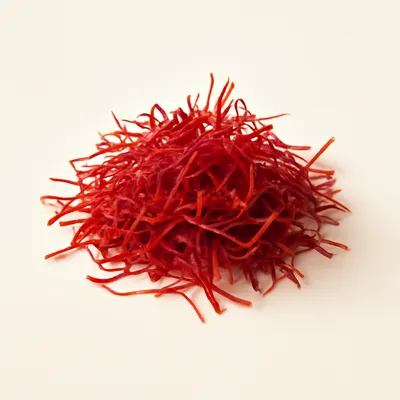
While pakhlava bakes, make syrup: combine 500 g sugar + 400 ml water + 1/4 tsp saffron threads + 1 tbsp lemon juice + 3 tbsp rose water in a saucepan. Bring to a boil; reduce heat; simmer 10 min until slightly thickened.
- 134 min
When the pakhlava is golden, remove from oven. Immediately pour the HOT syrup evenly over the pakhlava (HOT syrup on HOT pakhlava is the key — they meld together).
Watch outHot syrup onto hot pastry — pour the instant it leaves the oven so it hisses and gets drawn into the layers; cold syrup just sits on top and slicks it.
- 14240 min
Let cool completely (4+ hours) for the syrup to absorb fully. The pakhlava should be sticky-glossy on top.
- 156 min
Cut along the score lines to separate the diamond pieces. Plate each piece with a sprinkle of crushed pistachio.
- 164 min
Serve at room temperature with strong black tea (Azerbaijani chay served in armudu pear-shaped glasses).


