
Kamameshi is a single-portion Japanese rice dish cooked and served in its own small pot — a kama, traditionally cast iron, though the most famous version uses a ceramic pot. Short-grain rice is simmered by absorption in dashi seasoned with soy sauce, mirin, and sake, with toppings cooked on top: chicken and vegetables, mushrooms, or seafood such as crab and clams. The whole pot comes to the table with its lid on, and the rice is eaten straight from it. Its defining feature is the okoge — the crisp, browned layer of scorched rice that forms against the hot pot bottom.



The word kamameshi joins kama (釜), the heavy iron pot or cauldron used for cooking rice, with meshi (飯), cooked rice; the term came into use in the late Meiji period. Cooking rice communally in a large kama is ancient, but the modern single-portion form is closely tied to the 1923 Great Kantō Earthquake: the Asakusa restaurant Kamameshi Haru, founded in 1924, traces its dish to its founder Yano Teru, who took part in relief cooking from shared cauldrons on Ueno hill after the quake and afterward conceived of serving rice in small individual one-gō (about 180 ml) winged iron pots. The dish's most famous form is Toge no Kamameshi, an ekiben (station box lunch) sold since 1958 by Oginoya at Yokokawa Station on the Shin'etsu Line in Gunma; here the rice and toppings are served not in iron but in a small individual Mashiko-ware ceramic pot, fired at the kilns of Mashiko in Tochigi Prefecture, which keeps the rice warm and was a novelty when hot ekiben were rare. More than 170 million have been sold.
Lift the lid and a cloud of soy-dashi steam rises off rice that has soaked up the broth grain by grain — savory, faintly sweet from mirin, never bland. The toppings are arranged across the top: sweet-savory chicken, earthy mushroom, springy slices of bamboo shoot. The reward is at the bottom: a crisp, nutty, gold-brown crust of okoge stuck to the pot, which you scrape up with the spoon while the rest of the rice stays moist and tender. Eaten straight from the hot pot, the bottom rice should crackle, not turn to gum; rice that is uniformly soft with no crust means the pot never got hot enough at the base.
Cooking and serving in one small heavy pot does two things. First, the thick iron or ceramic base holds and conducts high, even heat with direct contact against the rice, so once the free water is gone the bottom layer dehydrates and browns: the Maillard reaction between starch sugars and amino acids, plus caramelization, builds the crisp scorched okoge, while steam trapped under the lid keeps the upper rice moist. A single small portion has a high base-to-volume ratio, so a good crust forms across the whole bottom and each pot is controlled on its own. Second, the seasoning is built on dashi umami: glutamate from kombu and inosinate from katsuobushi act in synergy — combined they taste far more savory than either alone — and dried shiitake adds guanylate, a third umami compound that compounds the effect. Cooking the rice in this seasoned dashi rather than topping it afterward drives the umami into every grain by absorption.
Variations
Toge no Kamameshi (Gunma, Oginoya) tops the rice with chicken, burdock, bamboo shoot, shiitake, quail egg, and a pickled apricot in its ceramic pot. Named single-topping versions abound: tori-kamameshi (chicken), kani-meshi (crab), kaki-meshi (oyster), and seasonal mushroom or chestnut pots. Kamameshi is essentially takikomi gohan — seasoned mixed rice — cooked and served in an individual kama; the difference is the vessel and the single portion: takikomi gohan is cooked in a large pot or rice cooker for several people and scooped into bowls, whereas kamameshi stays in its own pot, crust and all.
On the Palate
Where Kamameshi sits in the Japanese flavor cloud
Ingredients
Serves 1


How it's made
8 steps · 25 min active + 40 min waiting
- 133 min
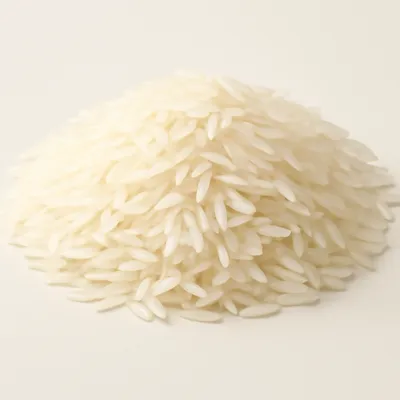
Rinse short-grain rice until the water runs nearly clear, then drain and let it sit 30 minutes so the grains hydrate evenly.
- 212 min
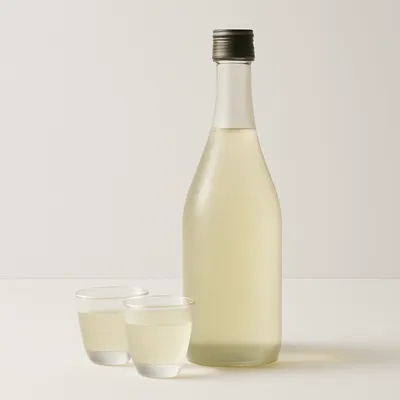
Make a dashi: steep kombu in cold water, bring just below a boil, remove the kombu, then add katsuobushi off the heat and strain after a minute. Season the dashi with soy sauce, mirin, and a splash of sake.
- 36 min
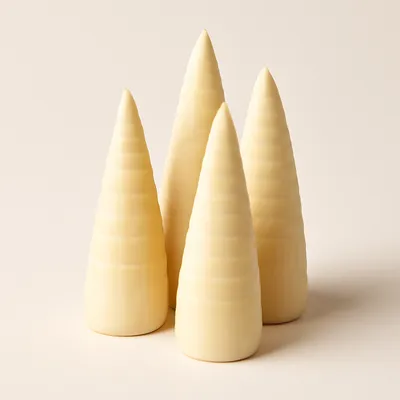
Slice chicken thigh, soak dried shiitake until soft and slice, and cut carrot and bamboo shoot into thin pieces.
- 44 min
Put the drained rice in a small iron or ceramic kama, pour in the seasoned dashi to the correct level, and lay the toppings evenly over the surface without stirring.
- 512 min
Cover and cook over medium heat until it comes to a boil, then lower the heat and simmer until the liquid is absorbed.
Watch outLay the toppings on the rice and cook without stirring until the liquid is absorbed — stirring muddies the rice and stops a clean crust forming.
- 61 min
Raise the heat briefly at the end for 30 to 60 seconds to crisp and brown the bottom layer into okoge, listening for a faint crackle.
Watch outRaise the heat 30-60 seconds at the end and listen for a faint crackle — that's the bottom layer browning into the crisp okoge; go by ear so it doesn't burn.
- 710 min
Turn off the heat and let the covered pot rest 10 minutes so the steam finishes the upper rice.
Watch outRest the covered pot 10 minutes off the heat — trapped steam finishes cooking the upper rice to fluffy without any more direct heat.
- 82 min
Bring the pot to the table, lift the lid, garnish with chopped mitsuba, and serve straight from the kama, scraping up the crust.
Archive tool suggestions — not reviewed
These legacy suggestions have not been evidence-reviewed and are not presented as required tools.


