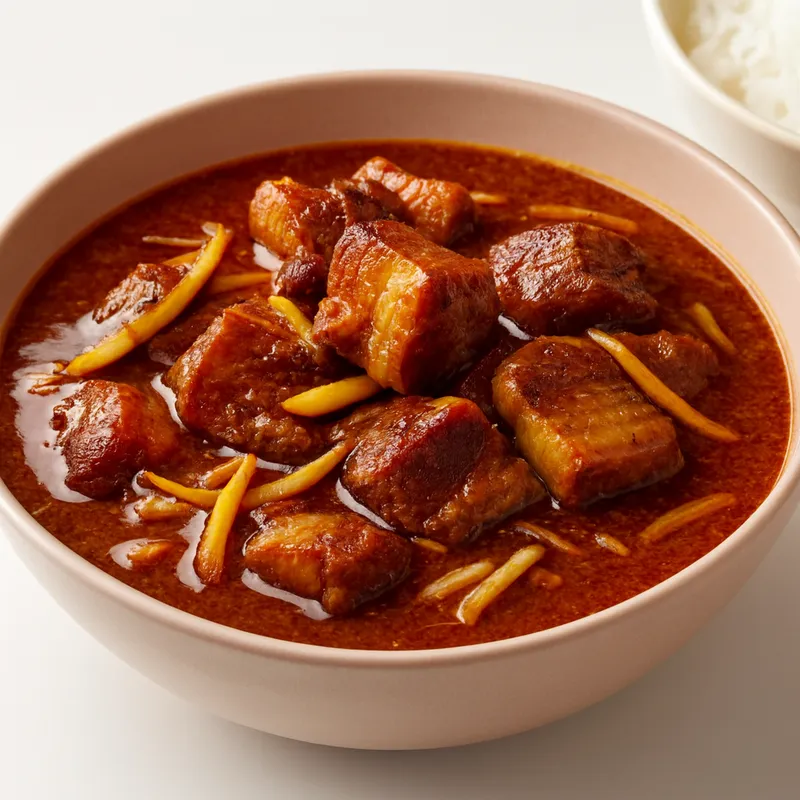
A celebrated dish of the Thai royal kitchens: a shrimp-paste chili relish stir-fried with sweet caramelised pork, crumbled salted-egg yolk, and clouds of crisp deep-fried fish. Where a plain nam prik is a loose dip, long rua is a composed, almost dry relish, sweet and rich and golden, eaten with the usual platter of raw and blanched vegetables. The name means 'boarding the boat,' tying it to a documented story of palace cooks improvising a portable relish for a boat outing.




Long rua belongs to the tradition of Thai royal cuisine and is documented to the Suan Sunandha Palace in Bangkok in the early 20th century, a residence built under King Rama V (Chulalongkorn, r. 1868-1910) for royal consorts and their daughters. By the most widely recorded account, a consort — named in palace records as Chao Chom Sadap — was asked to prepare dinner to be eaten aboard a small boat on the palace pond, and finding only shrimp-paste relish and assorted leftovers in the kitchen, combined them with crisp-fried fish, sweet pork, and salted-egg yolk into one durable, transportable dish. The recipe was preserved in the culinary records kept within Princess Saisavali Bhiromya's household. The specific attribution to a single consort rests on these palace traditions and should be read as the recorded origin story rather than independently dated fact; what is well established is the dish's home in the Suan Sunandha royal kitchens.
Glossy and amber-gold rather than the grey of a basic shrimp-paste dip, studded with dark caramelised pork, golden crumbs of salted-egg yolk, and a mass of feathery fried fish that shatters like crackling. The first taste is surprisingly sweet — palm sugar and the rich pork lead — then the deep ferment of shrimp paste arrives underneath, lime cuts across, and a modest chili heat closes. It is the gentlest and most luxurious of the nam prik family, built to flatter a refined palate while still demanding its raw-vegetable foil.
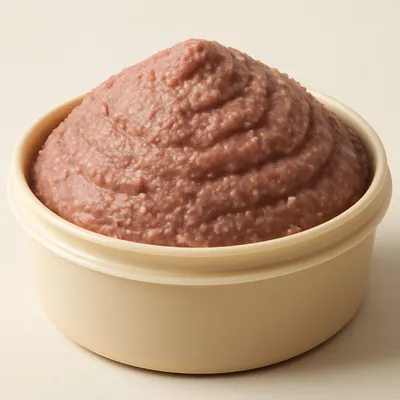
The relish base is built like any nam prik kapi — chili, garlic, shrimp paste and palm sugar pounded together — but here it is then cooked: fried gently in a little oil until the shrimp paste's raw edge mellows and the palm sugar begins to caramelise, which both deepens colour and concentrates the savoury-sweet base by driving off water. Sweet pork (moo wan) is reduced separately until sticky and dark before folding in. The signature crisp fish is the technical heart: fish is steamed, the flesh flaked and dried, then fried in hot oil where it puffs into a light, lacy, shatter-crisp cloud — the same trick as the catfish in pla duk fu. Crumbled salted-egg yolk, cooked and grainy, adds richness and a second savoury layer. The result is a relish that is dry and composed rather than wet, every element contributing a different texture against the cool snap of the vegetables.
Variations
Court and old-Bangkok kitchens differ on the fish — flaked crispy catfish (pla duk fu) or fluffy fried snakehead are both traditional; some versions skip the fish-floss and stir in shredded sour green mango for a sharper, fresher edge. The pork can be sweet caramelised pork or, in lighter takes, shredded simmered pork. A few high-style versions garnish with shredded omelette, slivered fresh chili and coriander, palace-fashion. The name and dish have a famous derivative on the menu of many Thai restaurants — fried rice made with the relish (khao pad nam prik long rua) — but the relish itself, with its vegetable platter, is the original.
On the Palate
Where Nam Prik Long Rua sits in the Thai flavor cloud
Ingredients
Serves 4

How it's made
6 steps · 45 min
- 115 min
Steam a white fish fillet until just cooked, flake finely, and dry the flakes in a low oven or pan; deep-fry in hot oil until puffed, lacy and crisp, then drain.
Watch outThe fish flakes should puff into a light, lacy cloud the instant they hit hot oil — that shatter-crisp is the dish's signature; if they just sink and brown, the oil's too cool or the flakes weren't dry enough.
- 212 min
Simmer 150g minced or sliced pork with 2 tbsp palm sugar and 1 tbsp fish sauce until sticky, dark and sweet; set aside.
- 35 min
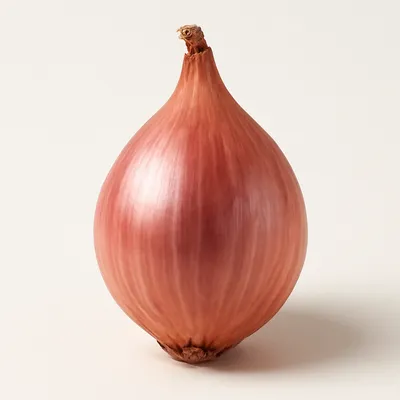
Pound 4-6 dried red chilies, 4 cloves garlic, 3 shallots and 2 tbsp shrimp paste to a paste.
- 44 min
Fry the pounded paste in 2 tbsp oil over medium heat until fragrant and the palm sugar (add 1 tbsp) caramelises and deepens in colour.
Watch outFry the pounded paste until it's fragrant and the palm sugar just caramelises and deepens colour — that's where the sweet-savory base builds; stop before it darkens to burnt.
- 53 min
Fold in the sweet pork, a crumbled cooked salted-egg yolk, and most of the crisp fish; season with lime juice to balance.
- 61 min
Pile onto a plate, top with the reserved crisp fish, and serve with a platter of raw and blanched vegetables and rice.