Gangjeong is a festive Korean confection in the hangwa family — puffed glutinous rice, popped grains, sesame, or nuts bound together with boiled syrup and pressed into crisp bars or clusters. In its classic form a dried glutinous-rice dough is deep-fried so the pellets puff up light and hollow, then tossed in hot rice syrup and rolled in puffed rice, sesame, black sesame, perilla, soybean flour, or crushed nuts; the simpler everyday kind, ssal-gangjeong, just stirs store-bought puffed rice into syrup and presses it flat to cut. Light, airy, and shatteringly crisp, with a clean grain-and-syrup sweetness and a nutty crackle from the coating. It is a centerpiece of New Year and Chuseok tables, weddings, and ancestral rites, set out on the hangwa platter beside yakgwa and dasik and eaten with tea.


Gangjeong belongs to the broad lineage of oil-and-honey confections, the yumilgwa, that the Korean court prized for centuries. Tradition traces its root to an old fried grain snack of ancient China called hangu, said to have been dipped in honey or syrup, and to have developed in Goryeo-era Korea into the lavish fried sweets that the throne both indulged and tried to rein in for their heavy use of grain, oil, and honey. By the Joseon dynasty these confections were tied to ceremony: gangjeong was heaped high on royal banquet tables alongside yakgwa and dasik, and the legal code restricted such sweets to weddings, sixtieth-birthday feasts, and ancestral rites. Gangwon Province, and the city of Gangneung in particular, became famous for its hangwa, a reputation its workshops carry to this day.
Gangjeong is weightless and crisp — it shatters at the first bite into light flakes, the puffed grain almost all air, so it seems to dissolve more than crunch. The syrup coat gives a clean, sticky-glossy sweetness, restrained rather than cloying, and the outer crust of sesame or nuts adds a toasty, nutty crackle and a faint roasted aroma. Underneath runs a gentle fragrance of toasted rice. Each kind has its own accent — black sesame deep and almost bittersweet, perilla grassy and rich, peanut warm and mellow — but all share that brittle, melt-in-the-mouth collapse.
Two pieces of food science make gangjeong. First the puff: moisture sealed inside a dried glutinous-rice pellet (or the grain itself) flashes to steam in hot oil, blowing the gelatinizing starch outward into a light, hollow, honeycombed crisp while the heat dehydrates and sets the walls firm; this is why the dough must be rolled thin and dried hard first, locking water inside dense starch so it can later burst. Second the binder: rice syrup and sugar are boiled together — a common ratio is four parts rice syrup to two of sugar to one of water — until concentrated to a sticky, near-soft-crack stage, then the puffed pieces and coating are tossed in fast while it is still hot and pressed into a frame, because on cooling the supersaturated sugar sets into a brittle glue that locks the cluster together. Sesame and nuts add fat, aroma, and crunch. The syrup is hygroscopic, so gangjeong softens in humid air and must be kept airtight.
Variations
Gangjeong is sorted mostly by its base and coating. By base there is puffed-rice ssal-gangjeong, sesame kkae-gangjeong, black-sesame, perilla deulkkae-gangjeong, soybean kong-gangjeong, peanut, mixed-seed, and pine-nut gangjeong; some are bound with rice syrup, some with sugar, some with honey. By shape the fried-dough kind runs from the slim finger and round-bead forms to flat cut bars, while the everyday puffed-rice kind is simply pressed and cut into squares. A few are tinted with natural colors for festive sets. Gangneung and Gangwon Province are known for their handmade hangwa, and modern shops sell crisp snack-bar versions much like a Western rice-crispy or seed brittle.
On the Palate
Where Gangjeong sits in the Korean flavor cloud
Ingredients
Serves 8

How it's made
8 steps · 40 min active + 6 hours 20 min waiting
- 140 min
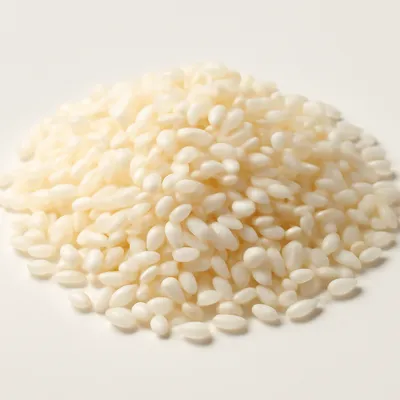
Soak glutinous rice until soft, drain, and grind it to a fine flour; mix the flour into a soft dough and steam it until cooked through and glossy.
- 215 min
Pound or work the steamed dough until smooth and elastic, then roll it out thin and cut it into small pellets or strips.
- 3300 min
Dry the pieces slowly and completely until they are hard, which locks the moisture inside so they can puff later.
Watch outDry the pellets slowly and completely until they're hard right through — that locks moisture inside the dense starch so it can flash to steam and puff later; any soft spot won't blow up.
- 415 min
Heat oil and deep-fry the dried pieces — easing them in so they swell, then frying hot until they puff up large, light, and hollow — and drain them well.
- 58 min
Boil rice syrup, sugar, and a little water together, stirring, until the sugar dissolves and the syrup turns thick and sticky.
- 64 min
Working fast while the syrup is hot, toss the puffed pieces and your chosen coating of puffed rice, sesame, or crushed nuts in the syrup until evenly glossed.
Watch outWork fast while the syrup is still hot and pourable — once it cools past sticky it seizes, and the puffs won't bind into a slab.
- 75 min
Tip the mixture into a lightly oiled frame and press it down firmly and quickly into an even, compact slab before it sets.
- 815 min
Let it cool until just firm, then turn it out and cut into bars or squares, and store airtight away from humidity.
Archive tool suggestions — not reviewed
These legacy suggestions have not been evidence-reviewed and are not presented as required tools.