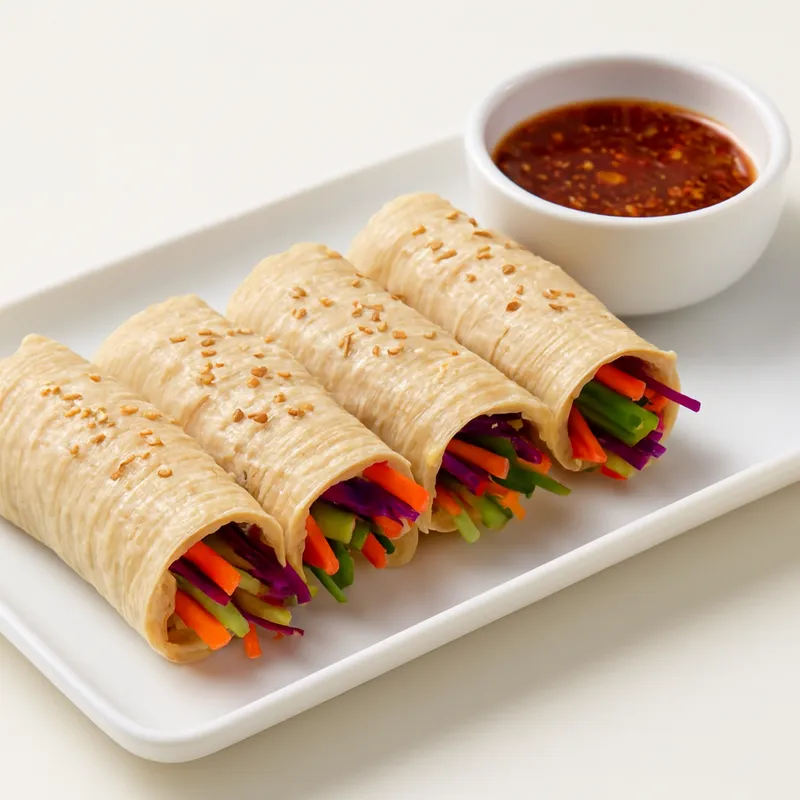
Busan eomuk is the port city's signature fried fish-paste cake, and Busan is recognized as the national home of eomuk in Korea. White fish is ground with salt and starch into a smooth paste, shaped into flat sheets or rolls, and deep-fried until golden. The cakes are most often folded onto bamboo skewers and served from street stalls in a clear, hot anchovy-and-kelp broth that diners sip alongside the skewer. Beyond the stalls, historic Busan makers such as Samjin sell the cakes by the bag at the city's markets. The same fried cakes are also sliced into soups, stir-fries, and the broth-side of tteokbokki.


Busan's eomuk industry grew out of Japanese surimi techniques. Japanese-style fish cakes (kamaboko) were introduced to the port during the colonial period of 1910 to 1945, when Japanese-run factories around Busan produced them in quantity; the earliest known kamaboko shops in the city are documented around 1915 in a Busan local-government newsletter. After the Korean War, refugees crowded into the port seeking cheap protein, and small Busan workshops ground pollock with salt and starch and fried the paste into a transportable food. Samjin Eomuk, founded in 1953 at Yeongdo by Park Jae-deok, who is said to have learned the craft in Japan, is widely cited as Korea's oldest surviving fish-cake maker; other early post-war producers operated around Bupyeong Market. From these roots eomuk became Busan's defining street and market food.
The skewer comes hot off the broth, the fried cake soft and pleated, springy under the teeth with a faint chew rather than a snap. The surface keeps a thin fried savor; inside it is mild and clean-tasting of white fish. Sip the anchovy-kelp broth between bites, lightly salty and faintly sweet from the radish, and the whole thing eats like warmth on a cold night.
The springy texture is built before frying. Grinding the fish with salt solubilizes the muscle proteins myosin and actomyosin; an adequate salt level, roughly 1.7 to 3.5 percent, is needed to pull these proteins into solution so they can form a continuous gel network on heating. The aligned myosin gives the cake its elastic spring, the quality Korean makers call tan-ryeok and Japanese makers call ashi; starch is added to hold water and soften the bite. Deep-frying at around 170 to 180°C sets that gel quickly and browns the surface through the Maillard reaction, adding the fried savor that distinguishes Busan's cakes from steamed white kamaboko. At service the cakes are simmered in a clear stock drawn from dried anchovy and kelp, whose glutamate and inosinate give the broth its savory depth without long bone-boiling; the broth is kept under about 30 minutes to avoid the bitter, fishy notes that over-extraction releases.
Variations
Eomuk is sold in many shapes, from flat sheets to thick tubes and balls, and varies mainly by fish blend and add-ins such as scallion, carrot, squid, or chili. On a skewer in broth it is street eomuk-tang or odeng; sliced, it goes into eomuk-bokkeum, a soy-and-sugar stir-fry, into eomuk-guk soup, and into the soupy base of broth-style tteokbokki. Higher-grade cakes use more white fish and less starch for a firmer spring, while cheaper ones carry more filler.
On the Palate
Where Busan Eomuk sits in the Korean flavor cloud
Ingredients
Serves 4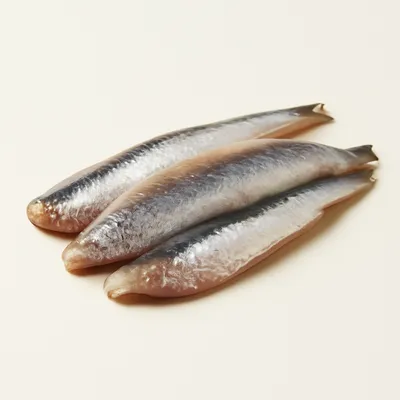


How it's made
7 steps · 40 min
- 110 min
Skin and debone white fish, cut into chunks, and grind cold with salt in a food processor until the paste turns sticky and glossy; this salting is what develops the spring.
Watch outGrind cold and keep going until the paste turns sticky and glossy — that sheen means the salt has pulled the proteins into solution, which is exactly what gives the cake its spring.
- 25 min
Blend in potato starch, a little sugar, and optional minced scallion, carrot, or onion until smooth and uniform.
- 38 min
Shape the paste into flat 1 cm sheets or rolls, keeping your hands and tools wet so it does not stick.
Watch outKeep your hands and tools wet the whole time — the paste is stickier than dough and will tear if it grabs the surface as you shape it.
- 410 min
Deep-fry at 170 to 180°C until golden and set, turning once, then drain on a rack.
Watch outHold the oil around 170 to 180 degrees so the gel sets fast and the surface browns; too cool and it soaks oil and goes flabby before it sets.
- 530 min
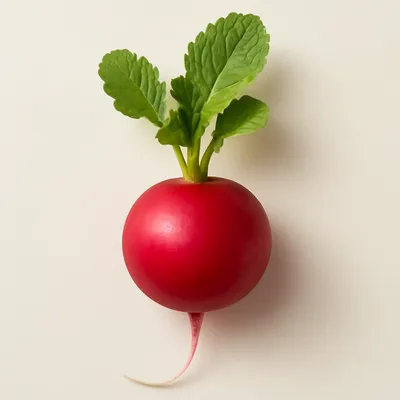
For the broth, simmer dried anchovies, dried kelp, radish, and onion in water; remove the kelp early, then strain after about 25 to 30 minutes.
- 65 min
Pleat the fried cakes onto bamboo skewers and lower them into the hot broth to warm through for a few minutes.
- 72 min
Serve the skewers in bowls of broth with a soy dipping sauce, sipping the broth alongside.