Two overlooked cuts of black carp — the gelatinous jaw and the collagen-dense tail fin — slow-braised in Shanghai's dark trinity of soy sauce, sugar, and Shaoxing wine until the fish's own gelatin glazes the sauce to a mahogany lacquer. A winter showpiece at Old Zhengxing restaurant, where three seasonings command respect.

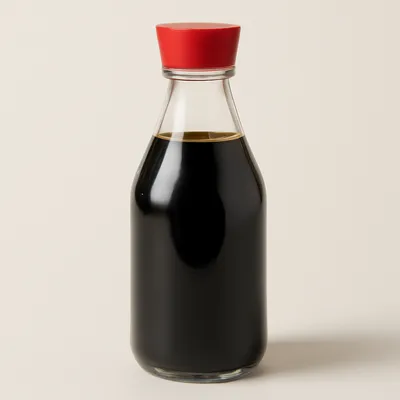
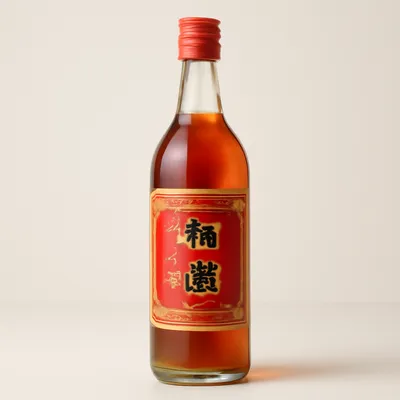



Old Zhengxing (老正兴), the founding house of Shanghai Benbang cuisine—whose culinary tradition is part of the 上海本帮菜肴传统烹饪技艺 listed as National Intangible Cultural Heritage (fourth batch, item Ⅷ-230, 2014; national-level protecting unit: Shanghai Old Restaurant 上海老饭店)—has long served seasonal black carp preparations as winter landmarks. Black carp jaw and tail fin were the parts left after filleting the more lucrative center cuts; Benbang chefs recognized that these liminal sections concentrate the fish's collagen, making them ideal for red-braising — the gelatin self-thickens the sauce without any starch. The Thepaper.cn culinary archives document the tradition at Old Zhengxing of treating black carp offcuts as prestige ingredients, a philosophy that defines the Benbang ethos of 物尽其用: the overlooked cut, when properly handled, exceeds the fillet.
Jaw cheek meat glides off the bone in supple, collagen-rich sheets with barely a tug; tail fin requires gentle chopstick persuasion — tug the flesh between fin rays to reach the gelatinous morsels hiding along the bone. Both arrive drenched in a dark, sweet-savory lacquer so thick it barely flows, staining the rice gold-brown the moment it touches.
Black carp jaw and tail fin are dense in type-I collagen — the same structural protein that gives slow-braised pork knuckle its richness. Held at 75–85°C for 15 minutes, the triple-helix collagen chains hydrolyze into soluble gelatin strands that spontaneously thicken the braising liquid, no starch required; cooling the finished dish briefly allows gelatin to semi-set into a signature glossy coat. The final high-heat reduction raises solute concentration and intensifies Maillard reactions between soy sauce's amino acids and reducing sugars, simultaneously deepening color and flavors. Calcium phosphate from the bone dissolves minimally into the liquid, enriching its mineral depth.
Variations
Some kitchens add the fish collar between jaw and body for greater meat volume. River carp (grass carp) substitutes when black carp is unavailable, though the sauce will be thinner with less collagen. A clay-pot version traps steam during the braise for smokier depth. In cold months, leftover sauce is chilled overnight into fish jelly and served as a cold starter.
On the Palate
Where Red-Braised Black Carp Jaw and Tail Fin sits in the Chinese flavor cloud
Ingredients
Serves 3
How it's made
7 steps · 15 min
- 15 min
Rinse jaw and tail fin pieces under cold running water; use a brush to scrub away any remaining scales from the fin. Pat completely dry with paper towels.
- 23 min
Heat wok over high heat until just smoking. Add oil, then fry scallion knots and ginger slices 90 seconds until fragrant and lightly caramelized.
- 35 min
Add fish pieces skin-side down; sear over medium-high without moving for 2 minutes, then flip and sear 2 minutes more until lightly golden.
Watch outLay the fish skin-down and don't touch it for two full minutes — moving it early tears the skin and it sticks to the wok.
- 42 min
Splash Shaoxing wine around the wok's edge; let it sizzle and reduce by half. Add light soy sauce, dark soy sauce, and sugar; gently turn fish to coat.
Watch outSplash the wine down the hot wok edge, not onto the fish — it should hiss and flash off, carrying away the raw fishy note.
- 52 min
Pour in just enough hot water to barely cover the fish. Bring to a vigorous boil, skim foam, then reduce to a steady medium simmer.
- 622 min
Cover and braise 15 minutes, then uncover; raise heat to high and reduce sauce 5–7 minutes, basting fish continuously, until sauce coats a spoon.
Watch outReduce while spooning sauce over the fish until it turns glossy and coats a spoon — the dissolved gelatin thickens it, no starch needed.
- 72 min
Gently transfer fish to a serving plate. Pour remaining sauce over. Scatter fine-sliced scallion greens on top and serve immediately with steamed rice.
Archive tool suggestions — not reviewed
These legacy suggestions have not been evidence-reviewed and are not presented as required tools.



