A Dongbei banquet centerpiece: a whole pork knuckle lacquered in caramel-dark soy glaze, braised until the skin trembles at a touch and the meat falls from the bone in silken, deeply savory ribbons.


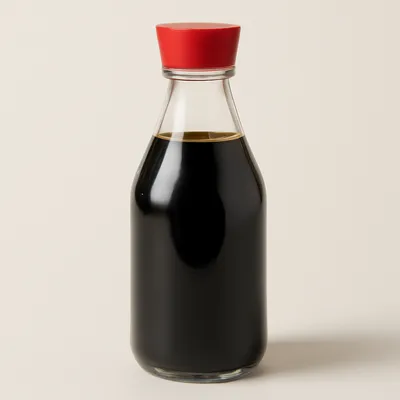
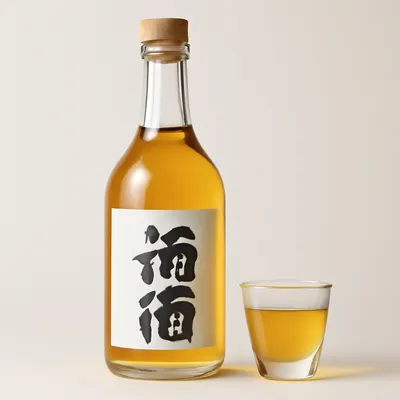
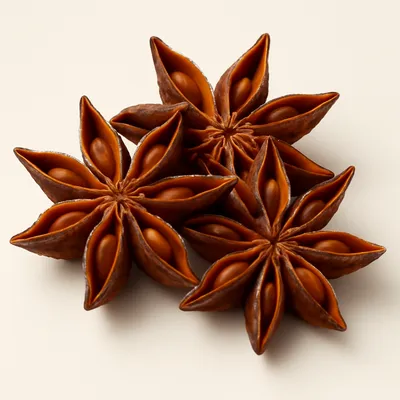
Red-Braised Pork Knuckle holds pride of place on Dongbei banquet tables — a fixture of New Year's Eve dinners, weddings, and full-moon celebrations. The technique descends directly from the Shandong (鲁菜) red-braising tradition: caramelized sugar for color, soy sauce for salinity, rice wine to neutralize off-notes, and a long slow braise over hardwood coals. When Shandong migrants poured into Manchuria in the great 闯关东 waves of the late Qing and early Republican eras, they carried this method north; Dongbei cooks adapted it to the regional taste for bold flavors and dramatic presentation, serving the knuckle whole rather than portioned — a statement of abundance and reunion at the table. By the Republican era, major Dongbei restaurants listed the whole-braised knuckle as the prestige closer of a formal banquet.
The braised skin melts on contact — pure gelatin draped over tooth-tender meat threads. The flavor is deeply lacquered: soy-savory, caramel-sweet, with the faint bitterness of reduced rice wine lingering at the back of the throat. One piece commands the table.
Pork knuckle carries 12–18g of Type I collagen per 100g in its skin, tendons, and periosteum. At 85–95°C sustained for two or more hours, the triple-helical collagen structure hydrolyzes into gelatin, creating the glossy, clingy sauce and the silken, trembling skin texture. The critical 炒糖色 step heats sugar to 160–170°C, triggering caramelization to generate hundreds of aldehyde, ketone, and heterocyclic compounds (furans, pyrans) responsible for the deep amber color and bittersweet aroma. Soy sauce amino acids then undergo Maillard browning with residual reducing sugars at high heat, layering additional color and umami depth. Extended reduction concentrates the gelatin, which sets to a translucent amber jelly on cooling.
Variations
Southern versions (Suzhou, Shanghai) use Shaoxing wine and rock sugar for a sweeter, lighter profile; Dongbei versions lean heavier on soy sauce for a saltier, more savory result. Pressure-cooker shortcuts reduce the braise to 45 minutes but sacrifice some of the skin's silky gelatin development. Some home cooks substitute rock sugar for the caramelized sugar step, resulting in a brighter, more translucent glaze.
On the Palate
Where Red-Braised Pork Knuckle sits in the Chinese flavor cloud
Ingredients
Serves 5



How it's made
8 steps · 20 min
- 115 min
Place the whole pork knuckle in a pot of cold water with ginger slices and rice wine. Bring to a boil and blanch for 15 minutes, skimming off scum. Drain, rinse under cold water, and pat dry.
- 25 min
Use a skewer to pierce the skin all over the knuckle — this helps the marinade penetrate and prevents the skin from splitting during braising.
Watch outPierce the skin all over with a skewer — this lets the marinade in and keeps the skin from splitting open during the long braise.
- 38 min
Heat a thin film of oil in a wok or heavy pot over low heat. Add the sugar and stir continuously until it melts and turns deep amber (caramel stage, about 8 minutes). Watch closely to avoid burning.
Watch outFry the sugar to deep amber and watch it like a hawk — the color's the base of the whole dish, and a moment past amber turns it acrid.
- 43 min
Lower the knuckle into the caramel and turn to coat evenly. Add light soy sauce, dark soy sauce, rice wine, star anise, and cassia bark.
- 590 min
Pour in enough hot water to submerge the knuckle. Bring to a boil, then reduce to the lowest possible simmer. Cover and braise for 90 minutes.
- 660 min
Carefully turn the knuckle over. Cover and continue braising on low heat for 60 more minutes, until the skin is soft and trembling and a chopstick slides through without resistance.
Watch outBraise low until the skin trembles and a chopstick slides through with no resistance — that quiver is the collagen turned to gelatin.
- 715 min
Uncover and raise the heat to high. Reduce the braising liquid, turning the knuckle frequently, until it becomes thick, glossy, and deeply lacquered.
Watch outReduce over high heat, turning often, until the sauce is thick and deeply lacquered — stop while it's thin and the skin won't glisten.
- 83 min
Transfer the whole knuckle to a serving plate. Spoon the reduced sauce over the top and garnish with scallion greens or fresh cilantro.
Archive tool suggestions — not reviewed
These legacy suggestions have not been evidence-reviewed and are not presented as required tools.



