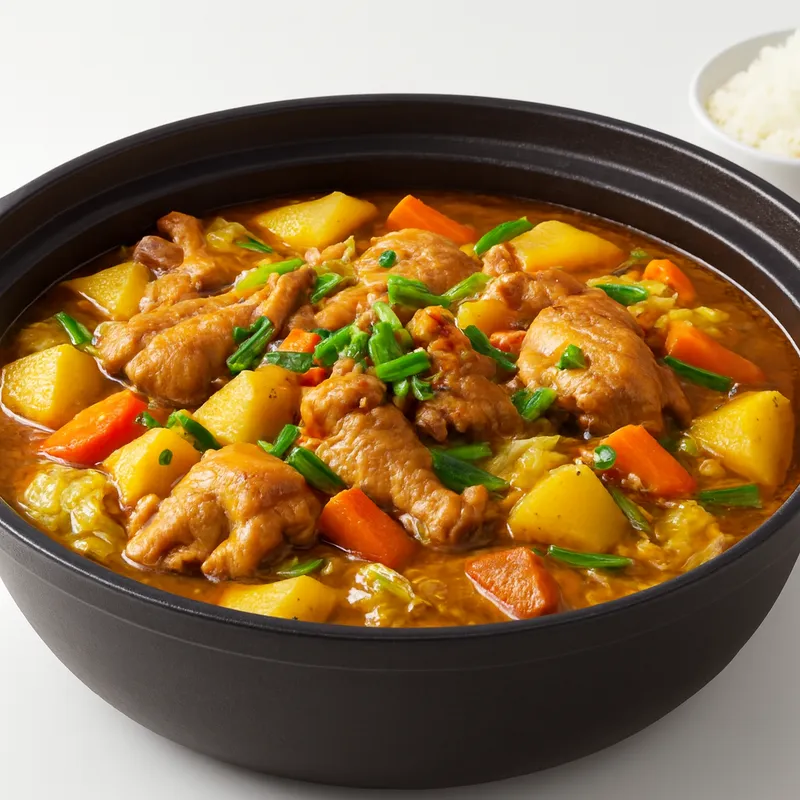
A Dengfeng specialty of young mountain goat slow-simmered for two hours until the collagen melts into the broth, then reunited with glass noodles, wood-ear mushrooms, dried lily buds, tofu, and a proprietary herb-infused lamb oil in a vigorous final braise. The broth emerges creamy-white and deeply savory, the meat impossibly tender, with no trace of gaminess — a dish that earned official recognition as one of Zhengzhou's ten canonical Henan dishes.


The legend connecting Dengfeng braised mutton to the early Tang dynasty is consistent across Henan food chronicles and is widely cited by local restaurateurs. The story holds that in 621 CE, Shaolin monks rescued the wounded Tang prince Li Shimin during his campaign against the rebel Wang Shichong; to speed his recovery, they prepared a simple stew of local mountain goat, Songshan spring water, scallions, and noodles. After Li Shimin became Emperor Taizong and requested the dish be reproduced at Chang'an, its fame spread beyond the monastery walls into Dengfeng's markets. The story is corroborated in its broad outline by a Tang imperial decree acknowledging the Shaolin monks' military assistance, though the specific culinary detail is legendary. The dish is widely recognised in Zhengzhou culinary circles as one of the ten canonical Henan dishes, providing a modern anchor for a preparation that has clearly evolved over centuries.
The meat collapses at the lightest pressure — collagen-rich and gelatinous at the edge, lean and fine-grained within. The broth is clear yet full-bodied: scallion sweetness, a whisper of herbal depth, and zero gaminess. Glass noodles drink the broth and turn slippery and satisfying; wood-ear adds crunch against the softness of everything else.
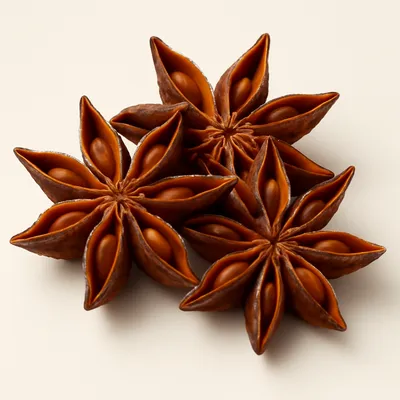
Soaking the raw lamb for two hours in cold running water draws out myoglobin and blood proteins that would otherwise cloud the broth and produce sour off-notes. During the long simmer, collagen in the connective tissue hydrolyzes into gelatin at around 70–75°C, which emulsifies the rendered fat and gives the broth a creamy, full-bodied texture without heaviness. The herb-infused lamb oil — made by slowly rendering fat with star anise, cardamom, and upward of twenty aromatics — delivers aromatic esters and terpenes that both suppress and displace the branched-chain fatty acids, principally 4-甲基辛酸 and 4-甲基壬酸, which are the primary sources of mutton's characteristic gaminess. Young animals (just over one year old, 40–50 jin) are selected because their fat composition includes proportionally less of these off-flavor acids than older animals.
Variations
A dry-pot version (干锅烩羊肉) reduces the broth almost entirely and adds dried chili, producing a concentrated, spicy dish. Some Dengfeng restaurants mix in lamb lung and tripe for a heartier, more mineral variant. A simplified home version omits the elaborate herb-oil step, using only ginger and star anise — cleaner but less aromatic.
On the Palate
Where Dengfeng Braised Mutton sits in the Chinese flavor cloud
Ingredients
Serves 4

How it's made
8 steps · 25 min
- 1120 min
Soak the lamb pieces in cold running water for 2 hours to draw out blood and myoglobin; drain thoroughly and pat dry.
Watch outSoak the lamb in cold running water two hours to draw out the blood — skip this and the broth clouds and turns sour-noted.
- 210 min
Place the lamb and any bones in a large pot; cover with cold water, bring to a boil over high heat, and skim the foam diligently for 10 minutes.
- 3120 min
Add scallions, ginger, star anise, and cardamom pods; reduce heat to a very gentle simmer and cook for 2 hours until the meat is very tender and the broth turns creamy.
Watch outSimmer very gently two hours until the meat is tender and the broth turns creamy — a hard boil clouds it and toughens the meat.
- 430 min
Lift the lamb pieces out and slice into 3–4 cm portions; continue simmering the bones for 30 more minutes to deepen the broth, then strain.
- 515 min
In a small saucepan, render the lamb fat over low heat with the remaining star anise, cardamom, and any additional aromatic spices for 15 minutes; strain out the solids to produce a fragrant seasoning oil.
- 620 min
Soak the dried wood-ear mushrooms, lily buds, and glass noodles separately in warm water until softened, about 20 minutes; drain and cut the glass noodles into manageable lengths.
- 75 min
Bring the bone broth to a vigorous boil in a wide pot; add the sliced lamb, tofu, wood-ear, lily buds, and glass noodles. Stir in two tablespoons of the aromatic lamb oil.
- 810 min
Simmer on medium-high for 10 minutes, adjusting seasoning with salt; ladle into deep bowls, scatter shredded scallion over the top, and serve immediately.
Archive tool suggestions — not reviewed
These legacy suggestions have not been evidence-reviewed and are not presented as required tools.