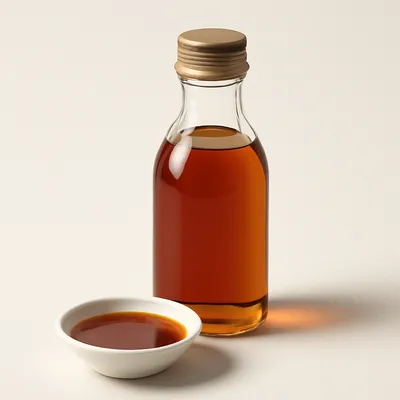
Henan's most celebrated soup and a Diaoyutai State Guesthouse mainstay: silken laminae of dried cuttlefish egg sac — peeled into petal-thin sheets after soaking — float in a crystal-clear eight-hour master broth soured with fermented cucumber juice rather than vinegar, so the soup stays luminous and the delicate egg retains its silky texture. White pepper adds slow warmth, sesame oil rounds the finish, and the broth coats the lips like fine gelatin.


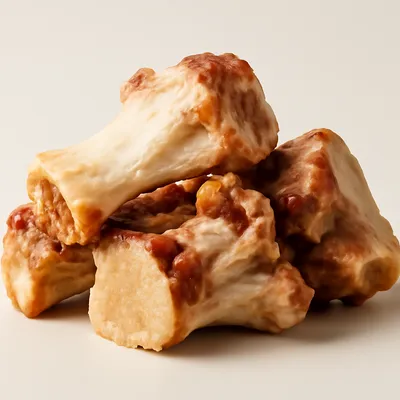


Cuttlefish egg — the dried nidamental gland of the female golden cuttlefish — appears in the Rizhao County Gazetteer of the 54th year of the Kangxi reign (1715 CE): 'the egg within the cuttlefish is one of the eight sea treasures.' By the late Qing dynasty it was imperial tribute from Shandong. The gourmet Yuan Mei catalogued a preparation in his 18th-century food memoir Suiyuan Shidan. The definitive Henan version was elevated into a state-banquet dish when master chef Hou Ruixuan formally transferred to the Diaoyutai State Guesthouse in 1981 — not 1980 as sometimes cited — and replaced vinegar with naturally fermented cucumber juice, maintaining the soup's crystalline clarity while softening the acidity. The dish became a favourite of Deng Xiaoping, who praised it as 'the finest sour-spicy soup — truly China's First Soup.' It is today formally designated one of the Five Great Traditional Henan Soups by Henan's Department of Commerce.
The soup arrives looking like water — clear, still, untroubling — yet the first sip coats the lips: collagen-rich from eight hours of bones. The cuttlefish egg laminae dissolve almost before they land, leaving a mineral brininess and the faintest oceanic sweetness. The sourness is soft, lactic, never sharp. White pepper builds gently and fades without a trace. A few drops of sesame oil close everything into a single, long finish.
Cuttlefish egg is the dried nidamental gland, a layered glycoprotein structure that separates after soaking, boiling, and peeling into silken, petal-like laminae. The critical innovation of fermented cucumber juice (predominantly lactic acid, acidity roughly equivalent to mild vinegar) over aged vinegar is twofold: lactic acid's relatively weak acidity avoids over-denaturing the surface glycoproteins — which sharp acetic acid would — preserving the egg's silken texture and preventing protein precipitation that would cloud the broth. The eight-hour bone broth releases hydroxyproline-rich collagen peptides in high concentration, producing the characteristic lip-coating sensation (挂唇) that distinguishes this soup from thinner broths. White pepper's piperine activates thermoreceptors in oral mucosa, generating the sensation of heat; the lactic acid simultaneously stimulates acid-sensing ion channels in the same tissue, creating two complementary sensory pathways that produce the soup's famous layered sour-spicy impact.
Variations
Vinegar substitutes are debated: some chefs use a blend of mild rice vinegar and cucumber brine when fermented cucumber juice is unavailable. A richer version adds thin silken tofu strips alongside the cuttlefish egg. The Shandong origin style uses the egg in a thicker, starch-heavy broth typical of Lu cuisine, contrasting with the Henan clear-broth refinement. A modern Zhengzhou restaurant variation adds a drizzle of chilli oil at the table for those wanting greater heat.
On the Palate
Where Hot-and-Sour Cuttlefish Egg Soup sits in the Chinese flavor cloud
Ingredients
Serves 4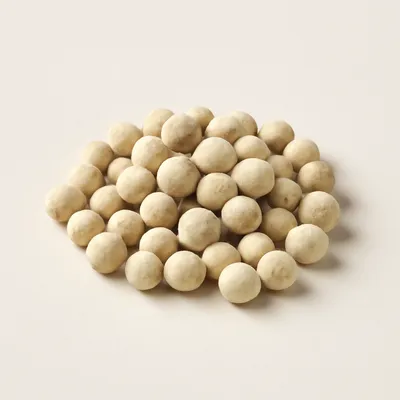

How it's made
7 steps · 30 min
- 1480 min
The night before: place old hen carcass, pork knuckle bones, ginger slices, and scallion stalks in a pot of cold water. Bring to a full boil; skim foam constantly for 30 minutes. Reduce to the lowest possible simmer and cook uncovered for 8 hours. Strain through a fine-mesh sieve; refrigerate overnight. The next day, lift and discard the solidified fat layer from the surface.
- 2130 min
Soak dried cuttlefish egg in cold water for 2 hours. Transfer to a pot of fresh cold water; bring to a boil and gently simmer for 10 minutes. Drain; once cool enough to handle, peel away the tough outer membrane layer by layer, separating the egg sac into thin petal-like laminae. Rinse gently and hold in cold water.
Watch outSimmer and peel the cuttlefish egg into thin petal-like laminae — rushing the peel tears the layers and you lose the silken texture.
- 35 min
Pour the defatted master broth into a clean pot; bring to a gentle simmer. Add the cuttlefish egg laminae and heat for 2 minutes until warmed through. Remove with a slotted spoon and set aside.
- 45 min
Pour fermented cucumber juice (or a mild rice vinegar substitute) gradually into the simmering broth while tasting continuously, until the acidity is just perceptible — soft and lactic, not sharp. Season with salt to taste.
Watch outAdd the sour cucumber juice bit by bit, tasting, until the acidity is just soft and perceptible — sharp acid over-tightens the egg's surface and clouds the broth.
- 55 min
Mix cornstarch with twice its volume of cold water. Drizzle the slurry gradually into the broth while stirring constantly in one direction, until the soup reaches a silky, light-coating consistency. Do not over-thicken — the soup should flow freely.
- 65 min
Lightly beat egg whites (do not foam). Pour in a thin, steady stream into the gently simmering soup while stirring to form white cloud-like wisps. Add ground white pepper to taste and stir gently.
Watch outPour the beaten egg white in a thin stream while stirring to form cloud-like wisps — dumped in, it clumps instead of feathering.
- 75 min
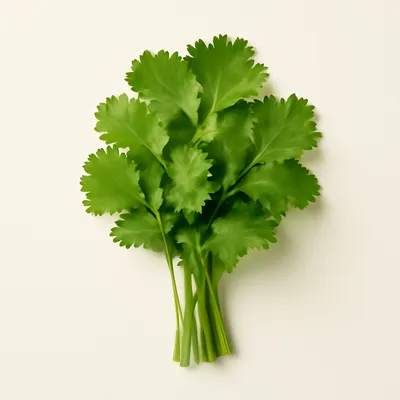
Return the cuttlefish egg laminae to the soup. Ladle into warmed bowls; drizzle a few drops of sesame oil over each portion and scatter with fresh coriander. Serve immediately — this soup must arrive piping hot.
Archive tool suggestions — not reviewed
These legacy suggestions have not been evidence-reviewed and are not presented as required tools.


