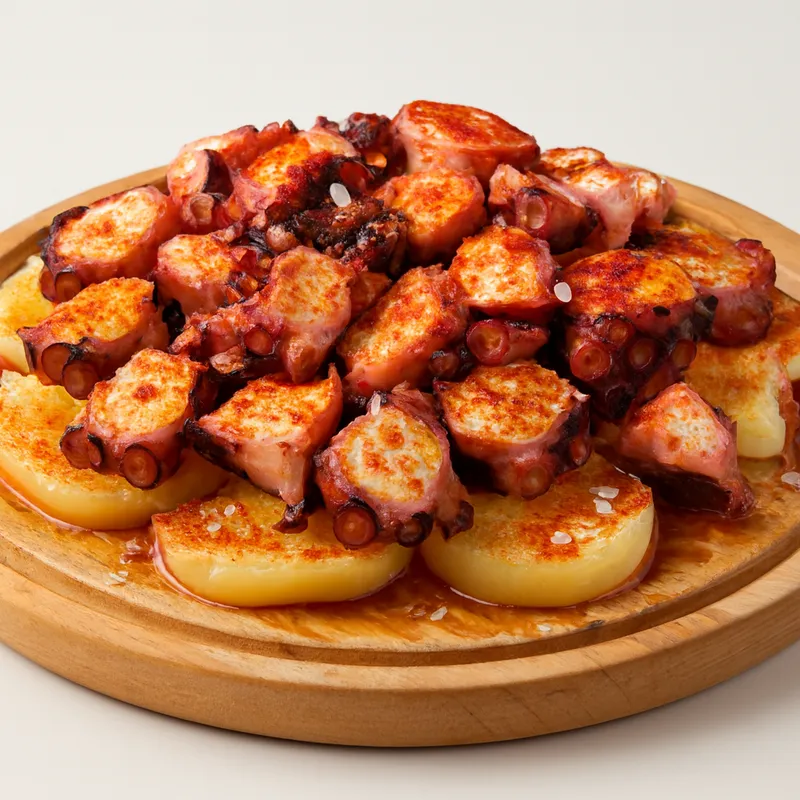
Octopus offers a delicately sweet and briny flavor, coupled with a tender, slightly chewy texture that captivates the palate. Its versatility allows for both bold and subtle preparations across various cuisines.
Where it comes from
Octopus is a key ingredient in Mediterranean and Asian cuisines, celebrated for its culinary diversity, from grilled preparations in Spain to sushi in Japan.
In the kitchen
Octopus is best when grilled or braised, allowing it to develop a satisfying char while maintaining its tenderness, often enhanced with bold marinades and spices.
Across cuisines
In Spanish cuisine, octopus is often tenderized by simmering before being grilled or served. Pulpo a la Gallega features octopus simmered with bay leaves and then sliced and seasoned with paprika and olive oil. This technique ensures the octopus is tender and absorbs flavors during the simmering process.
Portuguese cuisine often features octopus roasted with olive oil, a method known as 'à Lagareiro.' This technique involves roasting the octopus in a generous amount of olive oil, sometimes with potatoes, garlic, and herbs, resulting in a rich and flavorful dish. The olive oil not only enhances the taste but also keeps the octopus moist.
Octopus (zourit) — Seychelles' national pride dish ingredient; kari zourit (octopus curry) defines Seychellois cuisine.
Nutrition (per 100g)
AI-estimated; model and run unavailable.
Pairs well with