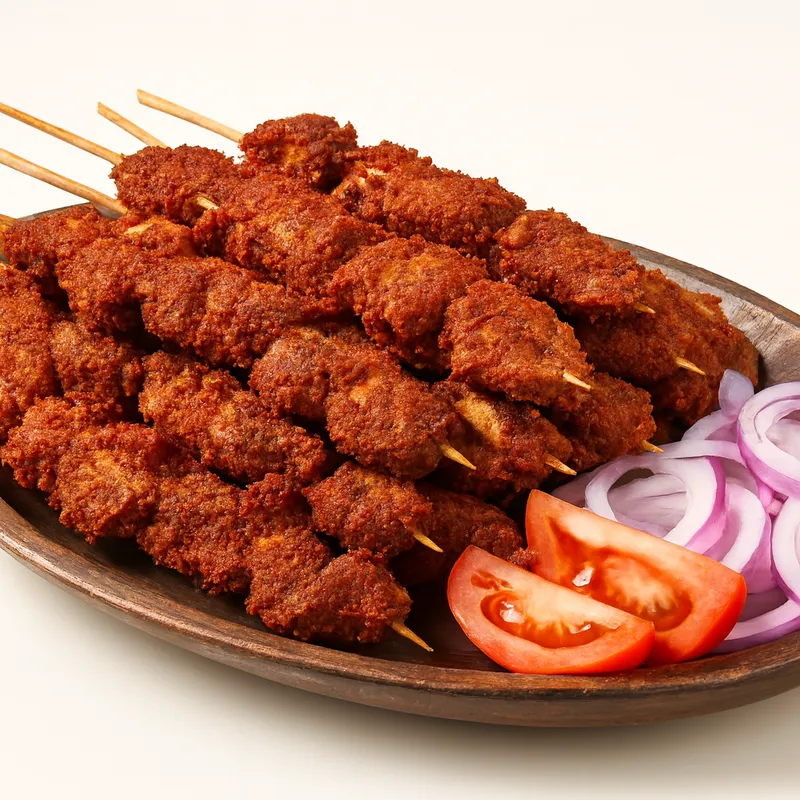
Kilishi is the deluxe dried beef of Hausa northern Nigeria and the Sahel: lean beef shaved into very thin, wide sheets, sun-dried, then coated in "labu" — a thick paste of ground defatted peanut cake (kuli kuli), spices, chili, salt, and a touch of sweetener — dried again, and briefly roasted over fire so the nutty-spicy crust sets onto the meat.





A Hausa preservation method from the savanna of northern Nigeria and the wider Sahel — Bauchi, Zaria, and Kano are the recognized centers — descended from older Sahelian dried-meat traditions shared with southern Niger and northern Cameroon. Kilishi keeps for months, which made it portable across the trans-Saharan trade routes, and it has long been prized both as a preserved snack and as a gift. The peanut-paste coating is often said to have spread after groundnut became a major cash crop in northern Nigeria, though the timing is not firmly documented.
Hausa beef-jerky descendant of trans-Saharan trade preservation. A single hindquarter is shaved against the grain into 1–2 mm sheets a meter long — a hand-honed knife and 20 years of practice. The peanut-paste-and-yaji coating, brushed on the dried sheet and re-sun-dried, is what gives kilishi its snap-then-chew. Oven shortcuts make jerky.
Paper-thin sheets of beef, sun-dried and coated in a rust-red crust of ground peanut, ginger, garlic, clove, and the northern chili-spice blend. Brittle at the edges, chewy in the thicker patches; it tears like beef-flavored leather and tastes of toasted nut and chili as much as of meat. Sold in bundles wrapped in newsprint at northern markets and motor parks.
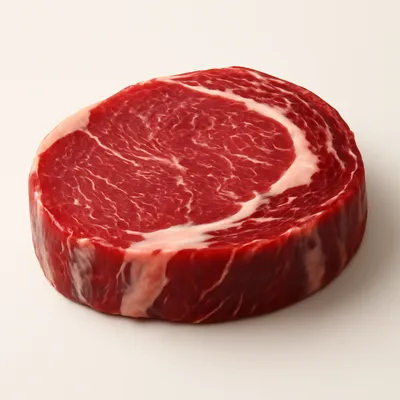
The slicing is the skill: a lean cut is shaved against the grain into roughly 1–2 mm sheets up to a meter long, which takes a hand-honed knife and years of practice. The dried sheets are coated one by one in the labu paste and returned to the sun for a second drying, then briefly roasted over fire to set the coating — a multi-day process. The double-dry plus the fire finish, more than the spice mix itself, gives kilishi its signature snap-then-chew. Oven shortcuts produce something more like ordinary jerky.
Variations
Beef is standard, but ram, mutton, goat, and chicken kilishi are also made. It is often called a dried form of suya, since the two share a spice profile — but suya is fresh-grilled and eaten at once, while kilishi is sun-dried, paste-coated, dried again, and fire-finished. It differs again from South African biltong, which is salt- and vinegar-cured and air-dried without any cooking, whereas kilishi is peanut-paste-coated and roasted. Niger has a drier related dried meat made without the peanut paste.
On the Palate
Where Kilishi sits in the Nigerian flavor cloud
Slice the lean beef against the grain into paper-thin 1–2 mm sheets — thin, even sheets are what let the meat dry fast and give kilishi its snap-then-chew; thick strips just turn into ordinary jerky.
Ingredients

How it's made
5 steps · 1 day
- 1240 min
Slice beef into thin strips.
Watch outAim for translucent sheets you can almost see light through — even thickness matters more than length.
- 2300 min
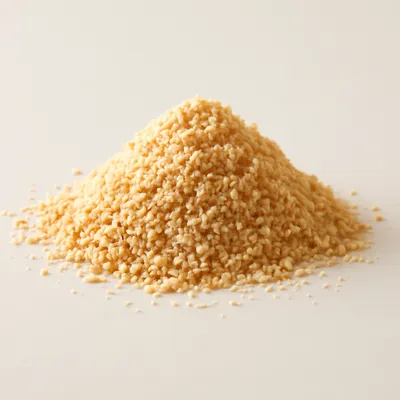
Prepare a marinade with ground peanuts, yaji spice, ginger, garlic, and bouillon cube.
- 3120 min
Coat beef strips in the marinade, let them absorb flavors.
- 4300 min
Sun-dry the marinated beef until fully dehydrated.
Watch outThe first dry is done when the sheets are stiff and leathery all the way through, no soft damp spots left.
- 5480 min
Brush with vegetable oil and grill briefly for extra flavor.
Watch outOver the fire, pull the sheets the moment the coating tightens and smells toasted — seconds too long and they scorch.
Archive tool suggestions — not reviewed
These legacy suggestions have not been evidence-reviewed and are not presented as required tools.