
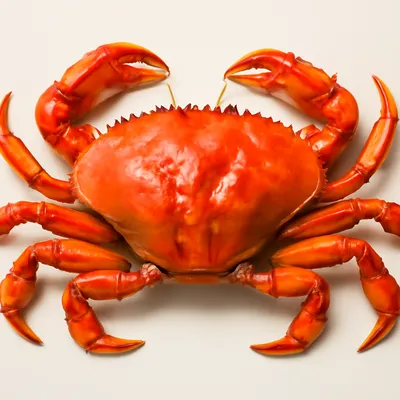
Live freshwater hairy crab (Eriocheir sinensis) steamed simply with ginger (and a splash of yellow wine), eaten with a vinegar-ginger dip — the autumn ritual of Yangcheng Lake.



The Yangcheng Lake hairy crab (阳澄湖大闸蟹) season runs roughly September to November — the moulting cycle is the constraint. By the lunar calendar, female crabs are at peak roe in the 9th month and males peak (fat/cream at its best) in the 10th month The pricing follows: 'September the female, October the male' (九雌十雄 jiǔ cí shí xióng) is the buyer's rule. Documented as a delicacy since the Tang dynasty (9th c.), but the modern Yangcheng Lake brand and bound-leg presentation are 1980s onward.
Yangcheng Lake season runs September to November, gated by the moulting cycle. 九雌十雄 — September the female (peak roe), October the male (peak fat). Eaten cold-tools-warm-meat with ginger-vinegar and warm yellow rice wine; the ritual takes 30+ minutes per crab.
A small crab, no larger than a fist. The shell is brilliant orange-red after steaming. Crack it open: a male crab is dry-savory with white meat concentrated in the body cavity and legs; a female has bright-orange roe pooled in the cavity, denser and umami-rich. Both are eaten warm, picked apart slowly with tools: pick out fragments, dip in ginger-vinegar, chase with warm yellow rice wine. The whole ritual takes 30+ minutes per crab; speed-eating defeats the purpose.
Hairy crab tastes different from saltwater crabs because the freshwater Eriocheir sinensis lives in lake bottoms feeding on aquatic plants — its flesh has a distinct sweet-mineral profile no marine crab has. Pricing tracks the moulting cycle: a crab is 'empty' (light, watery meat) just after moulting and 'full' (dense, rich roe or fat) just before. Yangcheng Lake's specific water mineral content and the lake bottom's hard floor (allowing the crab's claws to develop muscle) explain why the same species farmed elsewhere doesn't taste the same.
Variations
Yangcheng Lake (阳澄湖) is the brand benchmark; Tai Lake (太湖) crabs are slightly larger and run cheaper; Hongze Lake (洪泽湖) is the budget pick; the Shanghai banquet move is to extract the roe and remake it as 蟹粉 (crab-roe paste) for tofu, rice, or xiaolongbao.
On the Palate
Where Hairy Crab sits in the Chinese flavor cloud
Ingredients
Serves 4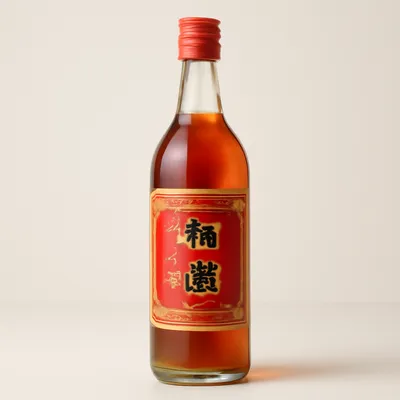
How it's made
5 steps · 25 min active + 5 min waiting
- 15 min
Rinse 4 live hairy crabs (200-250g each) in cold water. Tie legs and claws with cotton string or rice-stalk to prevent thrashing during steaming.
- 22 min
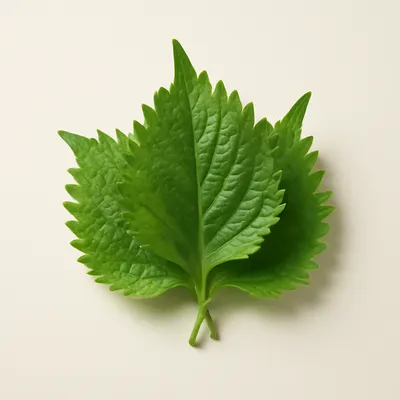
Place crabs belly-up (not back-up — this prevents roe from leaking out) in a steamer over boiling water. Tuck a few shiso leaves and ginger slices on top.
Watch outSet the crabs belly-up in the steamer, never on their backs — flipped the right way the roe stays put instead of running out during the steam.
- 315 min
Steam over high heat for 15 minutes (250g crab) or 12 minutes (200g). The shell should turn deep orange-red. Don't over-steam or the meat dries.
Watch outSteam hard until the shell turns deep orange-red — about fifteen minutes for a big one; pull it the moment the color's there, over-steam and the meat goes dry and stringy.
- 42 min
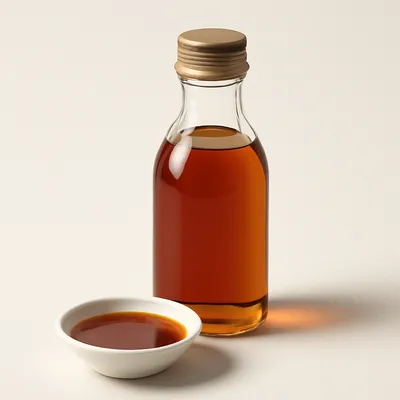
Mix the dip: minced ginger, dark Chinkiang vinegar, a touch of sugar, a few drops of sesame oil. The vinegar must be Chinkiang, not white.
Watch outFor the dip it has to be dark Chinkiang vinegar with the ginger and a pinch of sugar — white vinegar's flat sharpness kills the crab's sweetness.
- 50 min
Serve hot. Eaters use small picks or sucking-and-tearing technique. Drink warm Shaoxing huangjiu rice wine alongside — the only proper pairing. Eat in two stages: first the male crab (dry, savory white meat with flesh in the legs), then the female (rich orange roe, eaten with the meat).


