




From Hokkien piān-ê-si̍t (便食), "convenient food," brought by Chinese traders to the Philippines from at least the 16th century. The dish anchored Manila's Binondo district — the world's oldest Chinatown, established 1594 — where Filipino-Chinese cooks adapted the wok noodle to local seasonings: calamansi in place of vinegar, fish sauce alongside soy. The birthday-noodle custom was retained whole from southern Fujian.
From Hokkien piān-ê-si̍t (便食) — convenient food. Anchored in Manila's Binondo district, the world's oldest Chinatown, established 1594. Birthday noodles stay uncut: long noodles, long life.
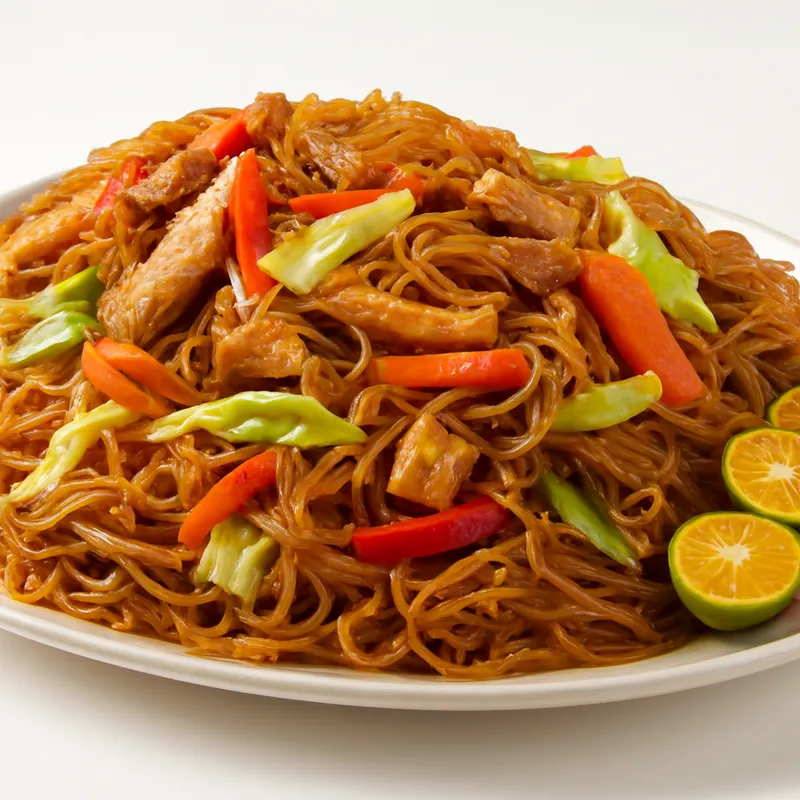
A platter of stir-fried noodles glossed with soy and calamansi, threaded through with shredded chicken or pork, sliced sausage, cabbage, carrot, snow pea. Wedges of calamansi go on at the table — squeeze right before eating. Pancit bihon uses thin rice vermicelli; pancit canton uses wheat. Birthdays get a long-noodle version uncut: long noodles, long life.
Calamansi is what makes it Filipino, not Chinese. The tiny green-orange citrus is more floral than lime and more tart than orange — squeezing it at the table, not in the wok, keeps the volatile oils alive. Cook it in and it reads like generic vinegar. The noodles are par-soaked, never boiled soft, then finished in stock so they absorb instead of dilute the sauce.
Variations
Pancit bihon (thin rice vermicelli); pancit canton (wheat); pancit palabok (rice noodles in shrimp-annatto gravy with crushed chicharron); pancit Malabon (from the Malabon fishing town: thick tubular rice noodles, seafood-heavy, with crab fat stirred into the sauce); pancit Molo is the Iloilo dumpling-soup outlier.
On the Palate
Where Pancit sits in the Filipino flavor cloud
Squeeze the calamansi at the table, never in the wok — its floral volatile oils die on heat and collapse into flat vinegar, and that fresh citrus lift is the whole reason the dish reads Filipino.
Ingredients


How it's made
5 steps · 20 min
- 110 min
Bring a pot of water to a boil and cook the noodles according to package instructions until al dente. Drain and set aside, tossing with a bit of oil to prevent sticking.
Watch outPull the noodles at al dente with a slight bite — they'll soften further in the wok, so soft-now means mush-later.
- 22 min
In a large wok, heat oil over medium-high heat. Sauté chopped garlic and sliced onion until fragrant and translucent, about 2 minutes.
Watch outDon't let the garlic burn; it should be golden and fragrant, not dark brown.
- 33 min
Add sliced carrots and cabbage to the wok. Stir-fry until the vegetables are tender-crisp, about 3 minutes. The colors should remain vibrant.
Watch outVeg should stay tender-crisp and vivid — three minutes tops, before the cabbage goes limp.
- 43 min
Stir in the cooked noodles along with soy sauce and fish sauce. Toss everything together until the noodles are well-coated and heated through, about 3 minutes.
Watch outToss until every strand glistens and is evenly coated; if it looks wet and pooling, let it keep going so the noodles drink it in.
- 52 min
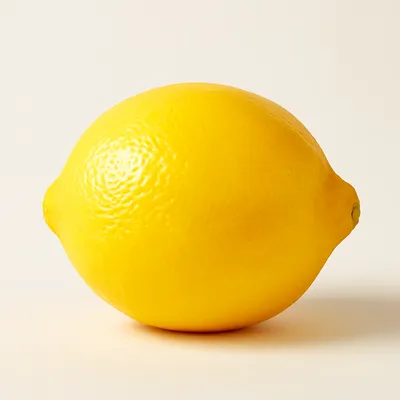
Serve the pancit hot, garnished with a squeeze of calamansi or lemon for a bright, citrusy finish.
Watch outSqueeze the citrus only now, over the plated hot noodles, so the fragrance hits raw.