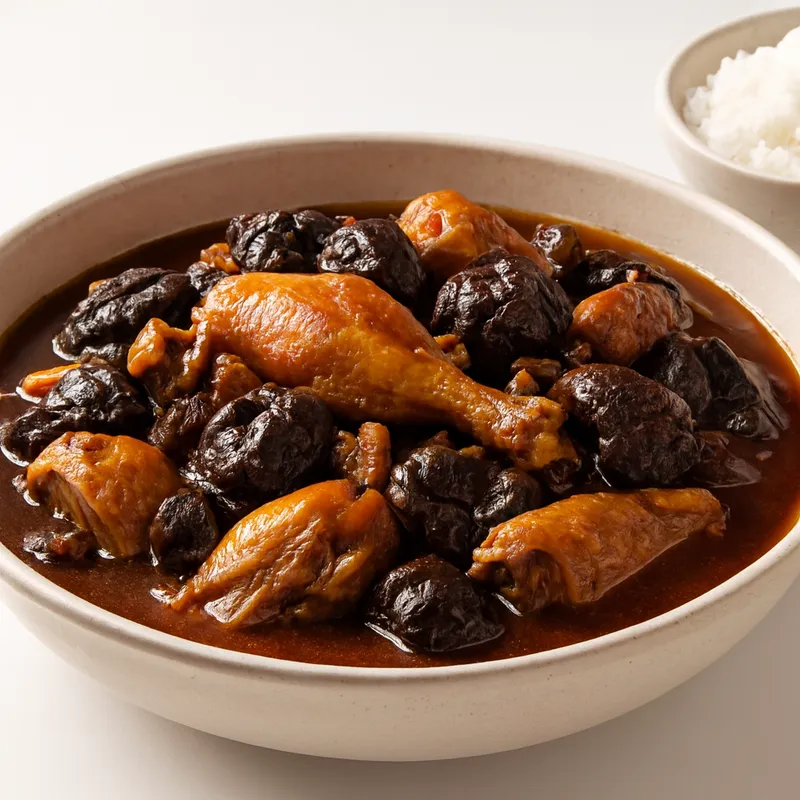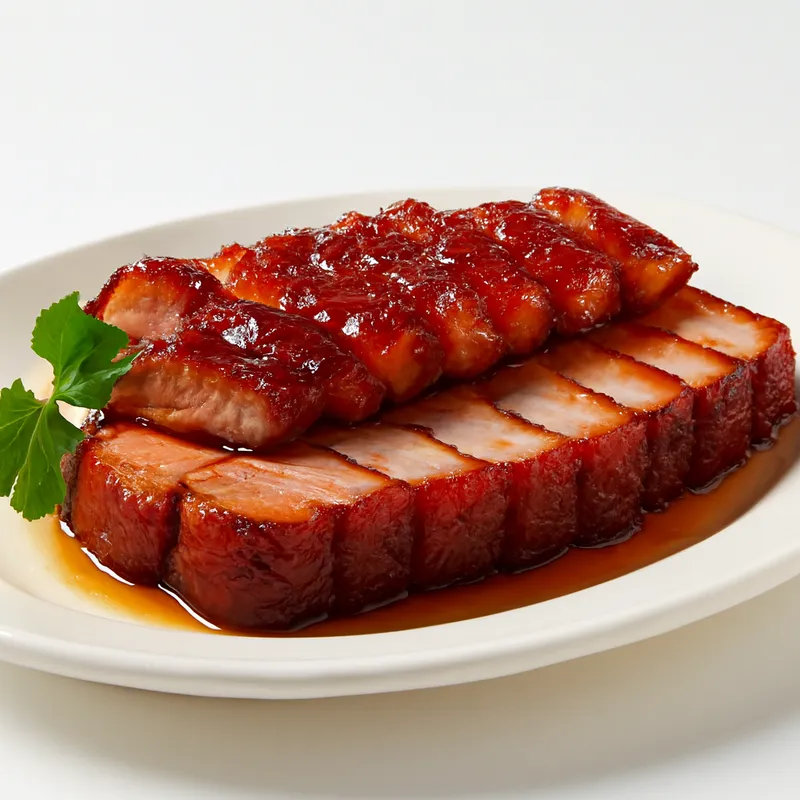
Cantonese barbecued pork marinated in a sweet-savory glaze of honey, hoisin, five-spice, and fermented bean curd, roasted until caramelized.




From Cantonese siu mei (烧味) roasting tradition, formalized in Guangzhou roast-meat shops by the late Qing era (mid-19th century). The name 叉烧 ("fork-roasted") evolved from an older method called 插烧 ("insert-roasting"): the prized loin of a whole roast pig was so limited (only two strips per pig) that cooks took to skewering several loin strips together on forks over open fire, and 插烧 gradually became 叉烧. The vertical hang is what lets fat drip off and creates the dish's defining edge char.
Red-lacquered Cantonese roast pork, hung in shop windows since Qing-dynasty Guangzhou. The maltose-and-fermented-bean-curd glaze is what gives it the candy edge.
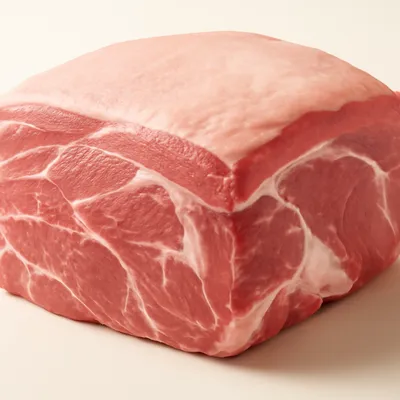
Strips of pork — preferably shoulder with a fat seam, not loin — hung in long pieces, lacquered red-mahogany, with charred-black edges where honey caramelized hardest. Sliced across the grain into thumb-thick pieces and laid over rice. Sweet first, then five-spice and fermented-bean-curd funk underneath, then a clean fat finish. The black edges are the prize, not a flaw.
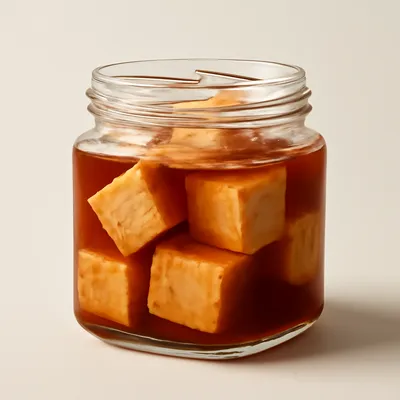
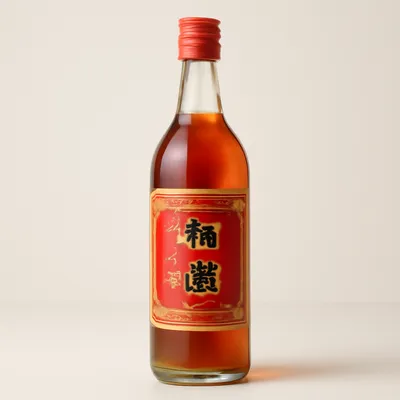
The marinade's fermented red bean curd (南乳, nán rǔ) is the load-bearing umami most home recipes substitute or skip; without it, char siu tastes like sweet teriyaki. Honey is brushed on only in the last 5 minutes of roasting — added earlier it burns to bitter carbon before the meat finishes. Proper char siu is shoulder with marbling; loin char siu, common in Western Chinese restaurants, dries out and misses the whole point.
Variations
Lean (sau mei) vs fatty (fei sau) cuts; Hong Kong version uses red yeast rice for color; Singapore-Malaysian char siu runs sweeter; Cantonese siu yuk (roast belly) is the crackling cousin.
On the Palate
Where Char Siu sits in the Chinese flavor cloud
Nail the shoulder cut plus red fermented bean curd and a late honey glaze: shoulder marbling keeps it juicy, the 南乳 carries the savory backbone, and honey brushed only at the end gives lacquer instead of bitter char.
Ingredients



How it's made
5 steps · 43 min active + 8 hours waiting
- 15 min
Pierce the pork shoulder thoroughly with a fork. This allows the marinade to penetrate deeply, ensuring a flavorful roast.
Watch outJab the fork in deep and all over; you want channels for the marinade, not just surface pokes.
- 23 min
Combine soy sauces, hoisin sauce, honey, and Chinese five spice in a bowl to create a rich marinade. The mixture should be glossy and aromatic.
- 35 min
Coat the pork strips evenly in the marinade. Cover and refrigerate for at least 8 hours to allow flavors to develop.
Watch outAfter a full overnight the meat looks deep red all the way through, not just coated on the outside.
- 410 min
Preheat your oven to 230°C (450°F). Hang the marinated pork on metal hooks or lay them on a rack, ensuring they are well-spaced.
- 520 min
Roast for 20 minutes, basting twice with the marinade. The pork should develop a deep red-brown glaze and be cooked through.
Watch outPull it when the surface is deep red-brown with sticky, slightly charred edges; that caramelized edge is the point.