


Hokkaido and the Sanriku coast have eaten raw abalone since at least the Jomon period — middens in Aomori show abalone shell layers thousands of years old. Awabi was prized enough to feature in Heian-era court tribute (8th–12th century). The modern thin-slice sashimi presentation is a Meiji-onward refinement; before that, raw abalone was more often pounded or scored to break the muscle.
Aomori's Jomon middens have abalone shell layers thousands of years old, and awabi shows up in Heian court tribute (8th–12th c.). The chew is paramyosin — slice on a hard bias against the grain or you get leather.
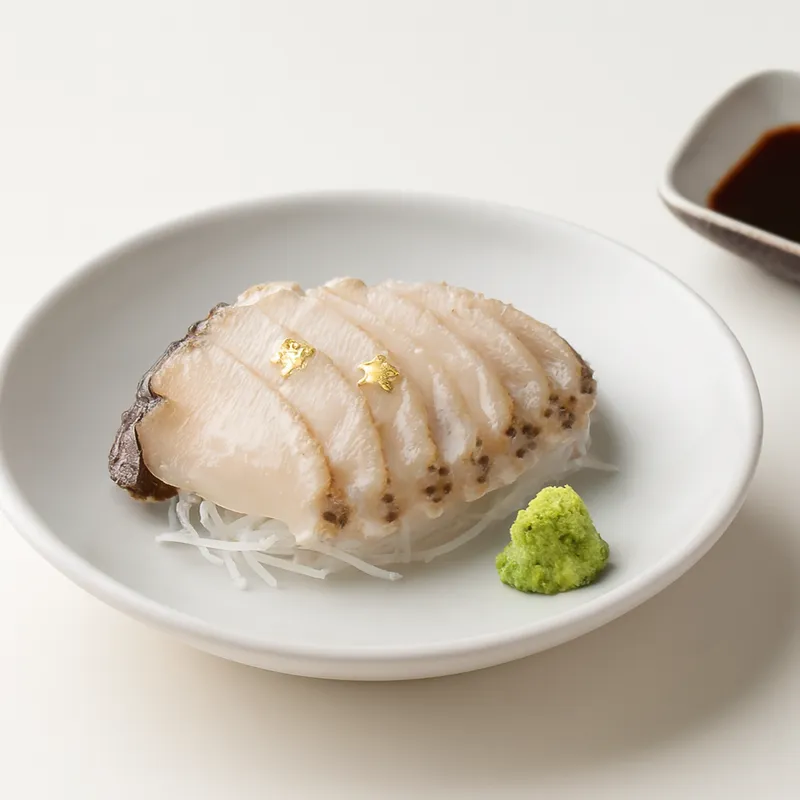
Translucent slivers of raw abalone fanned on a chilled plate, sometimes returned to the cleaned shell. The texture is the dish: a clean snap that turns to slow chew, almost rubbery, with a faint sweet-mineral seawater taste. Soy and wasabi on the side; some chefs serve with the liver pounded into a green-black paste. If it's soft and slimy, it was sliced too far ahead — abalone toughens on the cut over minutes.
Abalone's muscle is dense with paramyosin, a protein that makes it tougher than fish flesh and drives the chew. Slicing on a strong bias against the grain shortens the fibers; without that, the slice is leather. Live abalone is preferred — the foot's color shifts from pale beige to faint green within an hour of death as enzymes break down, and the texture turns mealy fast.
Variations
Kuro-awabi (black, prized for sashimi); megai-awabi (gold, sweeter, often steamed); ezo-awabi (the Hokkaido cold-water cousin); the liver pounded into kimo-shoyu is a Sanriku specialty; mizugai is the chilled-on-ice Iso-ryori service.
- ·Uses abalone instead of fish
- ·Hokkaido specialty
On the Palate
Where Abalone Sashimi sits in the Japanese flavor cloud
Everything rides on the slice: abalone muscle is packed with paramyosin, so cut it thin on a hard bias against the grain to shorten the fibers — slice with the grain or too thick and you're chewing leather.
Ingredients
How it's made
4 steps · 15 min
- 15 min
Carefully clean the abalone by scrubbing the shell under cold running water to remove any debris. Gently pry the abalone meat from the shell using a spoon, being cautious not to damage the flesh.
Watch outEnsure the abalone is thoroughly cleaned to avoid any grit in the final dish.
- 23 min
Trim away the dark edges and any viscera from the abalone meat. Rinse the cleaned abalone under cold water and pat dry with a paper towel.
Watch outRinse and pat completely dry after trimming — surface water thins the soy and makes the slices slip and taste washed-out.
- 35 min
Slice the abalone thinly into bite-sized pieces. Arrange the slices on a chilled platter, fanning them out for an elegant presentation.
Watch outFan the slices onto a well-chilled plate; the cold keeps the flesh firm and crisp right up to serving.
- 42 min
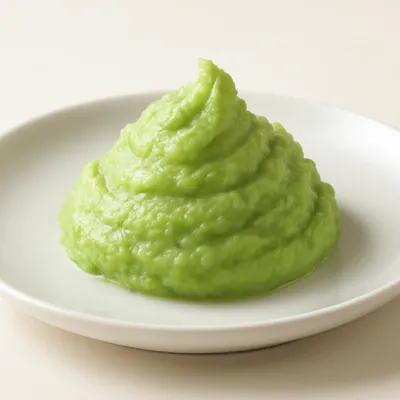
Serve the abalone sashimi with soy sauce, a dab of wasabi, and a wedge of lemon on the side for diners to adjust the flavor to their preference.
Archive tool suggestions — not reviewed
These legacy suggestions have not been evidence-reviewed and are not presented as required tools.