
Izumo soba is the regional buckwheat noodle of the Izumo and Matsue area of Shimane, counted among Japan's three great soba alongside Iwate's wanko soba and Nagano's Togakushi soba. What sets it apart is the flour: the whole buckwheat groat is milled husk and all (hikigurumi), so the noodles come out dark, coarse-textured, and far more aromatic and robust than pale refined soba. It is eaten in two signature local forms. Warigo soba is served chilled, the noodles divided among small stacked round lacquer tiers; you pour the tsuyu and condiments straight onto the top tier, eat down, and tip what is left into the next. Kamaage soba is the winter form: the just-boiled noodles are served undrained in their own cloudy, starchy cooking water, with hot tsuyu stirred in at the table.



Soba culture took root around Izumo and Matsue after 1638, when Matsudaira Naomasa was transferred from Matsumoto in Shinano (present-day Nagano) to become the first Matsudaira lord of the Matsue domain. He is recorded to have brought soba artisans from Shinano with him, and from this the noodle spread through the Sanin region; the date and the lord are documented both in Japanese encyclopedic accounts of Izumo soba and in records of the Matsue domain, and the local soba associations have since fixed 11 February 1638 as Izumo Soba Day. The cold Okuizumo uplands, where buckwheat tolerates poor soil and a short growing season, became the supplying district. The two serving forms carry their own geography: the stacked-tier warigo is said to have originated in Matsue, where retainers reportedly carried soba out to the fields in tiered boxes, while the undrained kamaage form is associated with the soba stalls and culture around Izumo Taisha and its temple-and-shrine gatherings.
The noodles are dark grey-brown and noticeably rougher and firmer than refined soba, with a deep, almost nutty toasted-buckwheat aroma that comes from milling in the husk. In the warigo form they are cold and taut, each tier sharpened by the dark, slightly sweet tsuyu poured directly over them and the bite of grated daikon, negi, and nori. Kamaage is the opposite mood: soft, warm, and slippery, the noodles bathed in their own milky, starch-thickened broth that turns the tsuyu mellow and clinging.
Milling the buckwheat hikigurumi, husk and all, is the whole character of the noodle. The hull and the layer just beneath it carry color, aroma compounds, and rutin, so whole-groat flour yields a dark, strongly scented, mineral-tasting noodle, at the cost of the gluten-free dough being harder to bind. Buckwheat has no gluten, so the strands hold together only through gelatinized starch and, usually, a wheat-flour binder, which is why the dough is worked with care and the noodles are comparatively short and tender. Boiling gelatinizes that starch and sets the strand; in warigo the noodles are then shocked in cold water, which firms the surface starch and gives the taut cold bite. Kamaage skips the rinse entirely: serving the noodles in their unstrained boiling water keeps them hot and leaves the leached surface starch in the liquid, so the cooking water itself thickens into a soba-yu that softens the tsuyu and carries the buckwheat aroma. The tsuyu's savor is a dashi of kombu and bonito, whose glutamate and inosinate combine for an umami greater than either alone.
Variations
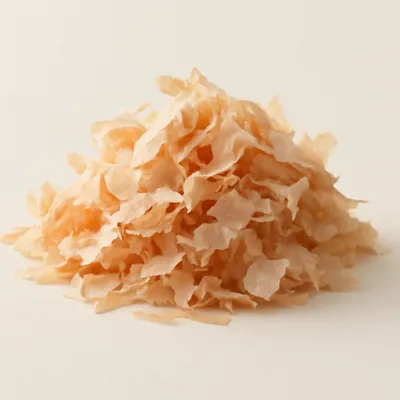
Warigo and kamaage are the two defining local forms, but Izumo soba also appears as ordinary hot kake soba and as cold zaru-style. Tiers in a warigo set are typically three, sometimes more, and the condiments vary by shop: grated daikon, chopped negi, nori, bonito flakes, sometimes a raw quail egg or grated wild yam. The tsuyu tends to run darker and stronger than Kanto soba broth. Buckwheat purists prize ju-wari (pure buckwheat) noodles, while most shops cut the flour with some wheat for workability; the surrounding Sanin region has its own buckwheat traditions, and Izumo soba is frequently eaten on festive and New Year occasions.
On the Palate
Where Izumo Soba sits in the Japanese flavor cloud
Ingredients
Serves 2
How it's made
7 steps · 25 min active + 15 min waiting
- 112 min
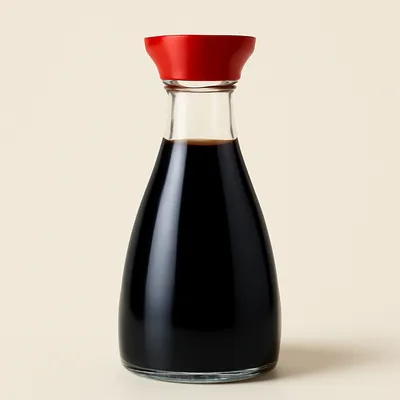
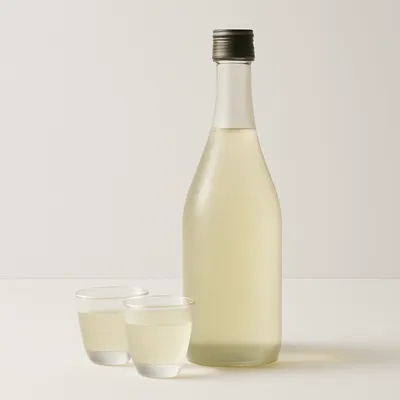
Make a kombu-and-bonito dashi, then combine it with soy sauce, mirin, and a little sake and bring to a brief simmer to make the tsuyu; cool it for warigo or keep it hot for kamaage.
- 26 min
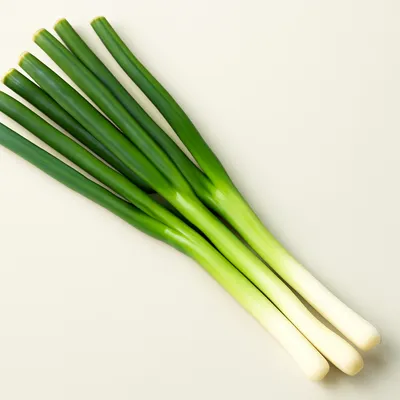
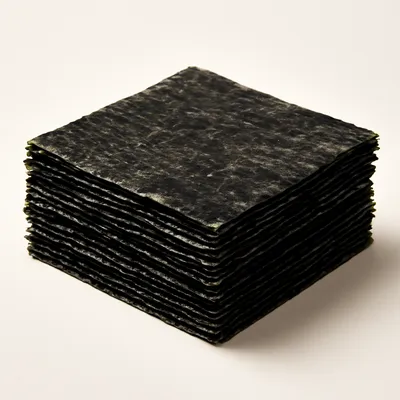
Prepare the condiments: grate daikon, finely slice negi, shred nori, and have bonito flakes ready.
- 35 min
Bring a large pot of water to a rolling boil.
- 45 min
Cook the whole-buckwheat soba in plenty of fast-boiling water until just done, stirring gently so the tender strands do not break.
Watch outBoil the whole-buckwheat soba just to done, stirring gently — with no gluten the strands are short and fragile, so rough boiling or overcooking breaks them apart.
- 54 min
For warigo: lift out the noodles, shock them in cold water, drain, and divide among the stacked round lacquer tiers; serve with tsuyu and condiments poured over the top tier.
Watch outFor warigo, shock the drained noodles in cold water at once — the cold plunge stops the cooking and tightens them to a firm, springy bite.
- 63 min
For kamaage: skip the rinse entirely and ladle the noodles into bowls together with their cloudy cooking water, then stir in hot tsuyu and condiments at the table.
- 75 min
Eat warigo top tier down, tipping leftover tsuyu into the next tier; drink the soba-yu broth at the end of a kamaage bowl.
Archive tool suggestions — not reviewed
These legacy suggestions have not been evidence-reviewed and are not presented as required tools.


