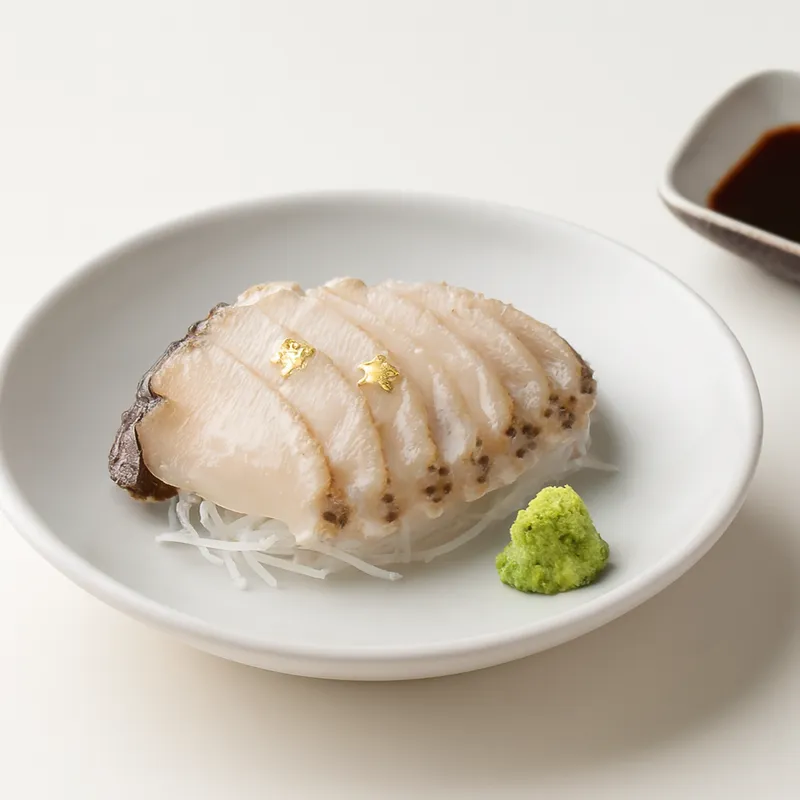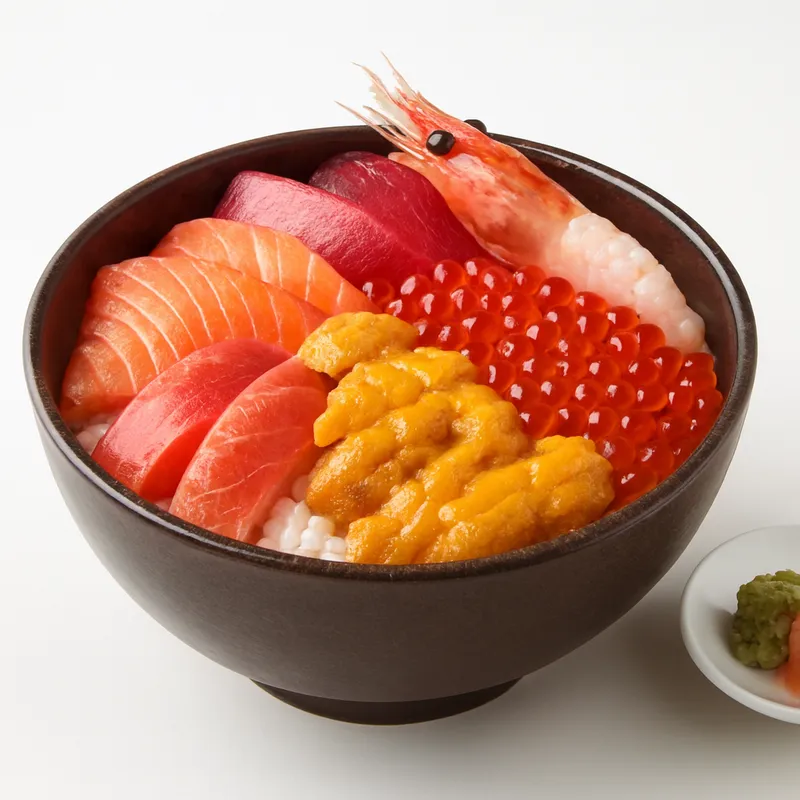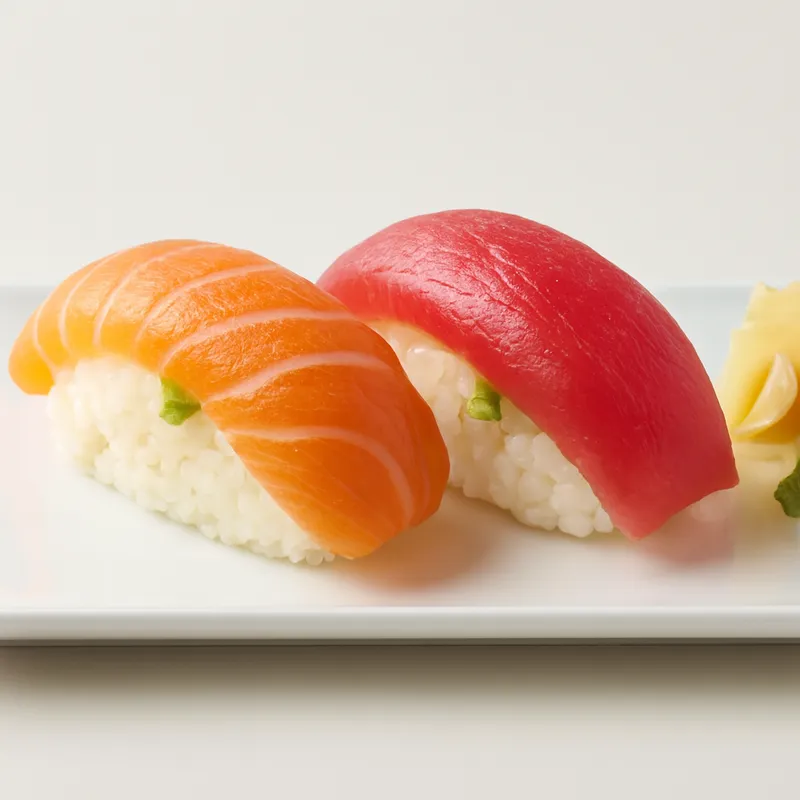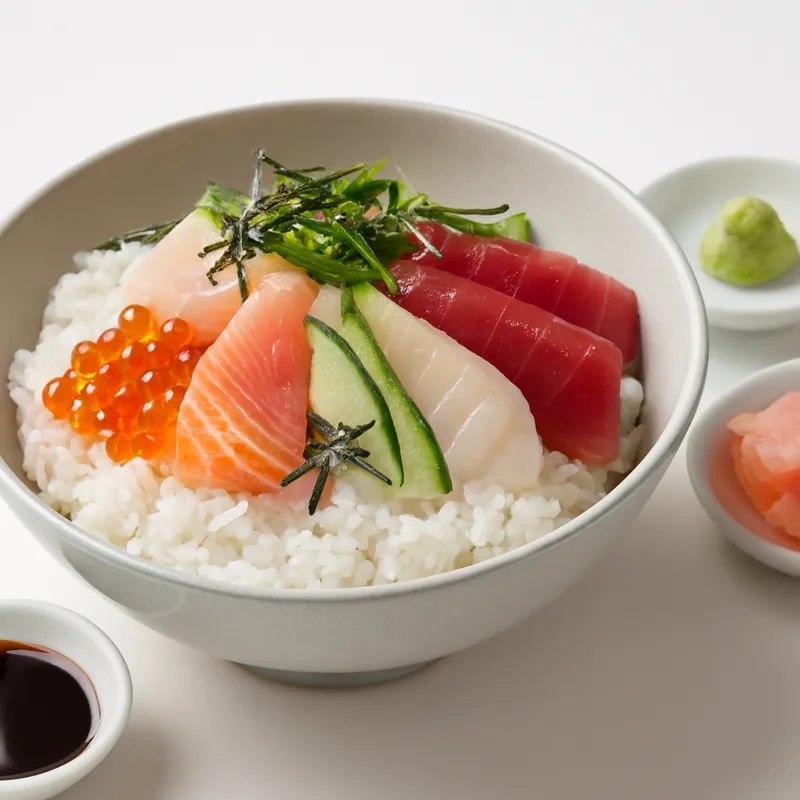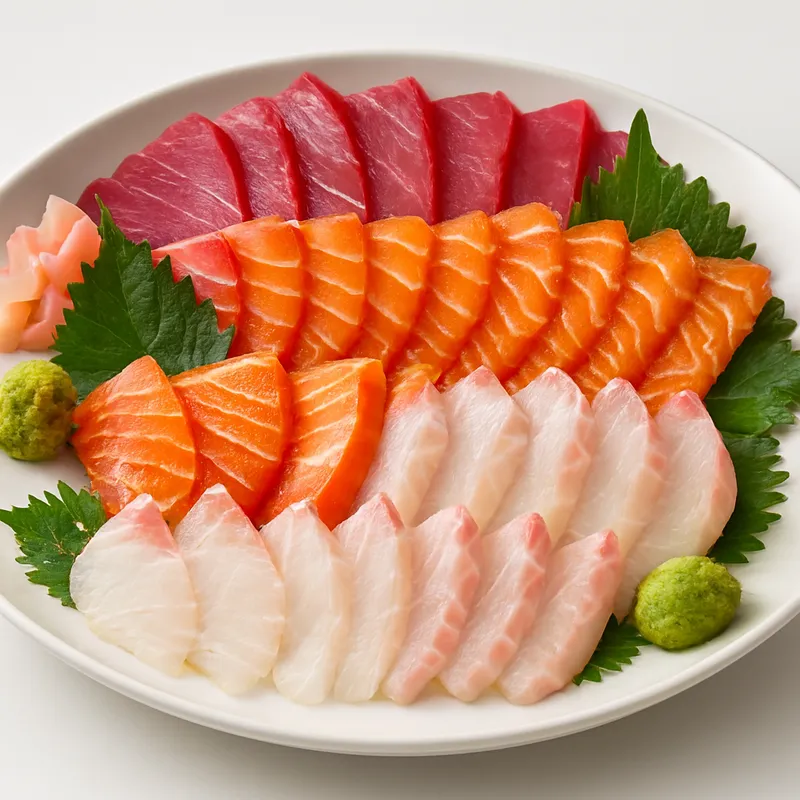
Pristine slices of raw fish and seafood served with soy sauce, wasabi, and pickled ginger.
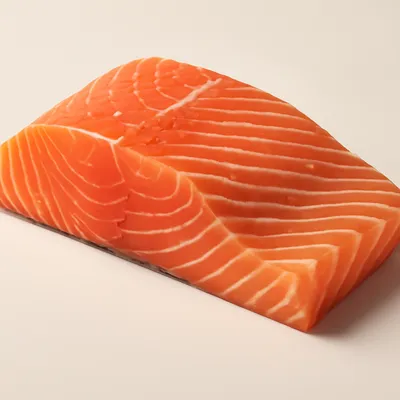
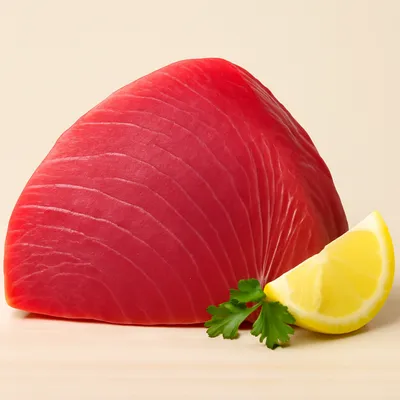

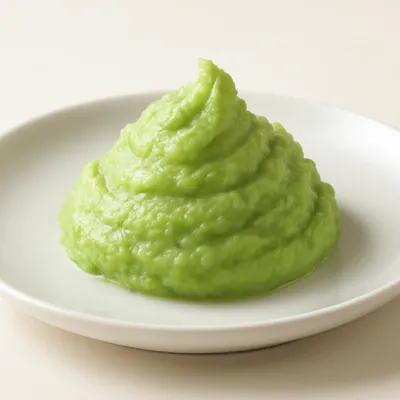


The word appears in Muromachi-period texts (15th century) referring to sliced raw fish identified by the tail or fin pinned to it (sashi = pierce, mi = body). Refrigeration and rail transport in the Meiji era (late 19th century) moved sashimi from coastal Edo to inland Japan; the modern Tsukiji-grade supply chain dates to the 1935 market opening. Pre-refrigeration versions leaned heavily on vinegar and salt cures.
A flavor-extraction technique disguised as a dish. The yanagiba's single-bevel cut is what makes the difference.
Cold raw fish on a small ceramic plate, cut at a fixed angle so each slice has a clean glassy surface. Soy sauce and a smear of wasabi go on the fish, not the rice — there is no rice. Pickled ginger between bites resets the palate. The good cut yields under tooth without resistance; if it shreds, the knife was dull or the fish was old.
The cut is the dish. Hira-zukuri (rectangular slabs) for tuna, usu-zukuri (paper-thin) for firm whitefish like fugu or hirame — the angle and thickness adjust for each fish's connective tissue. A single drawing motion of a yanagiba blade severs muscle fiber cleanly; sawing tears the cell walls and the fish weeps fluid on the plate. Wasabi belongs on the fish because soy alone strips flavor.
Variations
Tataki sears the surface; nikiri-soy-glazed for Edomae; Tosa style adds yuzu and grated daikon.
On the Palate
Where Sashimi sits in the Japanese flavor cloud
Cut with one clean draw of a sharp blade, pulling the knife through in a single stroke — sawing back and forth tears the muscle fibers, and the fish weeps fluid and turns mushy on the plate.
Ingredients

How it's made
3 steps · 17 min
- 110 min
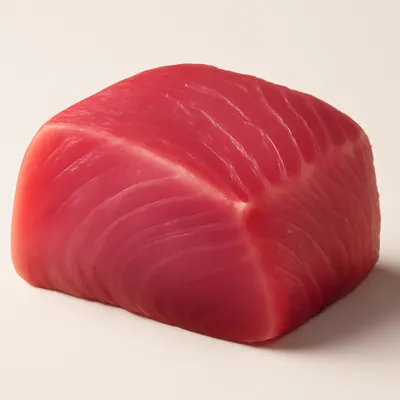
Select the freshest fish available, such as salmon and yellowfin tuna. Use a sharp knife to cut the fish into hira-zukuri slices, about the size of a domino, ensuring even thickness for a uniform texture.
Watch outOne unbroken pull per slice, all cut to an even domino thickness so they eat the same; a glassy cut face means you didn't tear it.
- 25 min
Arrange the slices artistically on a chilled plate, creating a visual feast that highlights the fish's natural colors and textures.
Watch outLay them on a well-chilled plate — a cold surface keeps the fat firm and the slices holding their edge instead of going slack.
- 32 min
Serve immediately with small dishes of soy sauce and wasabi on the side. Allow diners to customize their dipping to taste.
Watch outServe the moment it's plated; raw fish left sitting warms up, loses its sheen and starts to weep.
Archive tool suggestions — not reviewed
These legacy suggestions have not been evidence-reviewed and are not presented as required tools.