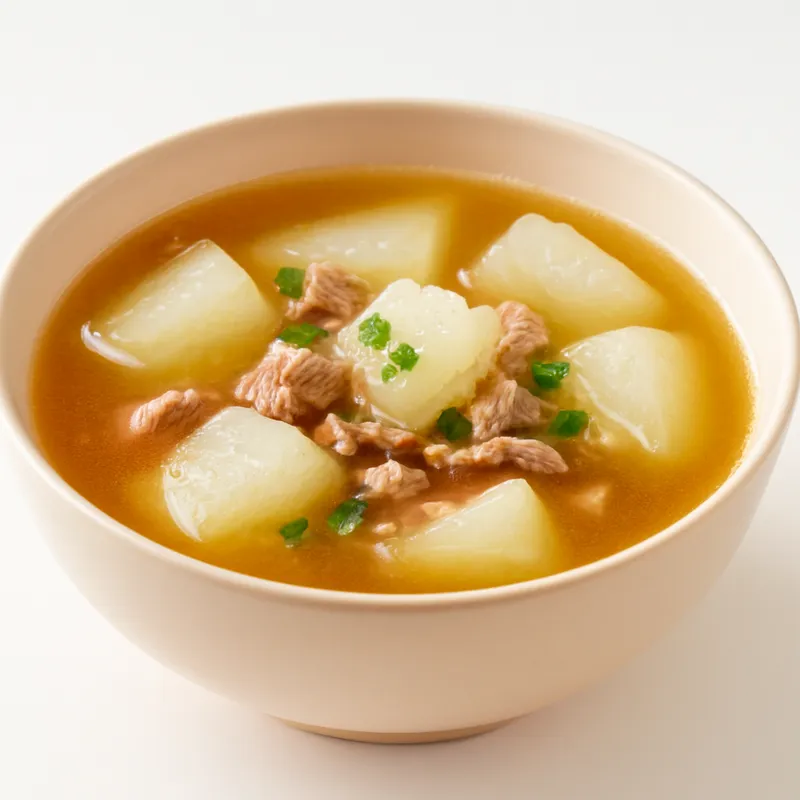
A whole deboned duck stuffed with Sichuan preserved vegetables and pork, then slow-braised in a sealed clay pot with aged mother soy sauce — the first-draw of Suzhou's autumn-cured soy — for three hours until the meat yields to the touch but the bird holds its shape.


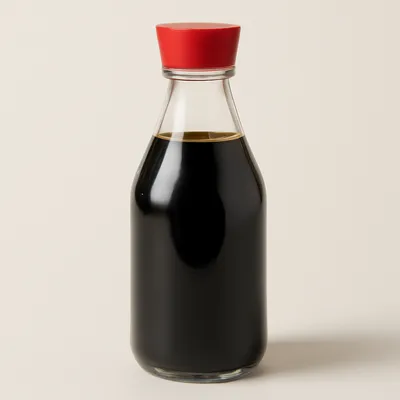

The dish traces to Lake Taihu's pleasure-boat cuisine tradition of the late Qing era. Boatmen cooked whole ducks in clay pots aboard decorated vessels for literati and officials touring the lake — diners simply called the result 'boat duck' (船鸭). Suzhou restaurant cooks later refined it: they deboned the duck while keeping the skin intact, stuffed the cavity with Sichuan preserved vegetables, pork slivers, and scallions, and — crucially — replaced generic soy with 母油 (also called 秋油, autumn oil). Qing physician Wang Shixiong's dietary treatise 《随息居饮食谱》 (ca. 1861) describes the production of 秋油: alternating three-伏 solar heat with cool-night exposure, with the first batch drawn in late autumn being the finest — this was called 'autumn oil' or mother oil. Suzhou produced Jiangsu's finest mother soy, and this substitution elevated the boat-cook's clay-pot duck into a canonical Suzhou centerpiece.
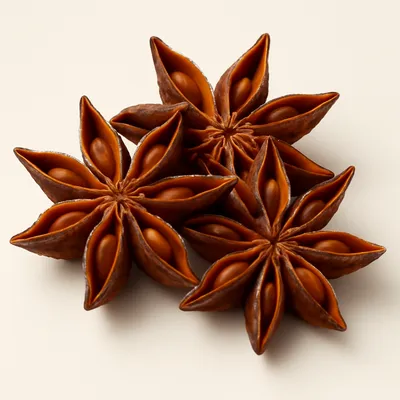
The braising liquid arrives the color of old lacquer, carrying a compound aroma of aged soy, star anise, and rendered duck fat. The meat has surrendered entirely — impossibly tender — yet the skin holds its outline and quivers at the touch. Inside, the preserved vegetables cut the richness with a mineral tang, making one mouthful seamlessly balanced.
The clay-pot 焐 technique maintains the braising liquid at approximately 85–90°C — below a rolling boil — preventing muscle fibers from seizing and toughening while allowing collagen to hydrolyze steadily into gelatin over three hours. This gelatin thickens the sauce and coats every fiber of meat. Mother soy sauce (母油), produced through months of alternating three-伏 solar heat and cool-night exposure, contains a richer profile of low-molecular-weight peptides, organic acids, and Maillard-derived aroma compounds than standard soy; these smaller molecules diffuse through cell membranes more readily during extended braising, penetrating to the bone. The Sichuan preserved vegetables contribute lactic-acid fermentation products that temper duck-fat richness and add an acidic brightness.
Variations
Wuxi versions substitute sweeter local braising sauce for 母油, producing a deeper mahogany color and a more pronounced sweetness. Festive winter variants stuff the cavity with glutinous rice and chestnuts. A simplified stovetop version uses dark soy sauce and extends simmering time to compensate — adequate, but without the layered complexity that months of sun-curing give true mother soy.
On the Palate
Where Boat-Banquet Soy-Braised Duck sits in the Chinese flavor cloud
Ingredients
Serves 4
How it's made
7 steps · 40 min
- 130 min
Debone a 2kg duck completely — keeping skin and outer shape intact — by working a small knife along the bones from the cavity. Pat dry inside and out.
- 215 min
Mix filling: rinse and squeeze 80g Sichuan preserved vegetables dry, combine with 100g seasoned pork slivers and 4 scallion lengths; stuff firmly into the duck cavity, then sew or skewer the opening shut.
- 310 min
Brush the entire duck skin with mother soy sauce (or dark soy sauce); heat oil in a wok and pan-fry the duck, turning, until all sides are deep mahogany and the skin is lightly crisped — 8–10 minutes total.
Watch outPan-fry the skin all over to deep mahogany and lightly crisp — this sets the color and tightens the skin so it holds through the long braise.
- 45 min
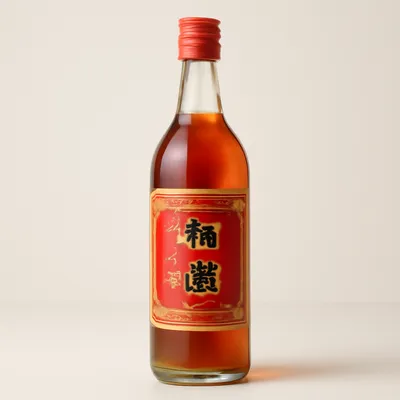
Transfer duck to a clay pot or heavy Dutch oven; add 4 tbsp mother soy sauce, 3 tbsp Shaoxing wine, ginger, star anise, cinnamon stick, and enough water to reach two-thirds up the duck.
- 5180 min
Bring to a boil, then reduce to the lowest possible simmer; cover tightly and braise (焐) for 2.5 to 3 hours, turning the duck once at the halfway point.
Watch outKeep the pot at a lazy 焐 simmer, never a rolling boil — below the boil the collagen melts to gelatin and the meat stays tender; a hard boil seizes the fibers tough.
- 615 min
Carefully lift the duck onto a serving platter; strain the braising liquid into a saucepan and reduce over high heat until it coats a spoon.
Watch outReduce the strained braising liquid over high heat until it coats the back of a spoon — that glossy nap is what lacquers the duck.
- 75 min
Pour the reduced sauce over the duck; garnish with blanched scallion lengths and serve whole, carved at the table.