Tender chicken breast marinated in sour orange and garlic, seared to juicy perfection.


A 20th-century Cuban cafeteria staple — "a la plancha" simply means "on the griddle," a technique of searing on a hot flat metal plate. The dish became a fixture of Havana lunch counters by mid-century as a lighter parallel to bistec de palomilla, using the same mojo marinade and pounding technique on chicken breast. Carried to Miami after 1959 and now standard at nearly every Cuban diner.
Havana lunch-counter staple from the 1950s — boneless breast pounded thin and seared on a 230°C plancha. Sour-orange marinade caps at 30 minutes; longer and the citric acid denatures the protein into chalky rubber.
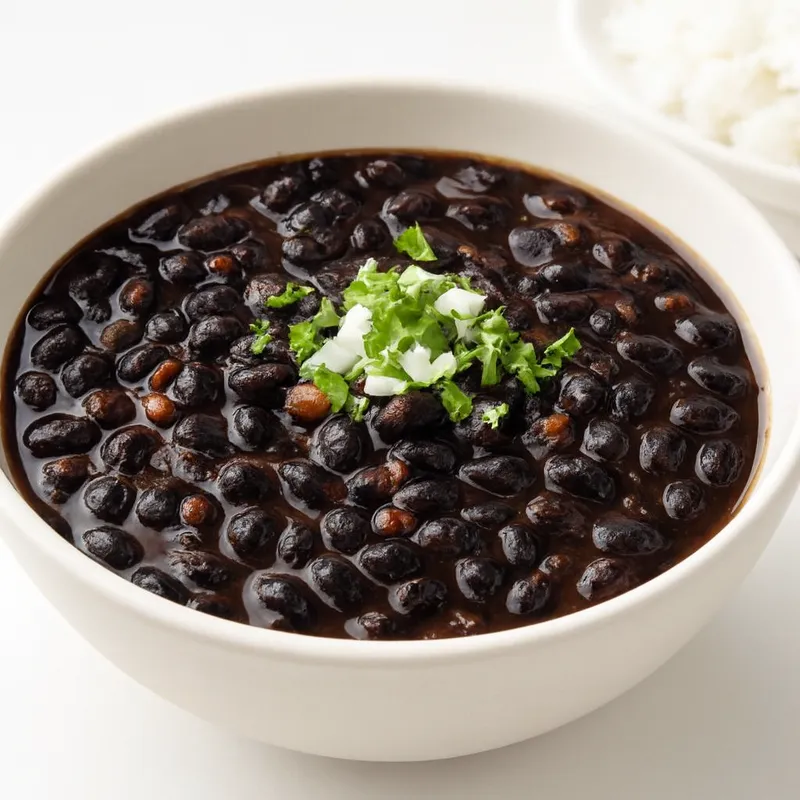
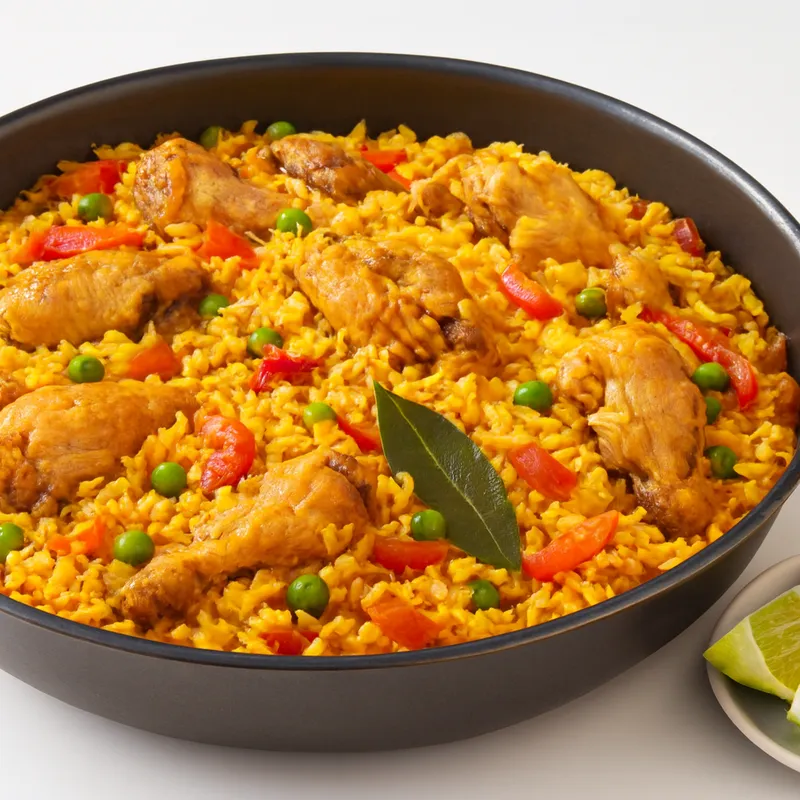
Boneless chicken breast — butterflied or pounded thin — seared on a flat-top griddle until the surface goes mahogany and lightly crusted. Sour-orange-and-garlic mojo carries through. Plate is the standard cafeteria template: white rice, black beans, fried plantains, a wedge of lime. The thin cut means edge-to-edge cooking in 3–4 minutes; longer and breast meat dries out instantly.
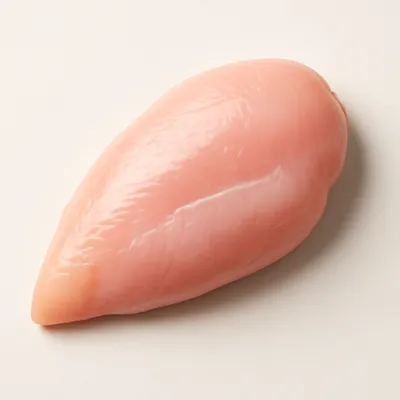
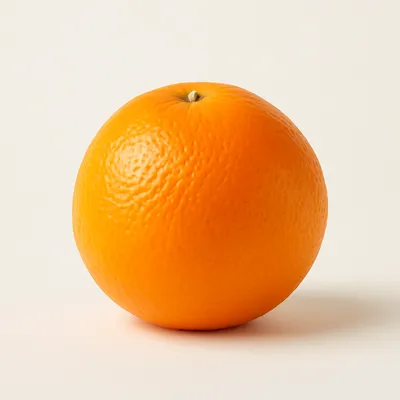
Two technical points. The cut is thin — breast butterflied or pounded to about 1/4 inch — so the meat cooks edge-to-edge before it dries. The marinade leans on sour orange (Seville/bitter orange); when it's unavailable, cooks blend sweet orange and lime juice as a stand-in. Marinating time varies by cook, from roughly 20 minutes up to a few hours, but most avoid going overnight, since the citrus acid gradually softens breast meat and over-long soaking turns the texture mushy. The griddle must be hot enough that the chicken doesn't stick when first pressed down (around 230°C / 450°F); a properly seared piece releases itself once the crust forms, which is the moment to flip.
Variations
Pollo a la plancha (breast, the cafeteria default); bistec de palomilla (the beef parallel using the same mojo and pound); pechuga empanizada (breaded version); Miami exile diners run the dish with maduros instead of tostones beside it.
On the Palate
Where Pollo a la Plancha sits in the Cuban flavor cloud
Ingredients

How it's made
5 steps · 35 min
- 126 min
Marinate chicken breast in sour orange juice, minced garlic, cumin, and oregano.
Watch outDon't push the marinade past a couple of hours — the citrus acid keeps softening the breast and long soaking turns it mushy.
- 22 min
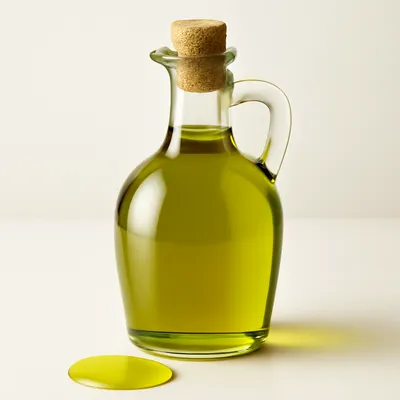
Heat olive oil in a skillet over medium-high heat.
- 32 min
Add sliced onions and cook until soft.
- 44 min
Remove onions and sear chicken until cooked through.
Watch outGriddle should be hot enough the chicken doesn't stick when you press it down; you want a golden crust, not steamed grey meat.
- 51 min
Serve chicken topped with sautéed onions.
Archive tool suggestions — not reviewed
These legacy suggestions have not been evidence-reviewed and are not presented as required tools.
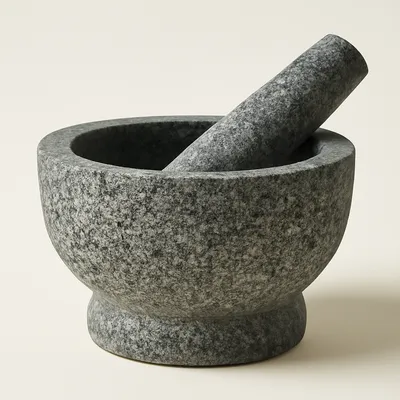
The simplest tool in any kitchen: a heavy bowl and a club to bash things in it. Different cuisines use different stones — Thai cooks pound green papaya in a tall granite mortar (krok hin); pesto Genovese requires the soft-pored Carrara marble; Indian masalas grind down on rough basalt. The bash-don't-cut motion releases volatile oils that a blade keeps sealed in the cell wall.

A heavy flat griddle, often 40-60 cm across, made from cast iron or chrome-plated steel, used in Spanish (and southern French) cooking for fast searing of seafood, meats, and vegetables. The dense metal holds 250-280°C steady; food is laid directly on the surface (no oil) and gets a deep crust without overcooking. Restaurant planchas are gas-or-electric flat-tops; the home version sits across two stovetop burners.