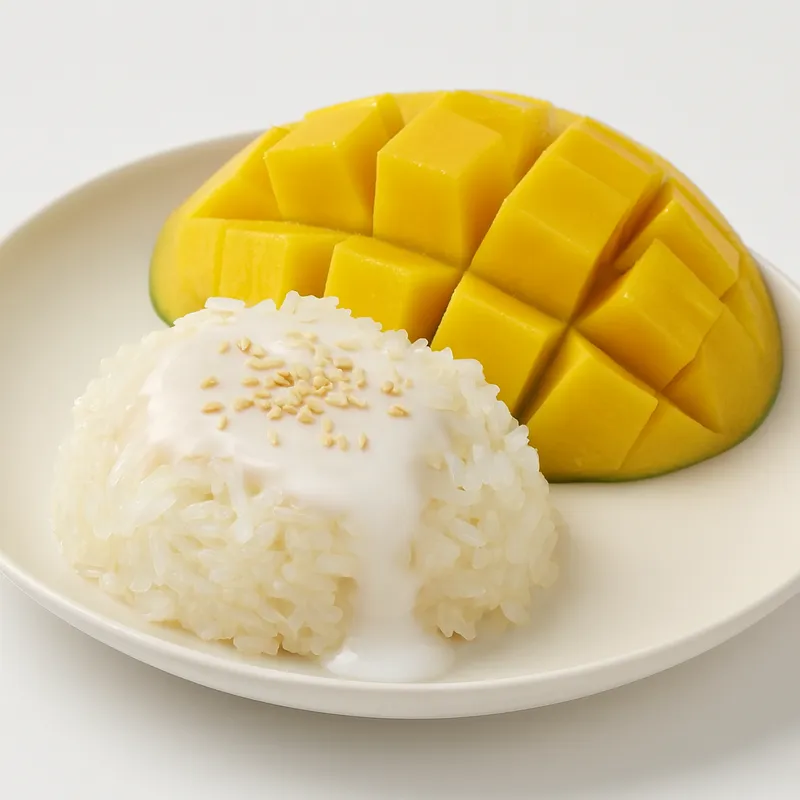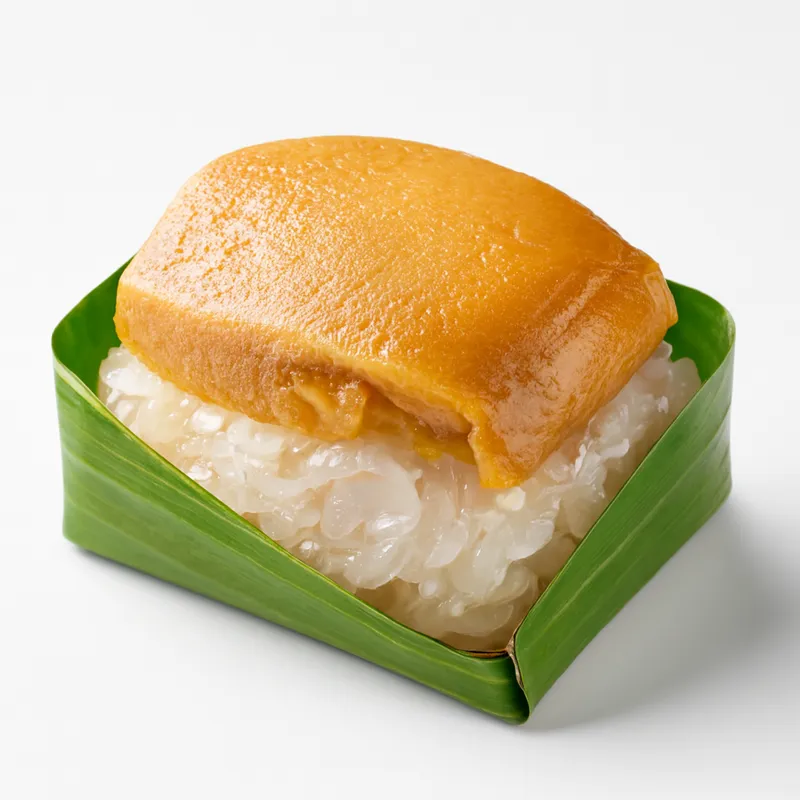
Thai dessert of sweet coconut sticky rice topped with a rich egg custard steamed in banana leaf cups.



A central Thai dessert whose egg custard layer is widely traced to Portuguese influence in 17th-century Ayutthaya. The technique of cooking sweetened egg-yolk-and-sugar desserts is credited to Maria Guyomar de Pinha, of Portuguese-Japanese descent, who ran the palace kitchens and reworked Portuguese custards with local coconut milk and palm sugar; 「sangkhaya」 is said to be the name Thai cooks gave the dish because they could not pronounce 「custard」. The technique of steaming custard inside fruit shells (pumpkin, young coconut) is older; the banana-leaf cup version is the street-friendly format that emerged for markets.
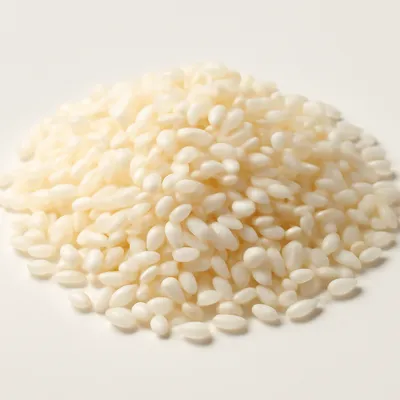
Khao niao sangkhaya — glutinous rice steamed in bamboo, soaked in coconut cream while hot, topped with pandan-egg custard. The mango version (khao niao mamuang) is the export hit; custard is the year-round one.
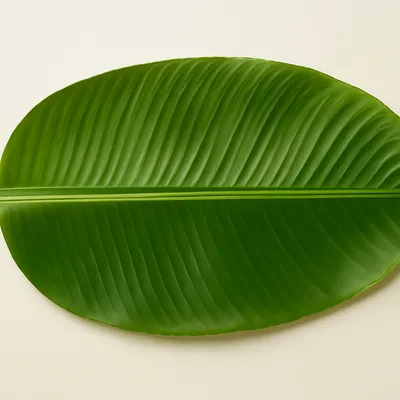
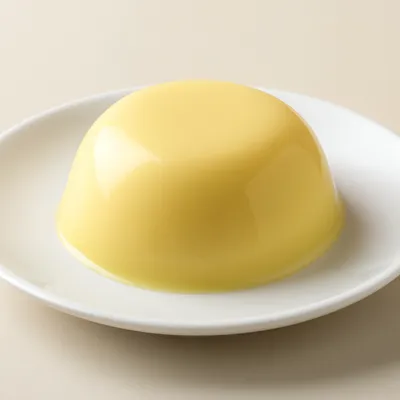
Khao niao sangkhaya: a small cup-shaped pleat of banana leaf holding a layer of coconut sticky rice topped with a steamed custard of egg yolk, palm sugar, and coconut milk. The custard sets soft like a panna cotta, the rice underneath stays warm and slightly salted. Eat with a spoon, scooping rice and custard together. The banana leaf perfumes both.
Steaming, never baking, is the rule. Dry oven heat would scorch the palm sugar and split the egg; gentle steam at 100°C lets the custard set just past liquid without overcooking. The coconut milk in the rice underneath must be salted — the savory base under sweet custard is the actual Thai signature. Western「coconut rice pudding」renderings skip the salt and lose half the dish.
Variations
Khao niao mamuang (mango, April-June season); khao niao sangkhaya (custard, year-round); Northern Thai version uses black glutinous rice; Lao naem-khao-style cooks add toasted sesame and salt.
- ·Topped with rich egg custard, steamed in banana leaf cups
On the Palate
Where Sticky Rice with Custard sits in the Thai flavor cloud
Ingredients





How it's made
4 steps · 50 min
- 15 min
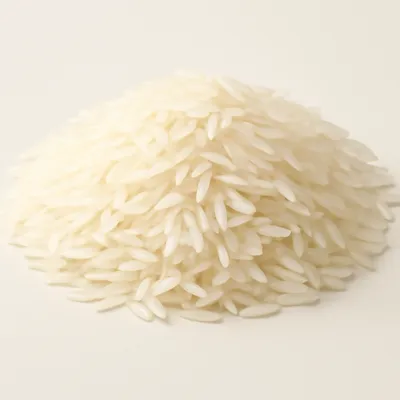
Rinse the sticky rice under cold water until the water runs clear. Drain well and set aside. This ensures the rice cooks evenly without excess starch.
Watch outEnsure all excess water is drained; too much water can make the rice mushy.
- 230 min
Place the sticky rice in a steamer lined with pandan leaves. Steam over medium heat for 25-30 minutes until the rice is tender and slightly translucent. The pandan leaves will infuse a subtle fragrance.
Watch outThe rice is done when the grains turn slightly translucent and squash soft between two fingers — chalky centers mean it needs longer.
- 35 min
In a saucepan, combine coconut milk and sugar over low heat. Stir gently until the sugar dissolves and the mixture is smooth and fragrant.
Watch outDo not let the coconut milk boil; it should only be warmed to dissolve the sugar.
- 410 min
Whisk the eggs in a bowl and gradually add the warm coconut milk mixture, whisking continuously to avoid curdling. Return the mixture to the saucepan and cook over low heat, stirring constantly until thickened to a custard consistency.
Watch outStir constantly over low heat and stop the instant it coats the spoon and leaves a trail — a second too long and it curdles.
Archive tool suggestions — not reviewed
These legacy suggestions have not been evidence-reviewed and are not presented as required tools.

Hand-held wire loop tool for beating eggs, whipping cream, emulsifying dressings, and incorporating air into batters. Balloon whisks (large round head) for whipping cream and meringues; French whisks (narrow tear-drop) for sauces in pots; flat whisks (gravy) for pan sauces. Stainless steel is universal; silicone-coated for non-stick pans.

Round metal pot, 14-26 cm diameter, with vertical walls and a long handle, designed for sauces, soups, oatmeal, rice, boiled vegetables. The vertical walls minimize evaporation (vs. a sauté pan). Sizes: 1 qt for melting butter, 2-3 qt for sauces, 4 qt for soups. Stainless-steel-clad aluminum or copper is best for conduction; cast-iron is too thick for delicate sauces.