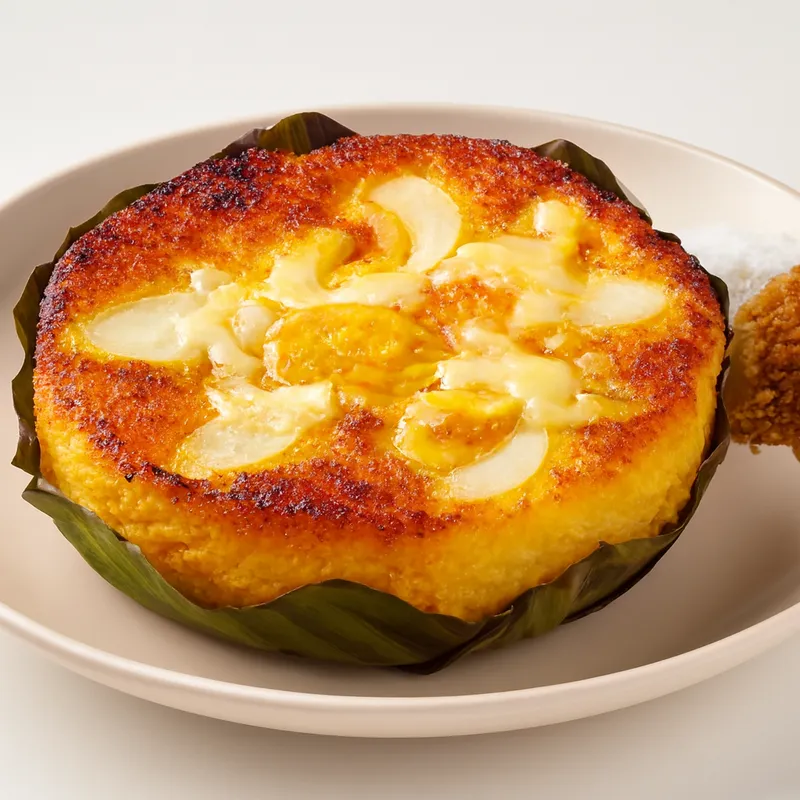
Filipino rice cake baked in banana leaves with salted egg and cheese, a beloved Christmas morning treat.





Tied to Simbang Gabi, the nine-day pre-Christmas dawn-mass cycle introduced by Spanish friars in 1669 in the Philippines. Bibingka was the food sold outside churches before sunrise — warm, portable, and starchy enough to last until breakfast. The clay-pot-and-banana-leaf method predates the Spanish; the rice-flour cake itself adapted Mexican atole and corn-cake traditions arriving via the Manila galleon trade.
Tied to Simbang Gabi, the nine-day pre-Christmas dawn-mass cycle introduced by Spanish friars in 1669. Coal heat top and bottom, banana leaf charring underneath — modern oven versions miss the leaf-smoke entirely.
A round cake of rice flour and coconut milk baked in a clay pot lined with a banana leaf, top and bottom heated by hot coals. Slices of salted duck egg and melting cheese sit on top; brushed with butter, sprinkled with grated coconut and sugar before serving. Eaten warm, with salabat (ginger tea), in the cold pre-dawn after Simbang Gabi mass.
Top-and-bottom coal heat, not oven heat, is what gives bibingka its signature: the banana leaf chars on the bottom (perfuming the cake with leaf-smoke), while coals above bronze the top without drying out the wet batter. Modern oven versions miss the leaf-smoke note entirely. Galapong — fermented rice batter — gives the slight tang that store-bought rice flour cannot.
Variations
Bibingka especial (with salted duck egg and quezo de bola); bibingka galapong uses fermented rice batter for the tang; royal bibingka of Vigan, Ilocos goes denser and cheese-heavy; cassava bibingka swaps rice flour for grated cassava entirely.
On the Palate
Where Bibingka sits in the Filipino flavor cloud
Cook it with heat from both top and bottom, not from a single oven wall — coals under the banana leaf char and perfume the base while coals above bronze the top, and that two-sided heat is the whole point of bibingka.
Ingredients



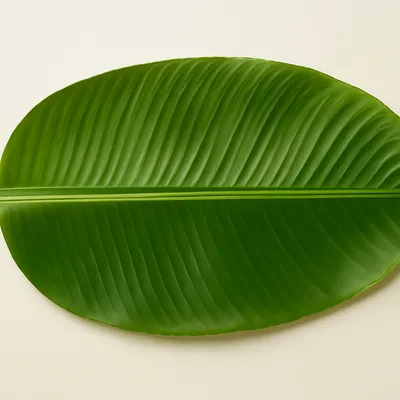


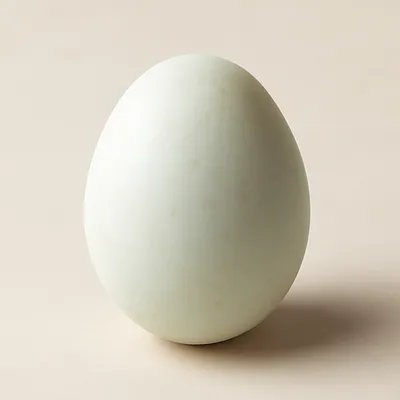
How it's made
5 steps · 40 min
- 15 min
In a large bowl, combine rice flour, coconut milk, sugar, and eggs. Stir until the mixture is smooth and free of lumps.
Watch outBatter should ribbon off the whisk smooth and glossy with zero lumps before it goes anywhere near the pan.
- 25 min
Line a shallow terra cotta bowl or cake pan with banana leaves, ensuring they overhang slightly. Pour the batter into the prepared pan, spreading it evenly.
Watch outMake sure the banana leaves are properly lined to prevent sticking.
- 35 min
Top the batter with slices of duck egg and cheese. Cover with another layer of banana leaves and place the pan over a bed of hot coals, covering with a metal sheet topped with more coals.
Watch outYou want live coals both under the pan and on the metal lid above — even heat top and bottom, not fierce on one side.
- 420 min
Bake until the bibingka is set and slightly charred on both sides, about 20 minutes. The aroma of toasted banana leaves should be noticeable.
Watch outToasted-banana-leaf smell rising is your doneness cue; the top should be bronzed and the center just set, not wet.
- 55 min
Remove from heat and let cool slightly. Brush with butter and sprinkle with sugar before serving.
Archive tool suggestions — not reviewed
These legacy suggestions have not been evidence-reviewed and are not presented as required tools.