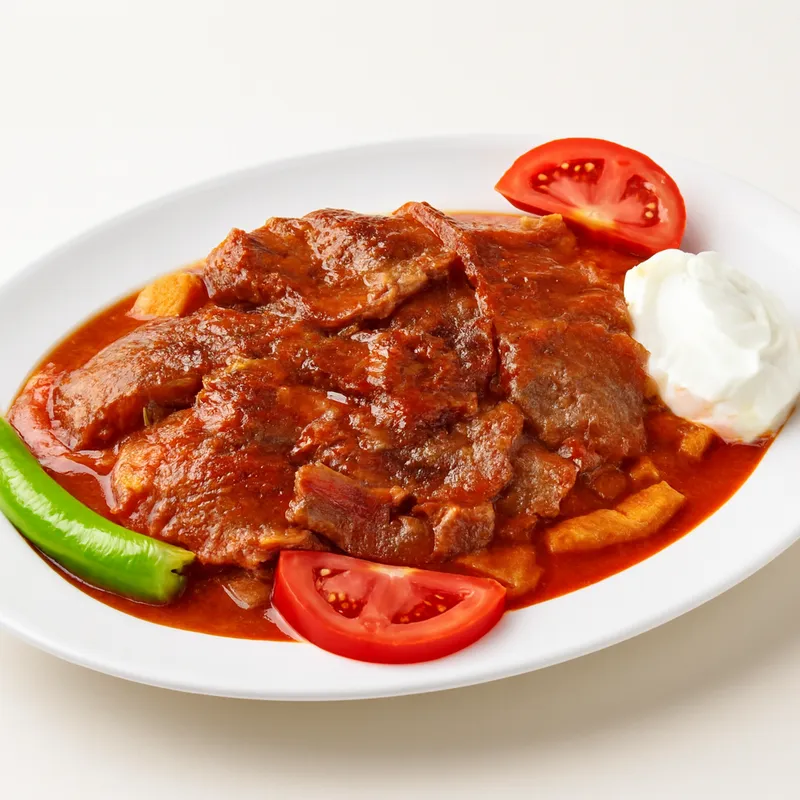
Southeast Turkish stuffed bulgur shells — fine bulgur kneaded into a paste with semolina, shaped around a spiced ground-lamb-and-walnut filling into football-shaped torpedoes, then deep-fried or boiled — the iconic Anatolian-Levantine kibbeh in its Turkish form.
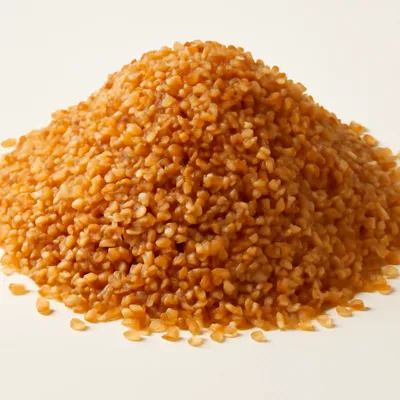

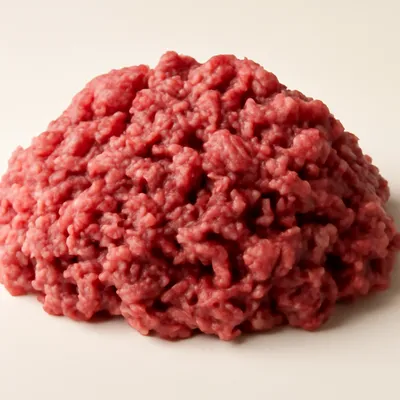


İçli köfte (literally 'stuffed meatball,' from iç = inside) is the Turkish name for what neighboring Levantine and Arabic cuisines call kibbeh or kubbeh — a fundamental Middle Eastern preparation where a bulgur-and-meat paste shell encloses a spiced meat-and-nut filling. The dish's geographic heartland in Turkey is the southeast — Gaziantep, Hatay (Antakya), Şanlıurfa, Mardin, and Diyarbakır. Each region has subtle variations: Gaziantep uses pomegranate molasses in the filling; Hatay adds dried mint to the shell; Şanlıurfa uses more walnuts. The shaping is the difficult part — making the shell thin (3-4mm) and uniform is the test of a good cook. İçli köfte appears at every wedding, every meze platter in southeast Turkish restaurants, and at every Iftar meal during Ramadan in the region.
Cut an içli köfte in half: the bulgur shell shatters with a satisfying crunch, revealing the inside — chopped walnuts visible like geological strata, ground meat caramelized and dark, parsley flecks of green, pomegranate molasses giving sweet-sour notes. The first bite: shell-shatter, then warm-spiced filling exploding with cumin, Urfa pepper, walnut crunch, and the unmistakable pomegranate tang. The bulgur shell tastes wheat-y, nutty, faintly buttery — entirely different from the meat-and-nut interior, creating textural and flavor dialogue. This is southeast Turkish cooking distilled into one bite.
Fine köftelik bulgur is essential — it absorbs water and binds into a paste when kneaded with semolina and flour. Coarse bulgur won't hold together. The semolina (durum wheat) provides additional gluten development for elasticity; the egg adds binding. Hand-shaping the shell requires moisture (damp hands) to prevent sticking; the shell must be thin enough to fry crisp but thick enough not to crack. Pomegranate molasses adds acid that brightens the rich meat-walnut filling; without it the filling tastes one-note. The football shape isn't aesthetic — it's structural, distributing heat evenly during frying and easier to fold and seal than spheres.
Variations
Gaziantep canonical with pomegranate molasses + Urfa pepper + walnuts; Hatay version uses dried mint in shell + boil cooking; Şanlıurfa adds more walnuts and skips paprika; Diyarbakır version uses ground beef instead of lamb; Mersin south-coast variant adds a poached-egg filling (raw quail egg) — rare; modern Istanbul restaurants serve mini içli köfte as meze; commercial frozen içli köfte is widely sold but the shell-to-filling ratio is wrong (too much shell); leftover içli köfte is excellent fried again the next day for breakfast.
On the Palate
Where İçli Köfte sits in the Turkish flavor cloud
Ingredients
Serves 6
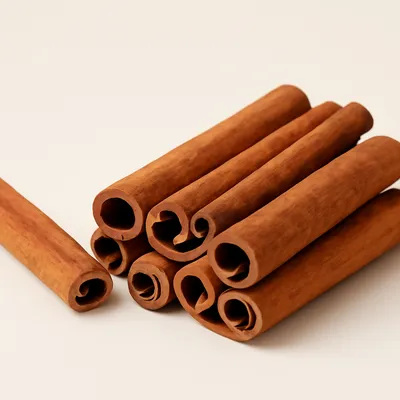




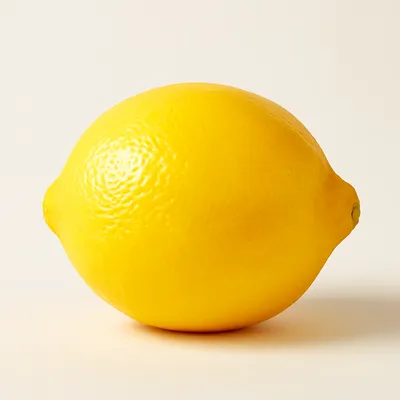


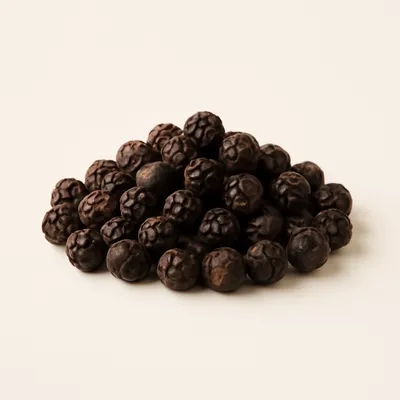
How it's made
8 steps · 2 hours active + 1 hour waiting
- 127 min
Make filling first: in a wide pan, heat 2 tbsp olive oil; add 1 finely diced onion + sauté 8 min until deeply golden. Add 300g ground lamb (or beef); cook 8 min, breaking up. Add 1/2 cup chopped walnuts + 1 tsp ground cumin + 1 tsp Urfa pepper + 1 tsp salt + 1/2 tsp cinnamon + 2 tbsp pomegranate molasses + 1/4 cup chopped parsley. Cook 3 min more. Cool completely.
- 222 min
Make shell paste: place 500g fine bulgur (köftelik bulgur — fine grade, NOT coarse) in a large bowl. Pour over 600ml very hot water + 1 tsp salt. Stir; cover with a plate; let absorb 20 min. The bulgur should be fully hydrated and tender.
Watch outPour very hot water over the fine bulgur and let it drink fully — it should turn soft and tender all through, or the shell won't bind and will crack.
- 313 min
Add to bulgur: 100g semolina flour + 100g all-purpose flour + 1 raw egg + 1 grated onion (squeezed of juice) + 1 tsp paprika + 1 tsp black pepper. Knead 10 min vigorously with damp hands until the mixture is uniform, smooth, and slightly sticky-elastic. Should hold its shape when squeezed. Rest 10 min.
Watch outKnead with damp hands until the paste turns smooth and holds a squeezed shape without falling apart — that stickiness is what lets you form a thin shell.
- 430 min
Form shells: take 50g of bulgur paste; flatten in your palm into a 6cm disc. Cup the disc in your palm; place 1 tbsp filling in the center; close the disc around the filling by pinching and rotating, forming a football/torpedo shape with pointed ends. The shell should be 3-4mm thick (thin enough to see through if held to light), 7-8cm long. Smooth any cracks with damp fingers. Repeat — should make about 20 köfte.
Watch outWork the shell down to 3-4mm — thin enough to glow when held to the light; too thick and it stays doughy, too thin and the filling bursts out.
- 532 min
Place shaped köfte on parchment; refrigerate 30 min to firm.
- 618 min
Cook by frying (most common): heat 5cm vegetable oil to 175°C in a deep pan. Fry köfte in batches of 4-5, gently turning, 5 min per batch until deeply golden brown all around. Drain on paper towels.
Watch outHold the oil around 175°C and fry to deep even brown — too cool and the shell drinks oil and goes greasy, too hot and it colors before the inside heats.
- 711 min
Alternative cooking — boiling (Hatay-style): bring 3L water + 1 tsp salt + 2 tbsp tomato paste to a simmer. Drop in köfte gently; cook 8 min, just simmering (not boiling — boiling breaks them). Lift out with slotted spoon.
- 88 min
Serve hot, 3 per person, on a platter with a wedge of lemon, a sprinkle of sumac, and chopped parsley. Boiled köfte are served with a small drizzle of the tomato cooking liquid. Pair with cold Şıra (grape juice) or ayran.
Archive tool suggestions — not reviewed
These legacy suggestions have not been evidence-reviewed and are not presented as required tools.