



Named after the wealthy Stroganov family; the dominant attribution (per William Pokhlyobkin's Culinary Dictionary) is to Count Alexander Grigorievich Stroganov (1795–1891), at whose Odessa 'open table' it was regularly served. The Pavel Stroganov / St. Petersburg / bad-teeth attribution is one of several competing legends, not settled fact. First printed recipe appeared in the 1871 edition of Elena Molokhovets' A Gift to Young Housewives (titled 'beef à la Stroganov, with mustard'); the cookbook itself debuted in 1861, but the stroganoff recipe was added in 1871, and it used diced floured beef rather than today's strips. The dish was a French-Russian hybrid — French sauté technique applied to Russian smetana — designed for Stroganov's elderly French chef who reportedly had bad teeth and needed the beef thin and tender. Spread globally via White Russian émigrés after 1917.
From Count Pavel Stroganov's St. Petersburg kitchen, first printed in Elena Molokhovets' 1861 A Gift to Young Housewives. Smetana is the load-bearing ingredient—30%+ butterfat versus American sour cream's 18%, which is why it doesn't break under heat.
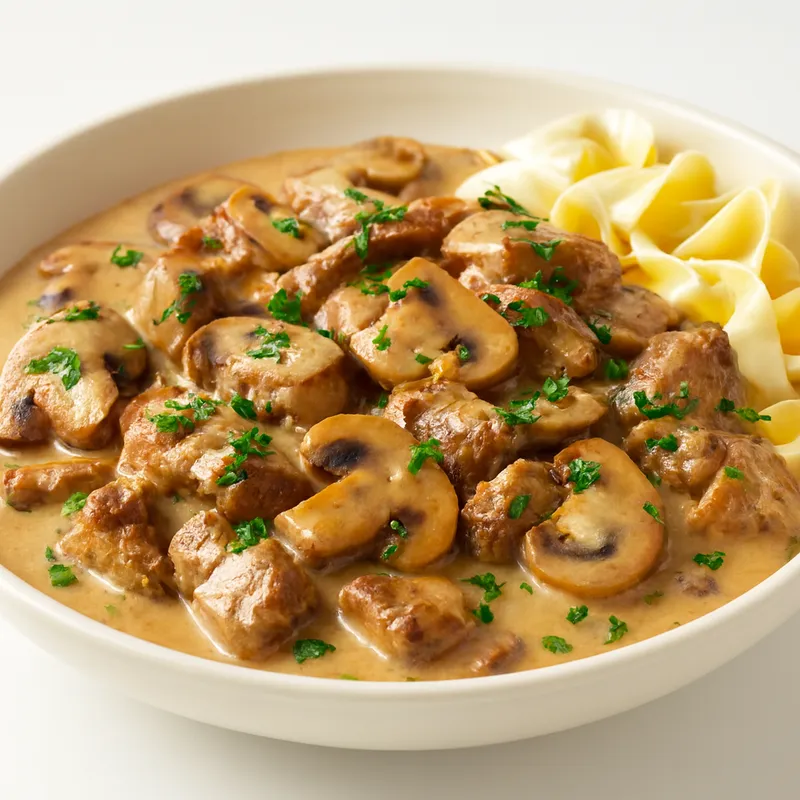
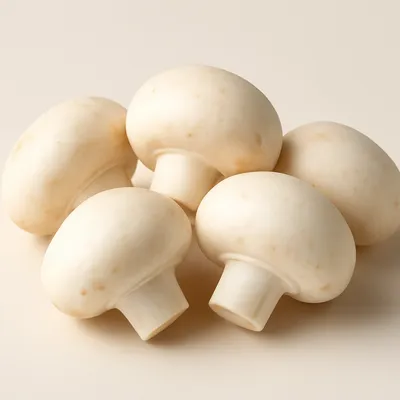
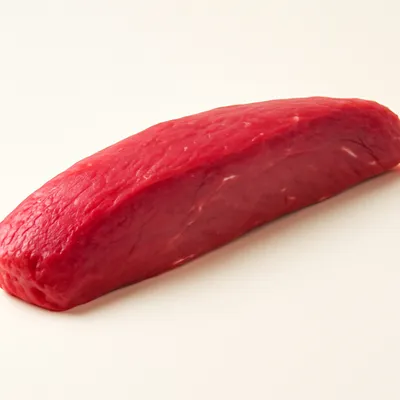
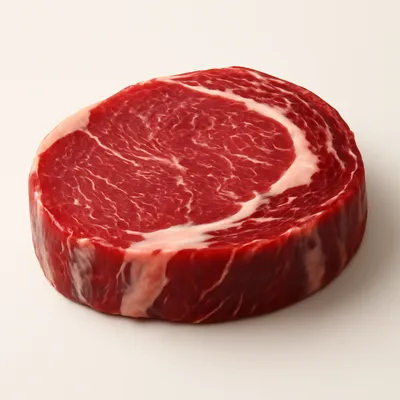
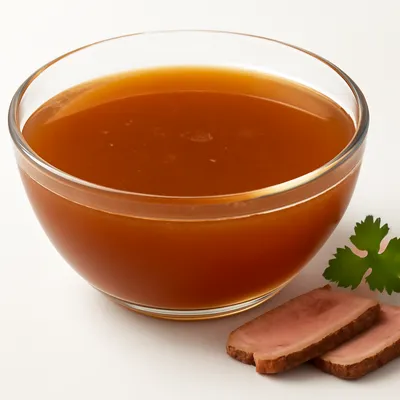
Strips of beef tenderloin, browned fast in butter, finished in a sauce of beef stock, smetana (Russian sour cream — fattier and tangier than American), Dijon mustard, and sometimes onion or mushroom. Served over kasha (buckwheat) in Russia, over egg noodles or rice almost everywhere else. The beef should be just-pink at the center; once it grays, the dish goes from tender to chewy.
Smetana is the load-bearing ingredient — it has 30%+ butterfat versus American sour cream's 18%, which is why it doesn't break under heat. Substituting American sour cream forces cooks to add cream or temper carefully or the sauce curdles. The mustard isn't for flavor primarily; its emulsifiers stabilize the sauce against the acid in the smetana.
Variations
Russian original serves it over kasha (buckwheat); American post-WWII version pairs with egg noodles; Brazilian estrogonofe adds tomato paste and ketchup, served with batata palha; Finnish version uses pickled cucumber alongside the smetana.
On the Palate
Where Beef Stroganoff sits in the Russian flavor cloud
Ingredients


How it's made
5 steps · 35 min
- 110 min
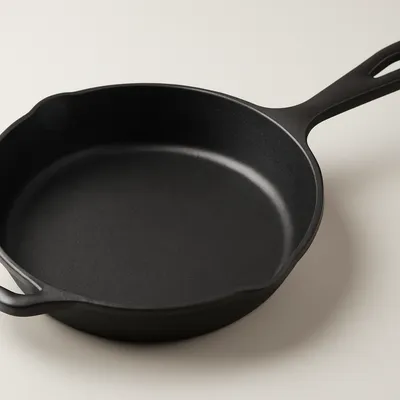
Slice the beef thinly against the grain. Melt butter in a large skillet over medium-high heat, and sear the beef until browned on all sides. Remove and set aside.
Watch outThe beef is seared when the outside is browned but the center still soft — overcook now and it turns tough after the simmer.
- 210 min
In the same skillet, add more butter if needed and sauté sliced onions until they become translucent and fragrant. Add mushrooms and cook until they release their moisture and turn golden.
Watch outCook the mushrooms past their watery stage until the liquid boils off and they turn golden — that's where the savory depth comes from.
- 35 min
Sprinkle flour over the onion and mushroom mixture, stirring constantly to avoid lumps. Cook until the flour is fully incorporated and begins to brown lightly.
- 45 min
Gradually stir in sour cream and a touch of water or broth to create a smooth, creamy sauce. Return the beef to the skillet, coating it in the sauce.
Watch outAdd the sour cream off a hard boil and stir until the sauce is smooth and glossy, never grainy.
- 55 min
Simmer on low heat until the beef is tender and the flavors meld together. Adjust seasoning with salt and pepper before serving.
Archive tool suggestions — not reviewed
These legacy suggestions have not been evidence-reviewed and are not presented as required tools.