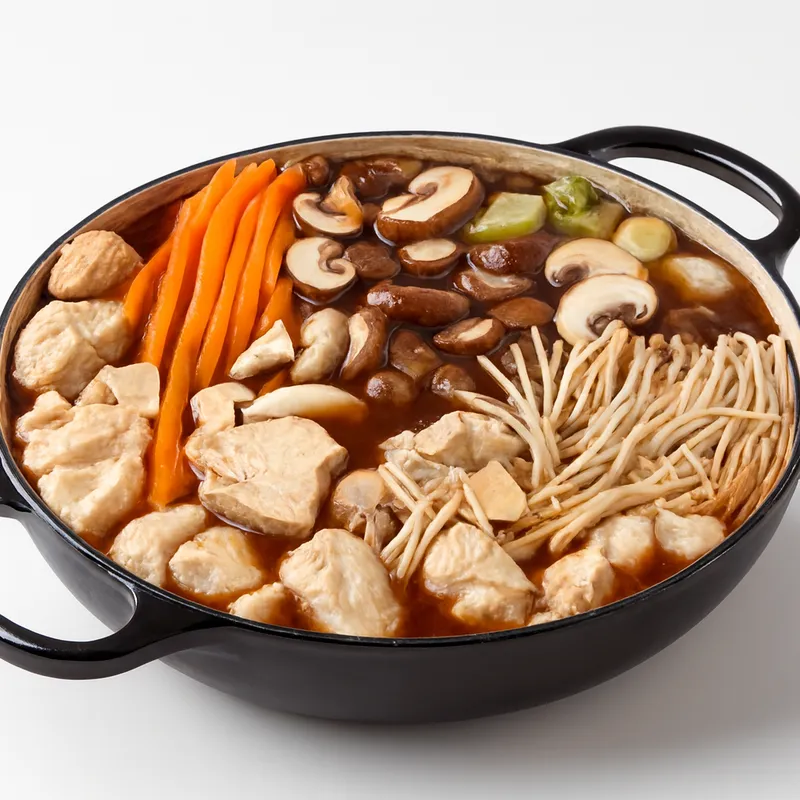

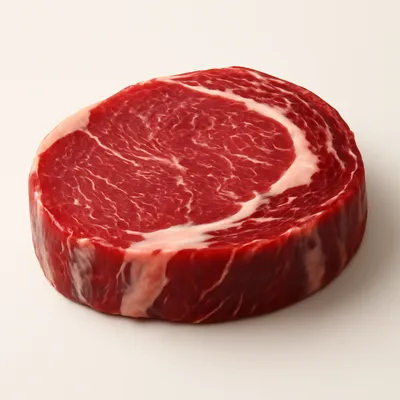



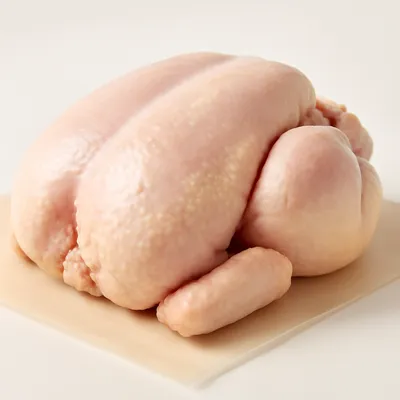
A medieval peasant dish across the Slavic and Baltic world — the byproduct of long-boiling tough cuts (shank, trotters, ear, tail) for stock. Cooks noticed that the cooled stock set into jelly and started serving it deliberately by the 16th century. Traditionally made the day before a feast and set overnight in an unheated outer room or windowsill in winter — refrigeration was the season itself.
A medieval Slavic-Baltic peasant byproduct — when cooks long-boiled trotters and shanks for stock, the cooled liquid set into jelly on its own. Pig's feet must go in for the collagen; gelatin-powder shortcuts make it rubbery instead of trembling. 6–8 hours uncovered.
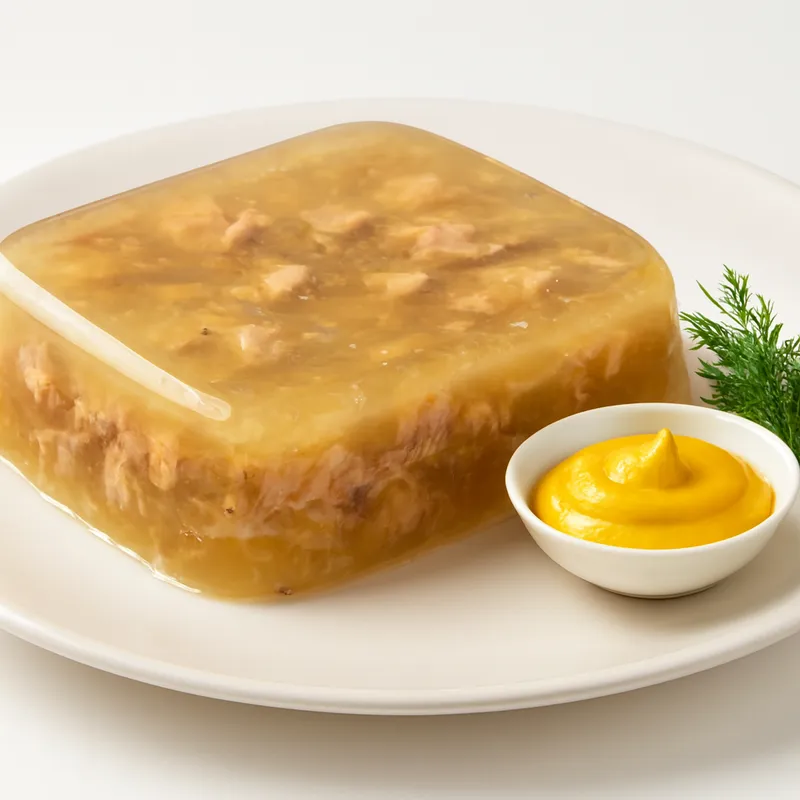
Cold meat aspic — chunks of pork shank, beef shin, sometimes chicken, set into a clear or amber gelatin made from the meat's own collagen (no added gelatin powder). Carrot rounds and parsley float in the set jelly for color. Served in slices or wedges with hot mustard or grated horseradish on the side; the heat of the condiment is what wakes the cold dish up. A New Year's and winter-holiday standard across Russia and Ukraine.
Pork trotters or pig's ears must go in the pot — they carry the collagen that sets the jelly. Skipping them and using only lean meat means a watery, never-firm result; cooks who don't know this often resort to gelatin powder, which makes the aspic rubbery instead of the proper trembling, just-barely-set texture. Boiling time is 6–8 hours uncovered to extract collagen and reduce simultaneously; rushing it leaves the jelly too soft to slice.
Variations
Russian pork-trotter version (cloudy amber); Ukrainian kholodets with garlic stirred into the jelly; Polish galaretka (often chicken-only, lighter); Latvian galerts adds bay-and-allspice heavy.
On the Palate
Where Kholodets sits in the Russian flavor cloud
Ingredients



How it's made
5 steps · 45 min active + 4 hours waiting
- 115 min
In a large pot, combine pork, beef, and water. Bring to a boil, skimming off any foam that rises to the surface. Reduce to a simmer and add bay leaf, garlic, carrots, and onions. Simmer for several hours until the meat is tender and falling off the bone.
Watch outSkim off every bit of grey foam as it rises in the first boil; what you leave behind will cloud the finished jelly.
- 210 min
Remove the meat and vegetables from the broth. Strain the broth to remove any impurities, then return it to the pot.
Watch outStrain the broth through fine cloth until it runs clear — any bits left will show as flecks in the set aspic.
- 310 min
Shred the meat finely, discarding any bones and excess fat. Add the meat back to the strained broth.
- 45 min
Dissolve gelatin in a small amount of warm water, then stir it into the broth until fully incorporated.
Watch outEnsure the water is warm enough to dissolve the gelatin completely.
- 55 min
Pour the mixture into a mold and refrigerate until set, at least 4 hours or overnight.
Watch outIt's set when the surface no longer wobbles as a liquid and a fingertip leaves a firm, springy dent.
Archive tool suggestions — not reviewed
These legacy suggestions have not been evidence-reviewed and are not presented as required tools.