Gunkanmaki, the "battleship roll," is a form of Edomae sushi in which a small hand-pressed oval mound of vinegared rice is wrapped in a band of nori tall enough to rise above the rice as a wall, leaving a shallow well on top. That well holds soft, loose, or liquid toppings that cannot be hand-pressed onto a rice mound like a slice of fish in nigiri: most classically salmon roe (ikura) and sea urchin (uni), and also flying-fish roe (tobiko). A dab of wasabi is usually tucked between rice and topping. The tall nori wall gives the piece its warship silhouette and its name, and the roll is assembled and served immediately, eaten in one or two bites with a little soy sauce.



Gunkanmaki is generally credited to the Ginza sushi restaurant Kyubey, founded by Toshiji Imada (the shop is usually dated to 1935), with 1941 commonly cited as the year of invention. The widely told account is that a regular customer asked for salmon roe, or brought prized sea urchin up from Hokkaido, to be served as sushi; because roe and uni are too soft and loose to hold their shape when pressed onto a rice mound, Imada is said to have surrounded the rice with a tall band of nori to contain the topping. The form was named for its resemblance to a warship (gunkan), a reading reinforced by the wartime mood of the early 1940s. The technique let chefs serve delicate ingredients that conventional nigiri could not, and gunkanmaki spread to become a standard part of the Edomae repertoire.
The nori wall is crisp-then-yielding at the first bite, giving way to the cool, lightly vinegared, faintly warm rice beneath. The topping is the contrast: salmon roe pops in distinct briny beads, sea urchin is soft and creamy and melts, and both flood the palate with a deep marine sweetness. The vinegared rice cuts the richness, and the thread of wasabi adds a clean, fleeting heat.
Gunkanmaki exists to solve a structural problem in nigiri: a firm slice of fish can be pressed onto a rice mound and will stay, but loose roe, custardy uni, or any soft or liquid topping rolls or slumps off. Wrapping a tall band of nori around the rice turns the piece into a shallow container whose wall retains the topping. The nori is added just before serving because dried laver is hygroscopic and rapidly draws moisture from both the warm rice and the wet topping, going limp within minutes; pros therefore line up bare rice mounds and wrap and fill each piece only at the moment of service to keep the wall crisp. The pairing is also a flavor mechanism: the high free-glutamate and briny amino-acid load of roe and uni reads as intense umami and salinity, which the rice's rice-vinegar acidity and faint sweetness balance, while a smear of wasabi (its pungent allyl isothiocyanate) cuts the richness and lifts the marine aroma.
Variations
The two classic toppings are ikura (salmon roe) and uni (sea urchin); tobiko (flying-fish roe) and the smaller, brighter masago (capelin roe) are common, as is negitoro, minced fatty tuna with scallion. Quail egg is often cracked over uni or tobiko. Beyond the Edomae canon, conveyor-belt (kaiten) sushi popularized inexpensive gunkan toppings such as corn-and-mayonnaise, potato salad, and natto. The base remains a rice mound walled with nori; cucumber or thin egg sheet is occasionally substituted for the nori band.
On the Palate
Where Gunkanmaki sits in the Japanese flavor cloud
Ingredients
Serves 2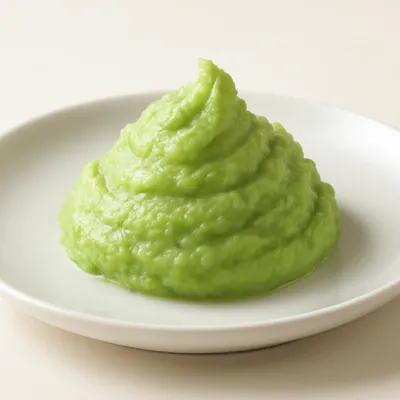

How it's made
7 steps · 15 min active + 5 min waiting
- 110 min
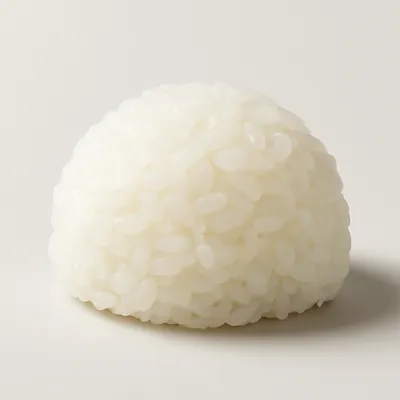
Cook short-grain sushi rice and, while still warm, fold in seasoned rice vinegar; let it cool to just above body temperature.
- 22 min
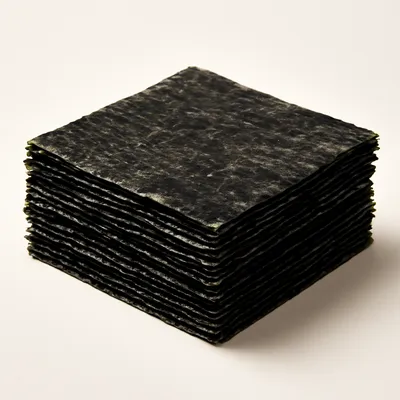
Cut a sheet of nori into bands roughly 3 cm tall and long enough to wrap once around a rice mound with slight overlap.
- 33 min
With moistened hands, gently press about 15-20 g of rice into a firm oval mound for each piece.
- 43 min
Wrap a nori band around the side of each mound so it stands as a wall above the rice, sealing the overlap with a few grains of crushed rice.
Watch outWrap the nori band so it stands as a wall above the rice, sealing the overlap with a few crushed grains — this wall is what holds the loose topping in place.
- 51 min
Dab a little wasabi onto the rice inside the nori wall.
- 62 min
Spoon the soft topping (salmon roe, sea urchin, or flying-fish roe) into the well until it sits level with or just above the nori rim.
- 71 min
Serve immediately, before the nori softens, with soy sauce alongside.
Watch outFill and serve immediately, before the nori softens — dried laver pulls moisture from the rice and topping and goes limp within minutes.
Archive tool suggestions — not reviewed
These legacy suggestions have not been evidence-reviewed and are not presented as required tools.