Spicy taco fillings served over fluffy white rice.





Invented in 1984 by Matsuzo Gibo at his restaurant Parlor Senri in Kin Town, Okinawa — a town built around U.S. Marine Corps Camp Hansen. Gibo wanted a cheap, filling meal for off-duty marines homesick for Tex-Mex but also for local students. He served the taco fillings over rice instead of in a shell because tortillas were scarce and rice was the local default. The dish stayed regional for two decades, then went national in the 2000s.
Matsuzo Gibo invented this in 1984 at Parlor Senri in Kin Town, the village outside Camp Hansen — he wanted a cheap homesick meal for off-duty marines and local students. Tortillas were scarce, rice was the default. The seasoning is American taco-shop (Lawry's, McCormick), not Mexican — heavy cumin, light lime.
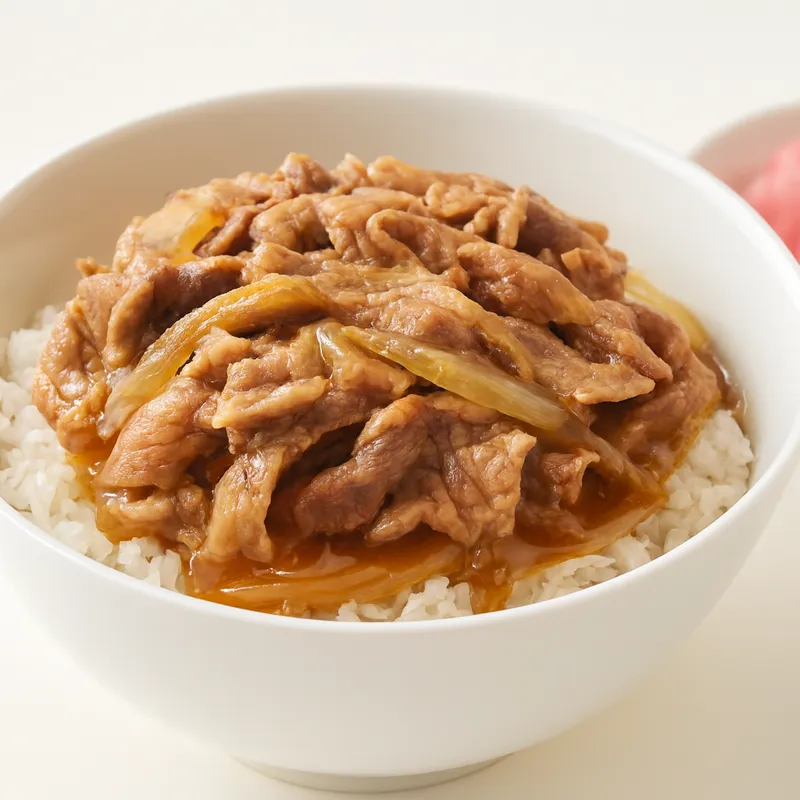
A bowl of white rice topped with seasoned ground beef (cumin, chili, garlic), then shredded iceberg, diced tomato, shredded cheddar, sometimes salsa. Eaten with a spoon, mixed as you go. The rice goes warm, the cheese melts a little where it touches meat, the lettuce stays cold and crunchy on top. The temperature contrast is the trick — uniformly hot or uniformly cold, it loses the structure.
The seasoning of the beef is closer to American taco-shop spice (Lawry's, McCormick) than to Mexican — heavy on cumin and onion powder, light on lime or coriander. That's a 1980s American military-base palate, not a fusion attempt. The dish reads "American" to Okinawans and "Japanese" to Americans precisely because it never tried to be Mexican.
Variations
Parlor Senri (the 1984 founder, still in Kin); Charlie Tacos in Kin runs the older Tex-Mex-leaning version; King Tacos — the chain Gibo himself opened as a second shop near Parlor Senri — dominates the modern format; Naha airport food courts add cheese sauce as a chili-cheese variant; the Okinawa convenience-store onigiri version compresses the whole bowl into a triangle.
On the Palate
Where Okinawa Taco Rice sits in the Japanese flavor cloud
Season the beef like an American taco shop — heavy on cumin and onion powder — because the whole point of this dish is that it reads American, not Mexican, so don't reach for lime and fresh coriander.
Ingredients






How it's made
5 steps · 23 min active + 10 min waiting
- 15 min
Rinse the rice under cold water until the water runs clear. Cook in a rice cooker or on the stovetop with 1.5 times its volume of water until fluffy and tender, about 15 minutes.
Watch outEnsure the water runs clear to remove excess starch for fluffier rice.
- 28 min
In a skillet over medium heat, cook the ground beef with diced onion until the meat is browned and the onion is translucent, about 8 minutes. Stir in cumin and chili powder, cooking until fragrant.
Watch outCook until the pan looks dry and the spices smell toasty; if the beef is still swimming in liquid it'll make the rice soggy.
- 35 min
Dice the tomato and shred the lettuce. Grate the cheese finely. Keep these fresh toppings ready for assembly.
- 43 min
Layer the cooked rice in a serving dish, spreading the seasoned beef mixture evenly over the top. Sprinkle with cheese, allowing it to melt slightly from the heat of the beef.
Watch outSpread the beef while it's hot so the cheese sinks in and just melts, going glossy without turning to a greasy puddle.
- 52 min
Top with fresh lettuce and tomato, finishing with a drizzle of salsa for a zesty kick. Serve immediately while warm.
Watch outServe immediately to maintain the freshness of the toppings.
Archive tool suggestions — not reviewed
These legacy suggestions have not been evidence-reviewed and are not presented as required tools.

A heavy, single-piece cast iron pan, 25-30 cm across, weighing 1.5-2.5 kg. Once preheated, the thick mass holds 230°C+ even when a cold steak hits the surface — that's the secret to a deep crust. A well-seasoned skillet (multiple thin layers of polymerized oil baked into the iron) is essentially nonstick, gets better with use, and lasts a century. Lodge skillets from Tennessee have been in continuous production since 1896.

An electric pot with a thermostat that switches off the moment internal temperature exceeds 100°C — meaning the moment all free water has boiled off. Add rinsed rice and water (1:1.2 by volume for short-grain), press start; 25 minutes later it sits in warming mode and stays at 65°C all day. The fuzzy-logic Japanese versions (Zojirushi, Tiger) cook brown rice, sushi rice, and porridge with separate algorithms for each.