A banquet dish of the Zhili Official Cuisine (直隶官府菜) tradition centered on Baoding, Hebei. A whole pork knuckle is first simmered with star anise, cinnamon and Sichuan peppercorn until the meat slips off the bone, then deboned, pressed and torn into strips, coated in a starch batter and deep-fried golden. Crisp-shelled outside and meltingly tender within, rich but never cloying, it is carved and dusted with five-spice. At the table it is wrapped in thin lotus-leaf pancakes with scallion whites, cucumber and Baoding's sweet-flour paste (甜面酱), much like Peking duck.



Crispy Wrapped Pork Knuckle belongs to Zhili Official Cuisine (直隶官府菜), the banquet school that grew up around the kitchens of the Viceroy of Zhili at his Baoding seat. The school budded in the Ming, flourished in the Qing across some six hundred years, and its cooking technique was named to Hebei's provincial intangible-heritage list in 2006 and to China's national list in 2011 — the country's first national-heritage culinary entry. The dish is said to come from Gaoyang county near Baoding: in Qing times Baoding was the last waystation for examination candidates heading to the capital, and the cured knuckles they carried were greasy and travelled badly, so local cooks reworked them by simmering, deboning and frying into a crisp, portable form. A popular tale further holds that it entered the palace and won the favour of the Empress Dowager Cixi — this last claim is repeated in food writing but is not securely documented, so it is best read as legend.
The shell shatters with an audible crack, giving way to a layer of soft, gelatin-rich meat that all but dissolves on the tongue. There is no soup, no sauce soaked in — the crust stays dry and brittle while the inside runs warm and fatty. Five-spice scents the surface; the meat is savoury and faintly sweet. Folded into a pancake with raw scallion and a smear of sweet-flour paste, the bite turns lighter: the paste's malty sweetness and the scallion's bite cut clean through the richness, the way they do for Peking duck.
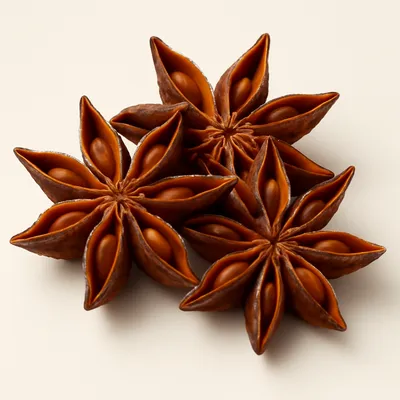
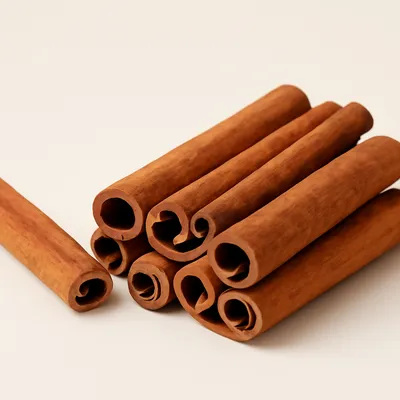
The dish is built on two stages — a long braise that renders the knuckle, then a fry that builds the shell. First the cleaned knuckle is boiled until half-soft, then simmered low and slow in its own stock with star anise, cinnamon, peppercorn, scallion and ginger; the gentle heat dissolves the connective collagen into gelatin without breaking the meat apart, which is what gives the finished interior its silky, melting texture. The knuckle is then deboned and pressed while still warm so the gelatin sets and binds the strips into a cake; cooling firms it for handling. A starch batter — traditionally a thick potato- or pea-starch (团粉) slurry — is coated on, and the piece is fried at roughly 60% oil heat (about 170°C) until both sides are golden, which dehydrates the batter into a hard, glassy crust that seals the rendered meat. It is carved across the strips and dusted with five-spice. The sweet-flour paste is a fermented-wheat condiment served alongside; its malty, lightly sweet aroma offsets the fat rather than going into the cooking.
Variations
Some Baoding houses tear the deboned knuckle into strips for a craggier crust; others press it into a neat round cake and slice it into rounds. The frying starch ranges from pure potato or pea starch to an egg-and-flour batter for a thicker shell. Accompaniments shift with the table — lotus-leaf pancakes, scallion whites, cucumber batons and sweet-flour paste are standard, with pickled vegetables sometimes added. The dish should not be confused with Dongbei's Guo Bao Rou, which is thin-sliced loin in a sweet-sour glaze, nor with Baoding's own Handle Knuckle (带把肘子) or oil-blanched knuckle (走油蹄髈), which are braised or steamed and left unfried; here the whole knuckle is braised, then battered and fried, and sauced only at the table.
On the Palate
Where Crispy Wrapped Pork Knuckle sits in the Chinese flavor cloud
Ingredients
Serves 6


How it's made
8 steps · 30 min
- 110 min
Singe and scrape the pork knuckle clean, then blanch it in boiling water to remove blood and scum; rinse.
- 240 min
Boil the knuckle in fresh water until half-soft, about 40 minutes.
Watch outBlanch until the knuckle is half-soft, not falling apart — it still has the long braise ahead to turn silky.
- 390 min
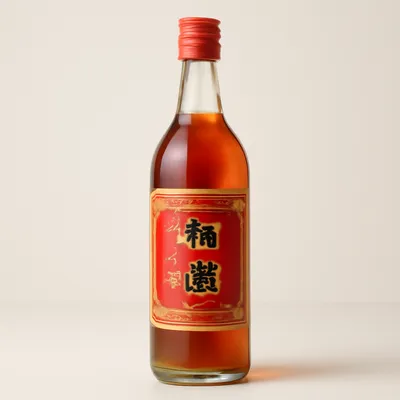
Transfer to a pot with star anise, cinnamon, Sichuan peppercorn, scallion, ginger, Shaoxing wine, soy sauce and rock sugar; simmer low and slow until the meat slips off the bone, about 90 minutes.
- 420 min
While still warm, debone the knuckle, then press and tear the meat into thick strips or a flat round; let it cool and set firm.
Watch outDebone and press while still warm — the gelatin is molten now and sets the strips into a firm cake as it cools.
- 58 min
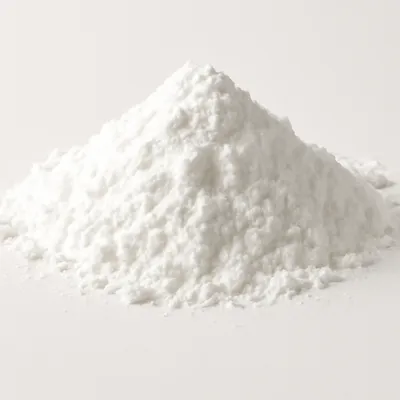
Whisk potato or pea starch (and an egg, if using) into a thick batter and coat the pressed knuckle evenly.
- 612 min
Deep-fry at about 60% oil heat (170°C) until both sides are golden and the shell is crisp; drain.
Watch outFry at about 170 degrees until the shell is golden and crackly — too cool and the batter soaks oil instead of crisping.
- 73 min
Carve across the strips, plate, and dust the surface with five-spice powder.
- 85 min
Serve with warm lotus-leaf pancakes, scallion whites, cucumber batons and a dish of sweet-flour paste for wrapping at the table.

