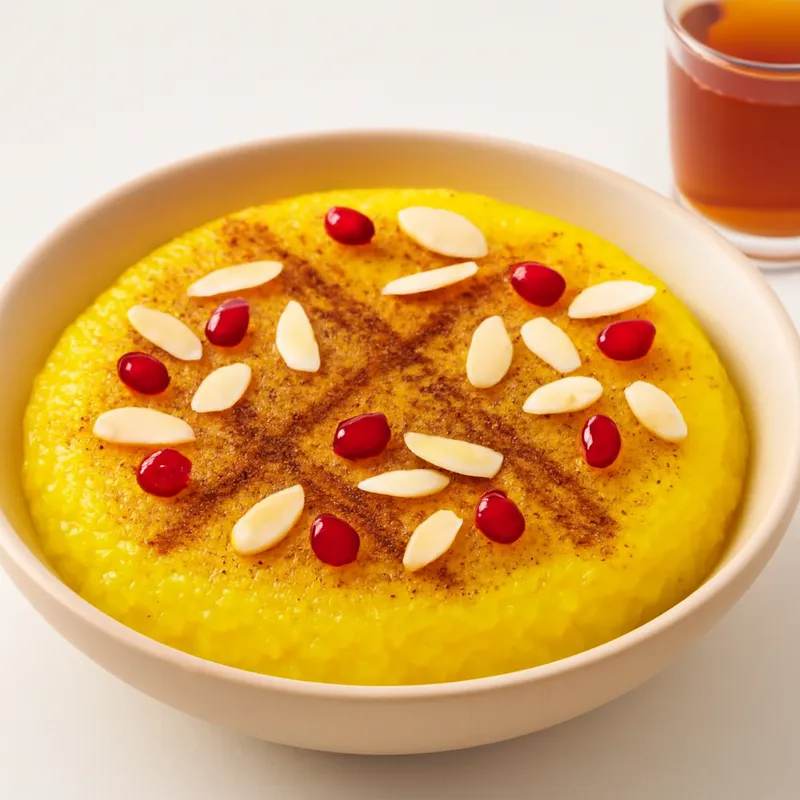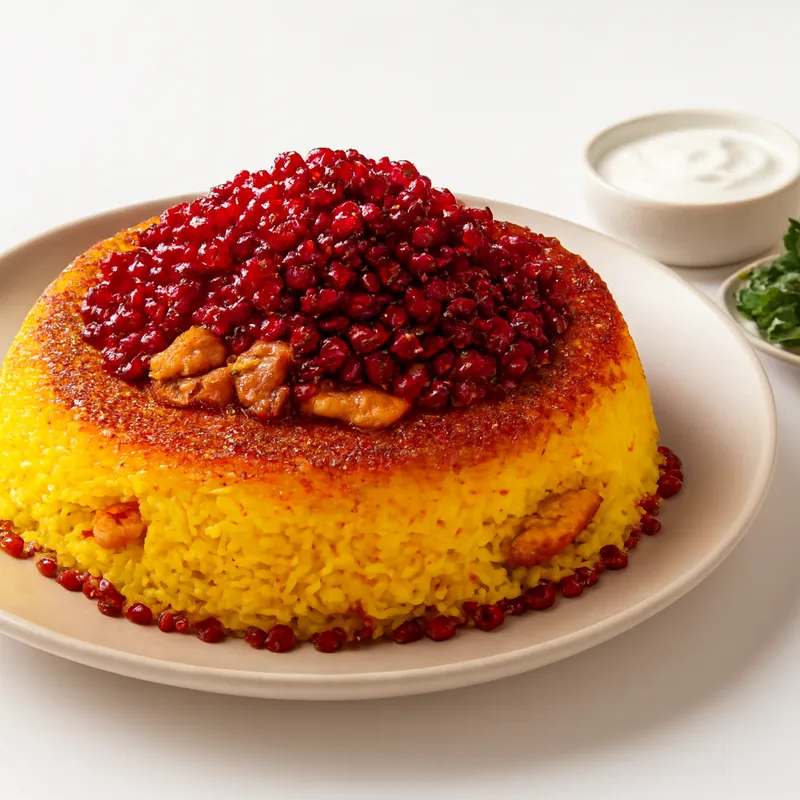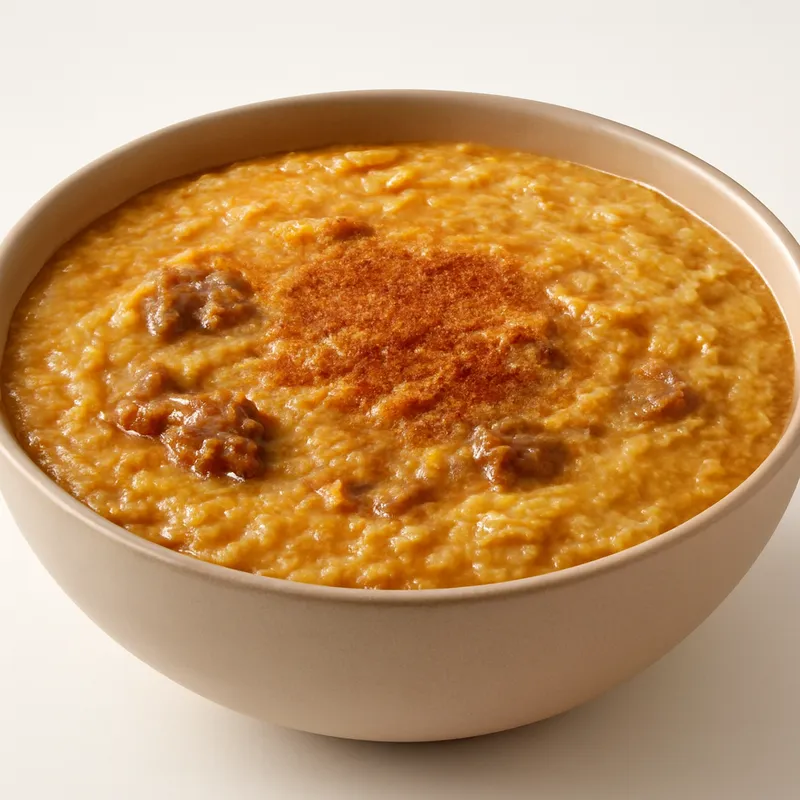






A pre-dawn meal traditionally eaten during Ramadan and on cold winter mornings across Iran, particularly Tabriz in the northwest. The technique — long-cooking grain with meat into a paste — is shared with Arab harees and South Asian haleem; the lineage runs through 10th-century Baghdad cookbooks (Kitab al-Tabikh) and from there branched east and west. Iranian halim stays sweet-savory, unlike the spiced South Asian versions.
Pre-dawn Ramadan and winter breakfast across Iran, especially Tabriz. Lineage runs through 10th-century Baghdad's Kitab al-Tabikh — same root as Arab harees and South Asian haleem — but the Iranian version stays sweet-savory while South Asian forks went heavily spiced. Wheat soaks overnight, cooks 6-8 hours with lamb, then gets paddle-beaten (kuftan) every 30 minutes.
A pale, nearly white porridge — wheat berries and shredded lamb cooked together until the grain dissolves into a thick, almost stretchy paste. Eaten for breakfast in winter, drizzled with melted butter, dusted with sugar and cinnamon, sometimes a pinch of salt. Texture is everything: it should pull off the spoon in soft strands. Watery means undercooked; lumpy means the grain wasn't broken down.
The wheat is soaked overnight, then cooked with lamb (traditionally a whole shank) for 6 to 8 hours over very low heat. The technique that turns soup into halim is the kuftan — beating the mixture with a wooden paddle every half hour after the meat falls apart. The mechanical breakdown releases the wheat starch into the liquid, which is what gives the stretchy texture. No paddle, no halim — just porridge.
Variations
Tabrizi version (the northwest standard, paddle-beaten); halim bademjan (eggplant version, usually still with meat plus walnuts and lentils, central Iran); Khorasani version (with turkey or duck); Indian-Persian Hyderabadi haleem branched off and went spice-heavy; halim shotor is the camel-meat version found in Khuzestan.
On the Palate
Where Halim sits in the Persian flavor cloud
After the meat falls apart, beat the mixture with a wooden paddle every half hour — that mechanical pounding is what pulls the wheat starch into the liquid and gives halim its stretchy pull; skip it and you only have porridge.
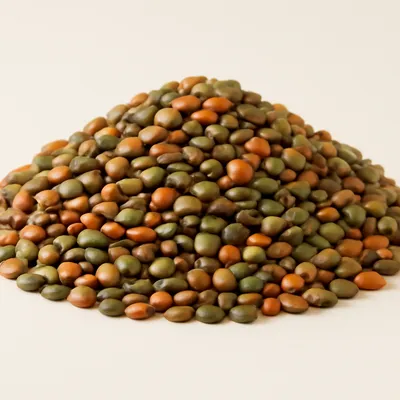
Ingredients



How it's made
5 steps · 6 hours
- 187 min
Boil wheat berries until soft.
- 255 min
Cook lamb with onions until tender.
Watch outThe lamb is ready when it's falling off the bone and shreds at a touch — that's the signal to start pounding.
- 333 min
Combine wheat and lamb, mashing to a creamy texture.
Watch outKeep beating until the mash turns glossy and stretches in ropes off the paddle, not just soft and lumpy.
- 422 min
Add cinnamon and salt to flavor.
- 5164 min
Simmer gently until fully integrated.
Watch outIt's done when a spoonful holds a slow stretch and no whole grains are left — smooth, thick and pullable.
Archive tool suggestions — not reviewed
These legacy suggestions have not been evidence-reviewed and are not presented as required tools.