Sea cucumbers rehydrated over three days until they swell into silken tubes are braised with pork belly, shrimp, and winter bamboo — the 'three fresh' that fill the braising liquid with stacked layers of umami. The finished sea cucumber is both flavor sponge and textural statement: gelatinous, yielding, and entirely saturated with the concentrated braising sauce.


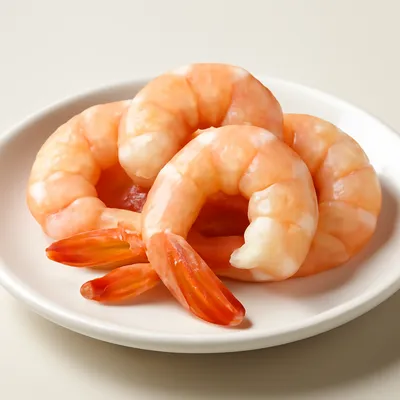



Three-Fresh Braised Sea Cucumber was created at Juchun Yuan restaurant in Fuzhou during the late Qing to early Republican era, under chef-proprietor Zheng Chunfa. Sea cucumber had been a prestige ingredient in Chinese imperial banquets for centuries; the 18th-century culinary essayist Yuan Mei noted in his 'Suiyuan Shidan' under the heading 'Three Methods for Sea Cucumber' that the ingredient is 'a flavorless thing, full of sand and fishy smell, most difficult to please' — a foundational challenge that Fuzhou chefs answered with the three-fresh braising method. Pork belly provides gelatin and sweetness; shrimp contributes coastal umami; bamboo adds texture and freshness. The dish became a cornerstone of the Juchun Yuan banquet repertoire and is listed in historical records alongside 'Buddha Jumps Over the Wall' and 茸汤广肚.
The sea cucumber slides between teeth with almost no resistance — a deeply savory gel that carries within it everything that surrounded it in the braise. The pork belly is soft and richly yielding; the shrimp adds a bright coastal pop; the bamboo introduces crunchy contrast. The glossy reduced sauce ties everything into a single, intensely focused spoonful.
Dried sea cucumber is approximately 43% protein by dry weight, predominantly fibrillar collagen, with holothurian mucopolysaccharides (including chondroitin sulfate) and holothurin saponins. Rehydration over 72+ hours allows the dense collagen matrix to swell from a hard, shrunken state into a gel-like open network readily able to absorb surrounding liquid. During braising, two umami-amplification pathways operate simultaneously: pork belly releases free glutamates while shrimp contributes inosinate; the combination of glutamate and inosinate produces synergistic umami amplification approximately eight times greater than either compound alone. The sea cucumber's open gel matrix absorbs this synergy-amplified braising liquid continuously as it reduces. At the finish, holothurian polysaccharides released from the sea cucumber itself contribute natural viscosity, allowing the sauce to form a glossy self-thickening coat without added starch.
Variations
A luxurious version adds dried abalone and fish maw to the same braise, approaching the complexity of 'Buddha Jumps Over the Wall'. Minced pork can replace pork belly for a leaner, faster version. The northern Chinese red-braised sea cucumber (红烧海参) uses dark soy sauce for a deeper color and heavier sauce. Fuzhou home cooks sometimes substitute dried shiitake and chicken for the three-fresh components, keeping the braising structure while varying the flavor base.
On the Palate
Where Three-Fresh Braised Sea Cucumber sits in the Chinese flavor cloud
Ingredients
Serves 4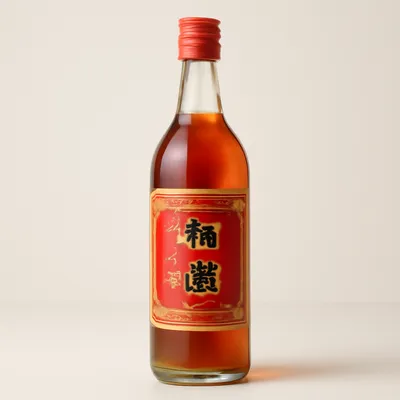


How it's made
7 steps · 30 min
- 14320 min
Soak dried sea cucumbers in cold water for 72–96 hours, changing water daily, until swelled to 4–5x original size and fully gelatinous throughout. Refrigerate throughout.
Watch outThe soak is done only when a sea cucumber has swelled four to five times and feels soft and jelly-like clear through with no hard core — a firm center means it'll be rubbery.
- 28 min
Score rehydrated sea cucumbers lengthwise and blanch in boiling water with ginger 5 minutes; rinse with cold water and cut each into three even sections.
- 35 min
Brown pork belly cubes in a hot wok with minimal oil until golden on all sides; add ginger slices and Shaoxing wine and stir-fry 1 minute to release aroma.
Watch outBrown the pork belly on every face until golden and the fat starts running before you wine it — that seared surface deepens the sauce.
- 416 min
Add chicken stock, oyster sauce, soy sauce, and shrimp oil; bring to a boil, then add sea cucumber sections. Reduce heat, cover, and braise 15 minutes.
- 59 min
Add fresh shrimp; continue braising 8 minutes until shrimp are cooked and have contributed their umami to the sauce.
- 66 min
Add blanched winter bamboo slices; stir gently to combine. Increase to medium-high heat and cook uncovered 5 minutes to begin reducing the braising liquid.
- 73 min
Taste and adjust seasoning. Reduce until the sauce glossily coats the sea cucumber; plate with pork and shrimp alongside and finish with sesame oil.
Watch outReduce just until the sauce glossily clings to the sea cucumber — pull it off the heat before it over-thickens, or the silky texture stiffens.
Archive tool suggestions — not reviewed
These legacy suggestions have not been evidence-reviewed and are not presented as required tools.
