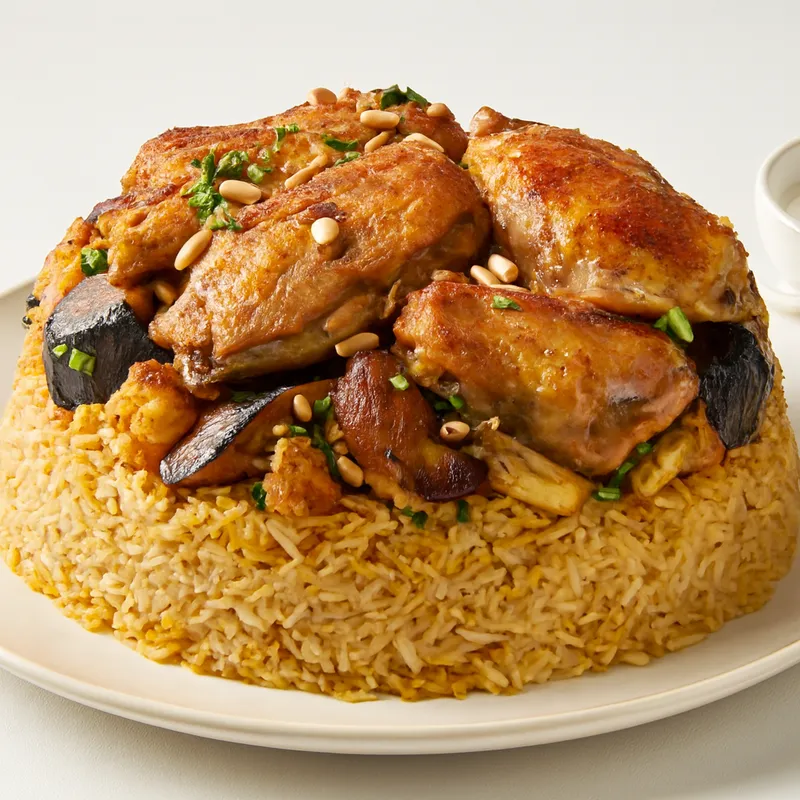



Maqluba is a Levantine layered rice dish, often called the national dish of Palestine. The earliest mention of a dish named maqluba appears in the Kitab al-Tabikh (Book of Dishes) compiled by the Baghdadi author Muhammad al-Baghdadi around 1226 during the Abbasid Caliphate — though that early dish was an egg preparation rather than the modern rice-and-meat pilaf, showing how old the flip-and-invert technique is. It became identified specifically with Palestine over the Ottoman centuries, eaten at Friday family lunch and at celebrations; one of the clearest early textual records of the Palestinian dish is Elihu Grant's The People of Palestine (1921), which describes rice and eggplant cooked in a deep dish and turned out upside down, the name meaning 'turned over.' After 1948, Palestinian refugees carried it across Jordan, Lebanon, and Syria; the Jordanian and Gulf-diaspora variants now serve a mansaf-style yogurt sauce on the side.
Recipe for an upside-down rice and meat dish appears in the 13th-century Damascene Kitab al-Tabikh of Ibn Mubarak Shah. Identified specifically with Palestine over Ottoman centuries; after 1948, refugees carried it across Jordan, Lebanon, and Syria, and Gulf-diaspora variants now use mansaf-style yogurt sauce on the side.
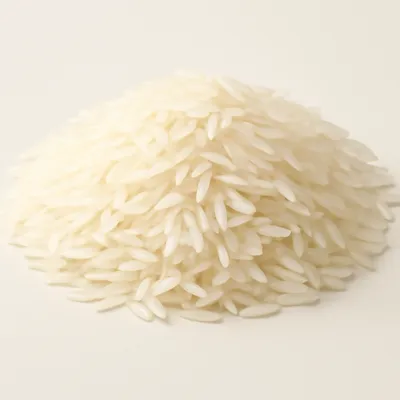
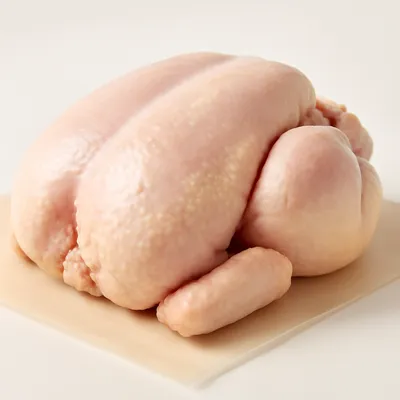
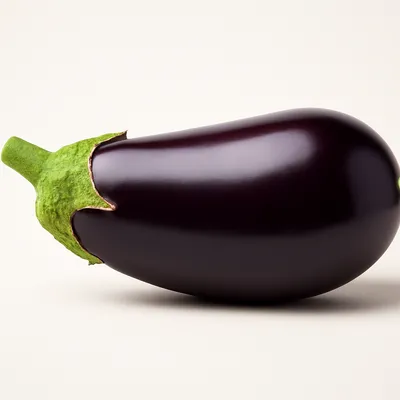
A pot is built bottom-up: fried eggplant or cauliflower, then chicken or lamb, then rice and stock, simmered with allspice and cinnamon. At the table it's flipped onto a tray — "maklouba" means "upside-down" — and the layers come down whole, browned vegetables now on top. Served with cucumber-yogurt and a chopped salad. The flip is the test: if rice sticks to the pot or the eggplant collapses, it didn't sit long enough off heat before inverting.
The fried vegetable layer at the bottom is structural, not just flavor — its oil seals the pot floor and lets the rice steam without scorching, while the caramelized exterior becomes the visual top after the flip. After cooking, the pot must rest off heat 10–15 minutes covered; this is when condensed steam loosens the bottom layer. Flip too soon and the eggplant tears; wait too long and the rice cools and packs.
Variations
Galilee village version tilts cauliflower and lamb shoulder; Jenin household uses fried eggplant and chicken; Jordanian-diaspora variant pours yogurt sauce mansaf-style on top; Gaza coastal style includes shrimp under the rice.
On the Palate
Where Maklouba sits in the Palestinian flavor cloud
The fried vegetable layer at the bottom is structural — its oil seals the pot floor so the rice steams without scorching, and it becomes the golden top after the flip; then rest off heat before inverting or the eggplant tears.
Ingredients



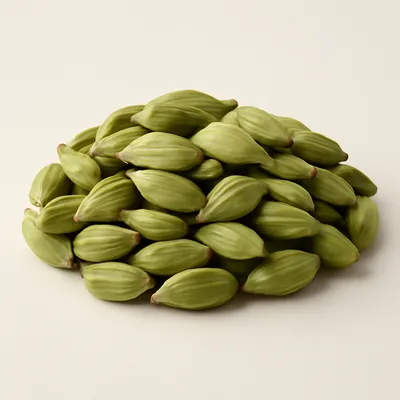
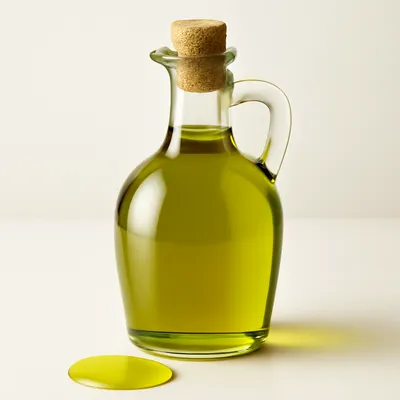



How it's made
5 steps · 2 hours
- 17 min
Season chicken with allspice, cinnamon, and cardamom, then brown in olive oil.
- 227 min
Fry eggplant and cauliflower until golden.
Watch outFry the eggplant and cauliflower to deep gold; this face becomes the visible top after the flip.
- 317 min
Layer a pot with chicken, fried vegetables, and rice, adding broth to cook.
- 451 min
Simmer until the rice is cooked and flavors meld.
Watch outKeep it at a gentle simmer until the rice drinks up the broth; a hard boil breaks the layers apart.
- 517 min
Invert the pot onto a serving platter to display the layered contents.
Watch outRest off heat before inverting, then flip in one confident motion onto the platter.
Archive tool suggestions — not reviewed
These legacy suggestions have not been evidence-reviewed and are not presented as required tools.


