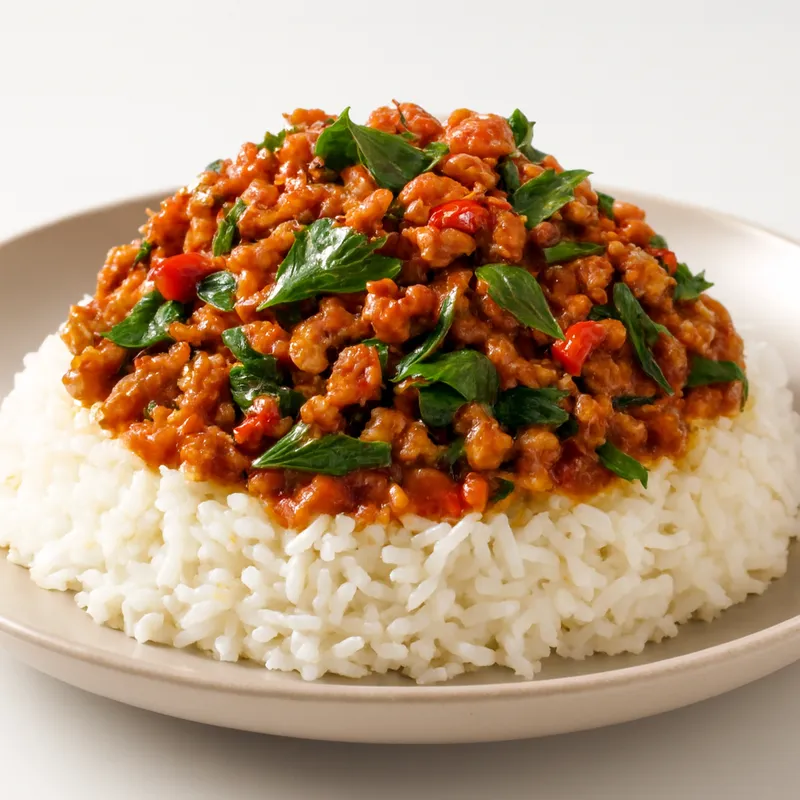
Wide rice noodles (sen yai) wok-charred in dark soy with Chinese broccoli (gai lan), egg, and pork or chicken — a Thai-Chinese stir-fry built on wok hei.
Pad See Ew (literally 「stir-fried with soy sauce」) is one of several Thai-Chinese noodle dishes brought by Teochew and Hokkien immigrants in the late 19th and early 20th centuries, alongside pad thai and rad na. The wide rice noodle (sen yai) and the dark-soy technique are direct inheritances from Chaozhou-style chao guo tiao. It became a Bangkok street-stall staple after WWII, when Chinese-run noodle carts proliferated in the central business districts.
Late-19th and early-20th-century Teochew-Hokkien import — wide rice noodle (sen yai) and dark-soy technique come straight from Chaozhou chao guo tiao. Defining variable: wok at 230°C+, dark soy poured on the rim hits Maillard plus caramel in two seconds. Fold the contents like turning laundry; stir-fry continuously and the noodles tear.
First note is the smoky char from a wok at full flame — you can smell it before the plate hits the table. Noodles are slippery, just-tender, with a half-burnt edge here and there; the sauce is dark, sweet-salty, oyster-thick. Gai lan stems crunch, leaves wilt. Egg is in soft folds. If the dish tastes uniform and gluey, the cook stir-fried instead of folded; if there's no smoky bitterness at all, the wok wasn't hot enough.
The defining variable is wok temperature. Dark soy on a 230°C+ wok surface goes from sticky to smoky in two seconds — that's the Maillard plus caramelized soy that gives wok hei. Pour the sauce on the rim, not on the noodles, or you stew instead of char. Second variable: don't stir-fry continuously. Wide rice noodles tear if you abuse them; you fold the wok contents like turning laundry. Third: separate the noodles cold with a little oil, never hot — they fuse when warm.
Variations
Pad see ew moo is pork; pad see ew nuea uses beef and is the Bangkok streetcart default; pad see ew gai is chicken; rad na is the gravied cousin from the same Teochew kitchen; Bangkok's Thip Samai and Pad Thai Thip Samai run wok-hei-heavy versions, while Yaowarat (Chinatown) shophouses keep it darkest with extra see ew dam.
On the Palate
Where Pad See Ew sits in the Thai flavor cloud
Ingredients
Serves 2







How it's made
6 steps · 15 min active + 10 min waiting
- 15 min
Separate 400g fresh wide rice noodles (sen yai) by hand — they come folded and stuck. Rub with 1 tsp oil so strands don't tear. If using dried, soak in warm water 30 minutes until pliable, then drain.
- 28 min
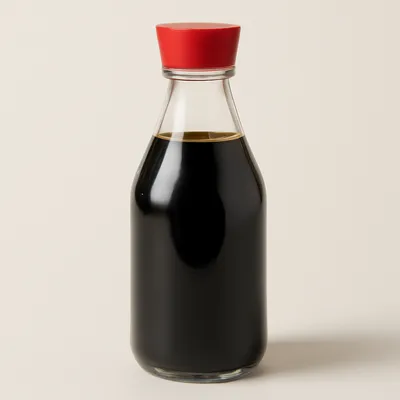
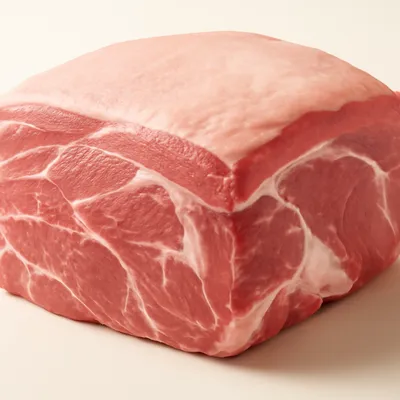
Mix sauce: 2 tbsp dark soy sauce (si-ew dam), 1 tbsp light soy, 1 tbsp oyster sauce, 2 tsp sugar, 1 tsp white vinegar. Slice 200g pork shoulder or chicken thigh thin against the grain. Cut 4 stalks Chinese broccoli (gai lan) into 5cm lengths, splitting thick stems.
- 32 min
Heat a carbon-steel wok over the highest flame until it smokes — 230°C+. Add 2 tbsp lard or oil and 3 smashed garlic cloves; meat goes in immediately, sear 60 seconds without stirring to build crust.
Watch outWait until the wok actually smokes before the meat goes in, then leave it 60 seconds untouched — that first crust is the wok hei; a lukewarm wok just stews grey meat.
- 41 min
Push meat to one side. Crack 2 eggs into the open side; let them set 15 seconds, then break and scramble loosely. Add gai lan stems first, leaves after 30 seconds.
- 52 min
Add the loose noodles. Pour the sauce around the rim of the wok so it caramelizes on metal before hitting noodles. Toss with a long spatula in folding motions — do not stir-fry continuously, or noodles break. You want patches of charred-dark and patches of pale.
Watch outPour the sauce down the hot rim, not onto the noodles, so it caramelizes on the metal first — and fold the noodles like turning laundry; keep stir-frying and the wide strands tear. Aim for charred-dark patches next to pale ones.
- 61 min
Plate immediately. Serve with prik nam som (sliced bird's-eye chiles in white vinegar), white sugar, fish sauce, and crushed dried chile on the side — diners adjust their own.