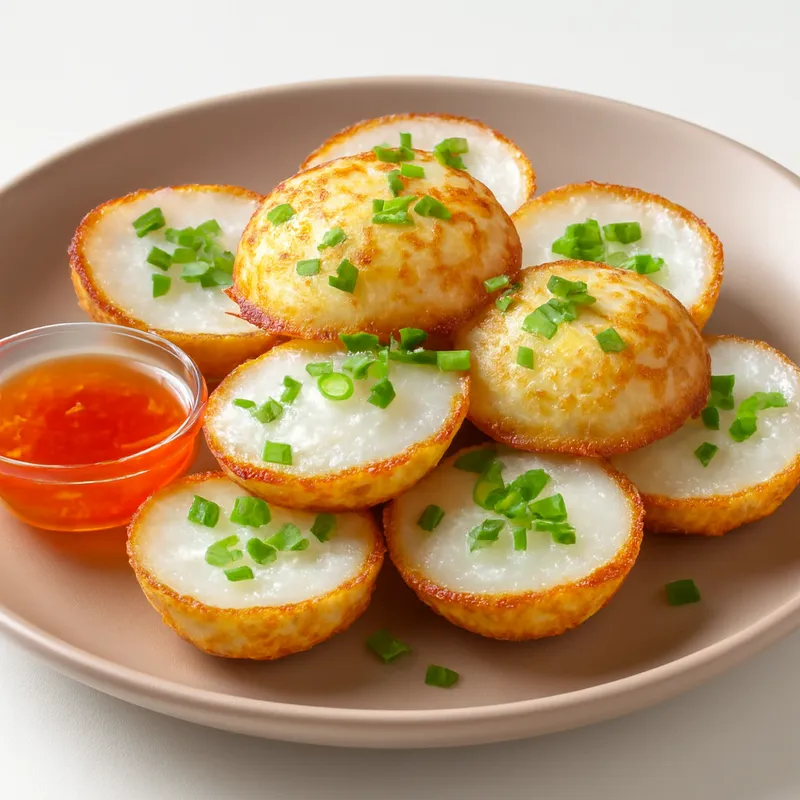
Bite-sized coconut-rice pancakes cooked in a dimpled iron griddle: a thin rice-flour batter forms the shell, a sweet coconut-cream layer sets on top, and they're scooped out joined two-by-two.
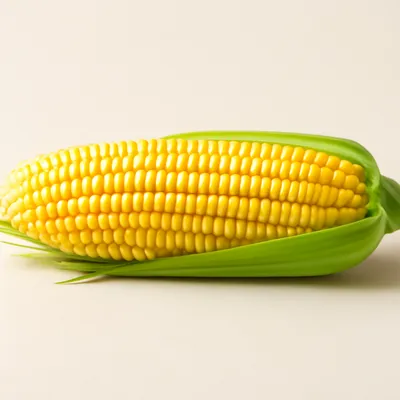
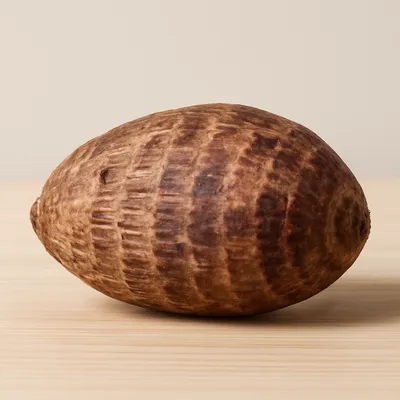
Khanom Krok is among the oldest documented Thai sweets, with the dimpled iron pan (krok means mortar — the cake takes the shape of a small mortar's bowl) appearing in Ayutthaya-era cookery records (17th century). The two-batter technique mirrors a Portuguese-era logic — a setting base and a custardy top — but the ingredients are entirely Southeast Asian: rice flour, palm sugar, coconut cream. Modern street vendors push the form with savoury toppings (corn, scallion, shrimp) and dessert versions (taro, pandan, sweet potato).
Among the oldest documented Thai sweets — the dimpled iron pan (krok = mortar) appears in 17th-century Ayutthaya cookery records. Two batters, two textures: the base sets crisp, the top wobbles like custard.
Each cake is the size of a walnut half, two stuck together flat-on-flat. The bottom shell is crisp and faintly toasted, edged with caramelised coconut. The top is a salty-sweet custard that wobbles and pulls slightly when you bite — almost a coconut panna cotta. Eat hot: the contrast between brittle base and warm liquid centre is the whole point. Cool ones go uniformly soft and lose the crack. Scallion topping looks odd on a sweet but the salt-savoury hit is what makes them addictive.
The two-batter system is the load-bearing detail. The base needs to gelatinise quickly into a self-supporting shell at the well's wall — that's why it has a higher water-to-flour ratio and includes cooked rice for elasticity. The top batter is fat-rich (thick coconut cream) so it sets soft, like a custard, even at high temperature. Pour both at once and they merge into a single dense cake. Pour them in sequence and you get two textures from one cooking. The dome lid traps steam to set the top before the bottom over-bakes.
Variations
Plain coconut version is the Ayutthaya original; scallion-topped is the Bangkok street favourite; taro and pandan are 20th-century dessert riffs; corn-and-shrimp savoury versions appear in modern Yaowarat stalls.
On the Palate
Where Khanom Krok sits in the Thai flavor cloud
Ingredients
Serves 4





How it's made
6 steps · 25 min active + 10 min waiting
- 114 min
Soak 100g raw rice in water 4 hours; drain. Blend with 50g cooked rice, 50ml coconut milk, 200ml water, 1 tbsp grated coconut, pinch salt to a smooth thin batter. Rest 10 minutes — this is the bottom layer.
- 24 min
For the top layer: whisk 200ml thick coconut cream, 60g rice flour, 1.5 tbsp sugar, 1/2 tsp salt — saltier than the base.
- 33 min
Heat a khanom krok pan (cast iron with 12-16 hemispherical wells) over medium until each well registers 180°C. Brush each well with oil — they should hiss but not smoke.
Watch outBring each well to temperature and brush with oil — it should hiss on contact but not smoke, or the shell scorches before it sets.
- 42 min
Three-quarters fill each well with the rice-base batter. Wait 60 seconds — the bottom and sides set into a thin shell, the centre still wet.
Watch outFill only three-quarters with the rice batter and wait a full minute — the sides must gel into a thin shell while the centre stays wet.
- 54 min
Top each well to the brim with the coconut cream layer. Scatter optional toppings — sweet corn, scallion, or taro — across the surface. Cover with a domed lid 3 minutes — the top sets to a soft custard, the shell crisps underneath.
Watch outCap with the domed lid so trapped steam sets the soft coconut top before the shell underneath over-bakes.
- 62 min
Lift each pair (the wells are spaced so two cakes are scooped together) with a small dome-spoon, joining flat-sides and serving them as a 'sandwich'. Eat hot.
Archive tool suggestions — not reviewed
These legacy suggestions have not been evidence-reviewed and are not presented as required tools.
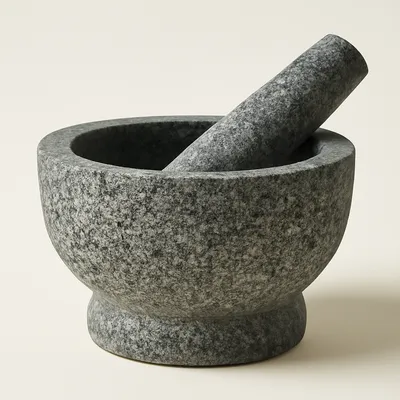
The simplest tool in any kitchen: a heavy bowl and a club to bash things in it. Different cuisines use different stones — Thai cooks pound green papaya in a tall granite mortar (krok hin); pesto Genovese requires the soft-pored Carrara marble; Indian masalas grind down on rough basalt. The bash-don't-cut motion releases volatile oils that a blade keeps sealed in the cell wall.
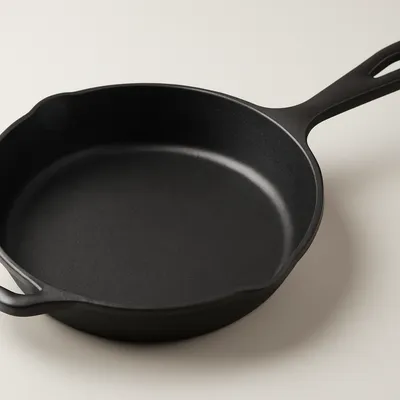
A heavy, single-piece cast iron pan, 25-30 cm across, weighing 1.5-2.5 kg. Once preheated, the thick mass holds 230°C+ even when a cold steak hits the surface — that's the secret to a deep crust. A well-seasoned skillet (multiple thin layers of polymerized oil baked into the iron) is essentially nonstick, gets better with use, and lasts a century. Lodge skillets from Tennessee have been in continuous production since 1896.