



Modern Greek moussaka was codified by chef Nikolaos Tselementes around 1910 (in his cookbook) — he added the béchamel layer (a French technique) to a much older Levantine dish (eggplant-and-meat casserole, found across Turkey, Lebanon, the Balkans). The pre-Tselementes version had no béchamel and was closer to Turkish musakka. Tselementes "Frenchified" Greek cuisine to make it presentable to European elites; moussaka is the most-quoted result.
Moussaka is the essence of Greek comfort food, with layers that unveil a delicious story of eggplant and spices.
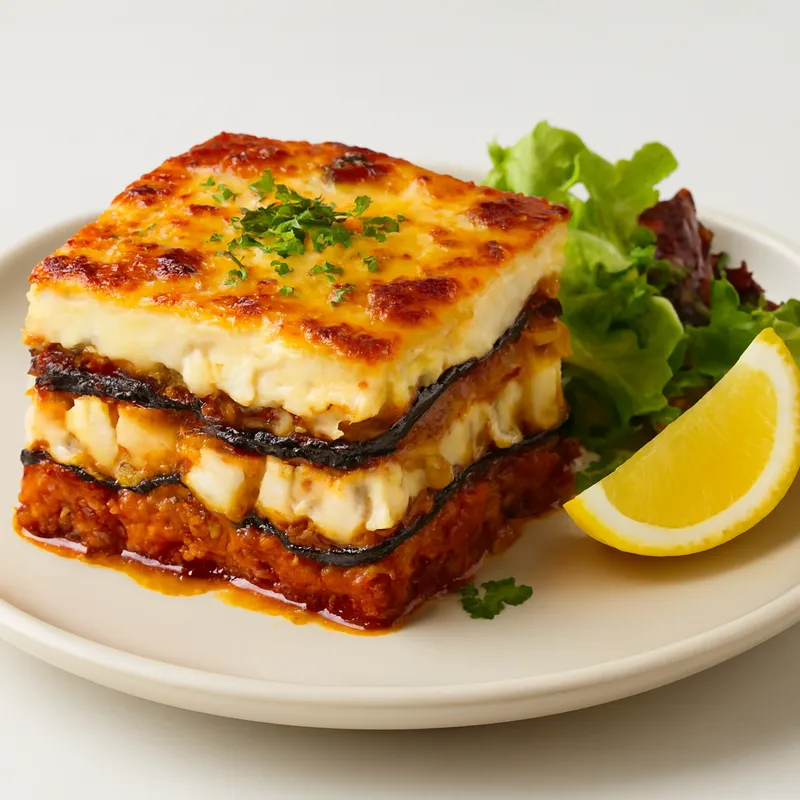
A square slab from a deep baking dish: fried eggplant on the bottom, ground lamb in tomato-cinnamon sauce in the middle, thick béchamel topped with grated kefalotyri on top, baked until the béchamel goes golden and a bit puffy. Eat warm, not hot — layers need 10 minutes to set or they slide apart on the fork.
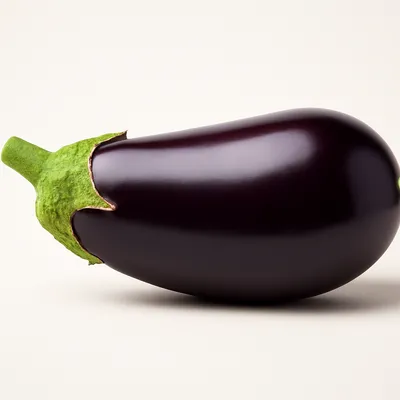
Eggplant prep is the make-or-break: salt the slices and let them sit 30 minutes to draw out moisture, then squeeze dry before frying — otherwise the bottom layer goes mushy and waterlogs the dish. Béchamel needs to be thick enough that it doesn't sink into the meat layer; ratios matter (50g flour to 50g butter to 500ml milk for a properly stiff sauce), and beaten egg plus cheese are stirred in so it sets into a custard when baked. The kefalotyri-cheese top isn't optional — it's what creates the golden crust.
Variations
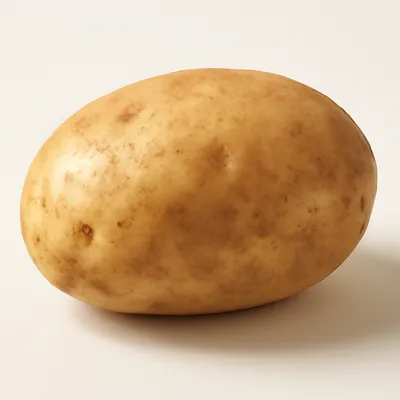
Cypriot version uses potato instead of eggplant; Turkish musakka is sautéed not baked, no béchamel; vegetarian moussaka layers chickpeas and lentils.
On the Palate
Where Moussaka sits in the Greek flavor cloud
Ingredients






How it's made
6 steps · 55 min active + 30 min waiting
- 115 min
Slice the eggplants into 1/4-inch rounds. Heat olive oil in a large pan over medium heat until shimmering, then sauté the slices until golden brown on each side.
Watch outThe oil should shimmer before the eggplant goes in so the slices brown rather than drink oil; fry to golden on both sides and set aside. Soggy, pale slices mean the pan wasn't hot enough or the eggplant wasn't squeezed dry.
- 210 min
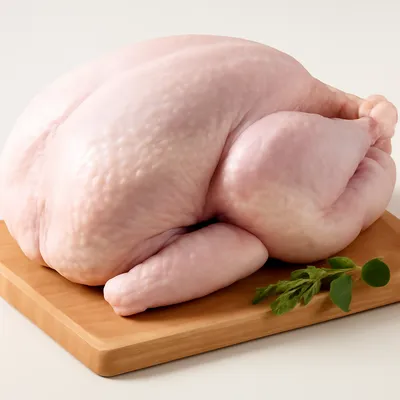
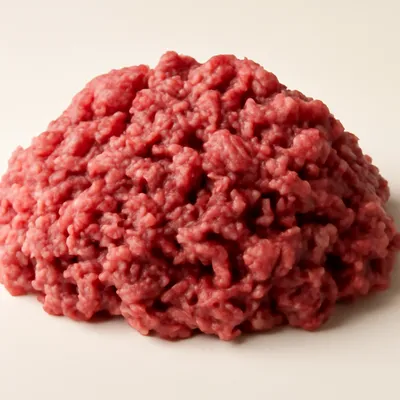
In the same pan, add chopped onions and garlic. Sauté until the onions are translucent and the garlic is fragrant. Add minced meat and cook until browned, breaking it up with a wooden spoon.
Watch outCook onions until translucent and soft, then break the meat up with a wooden spoon and brown it fully — no pink patches and any liquid cooked off before the tomato goes in.
- 310 min
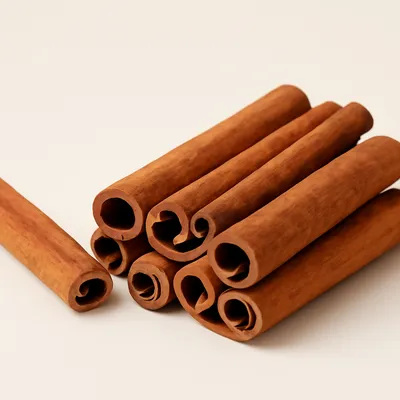
Stir in the pureed tomatoes and cinnamon. Simmer the mixture until it thickens slightly and the flavors meld together.
Watch outLet the tomato and cinnamon simmer down until the sauce thickens and looks glossy rather than watery, and the flavors have melded — a wet meat layer will loosen the whole bake.
- 410 min
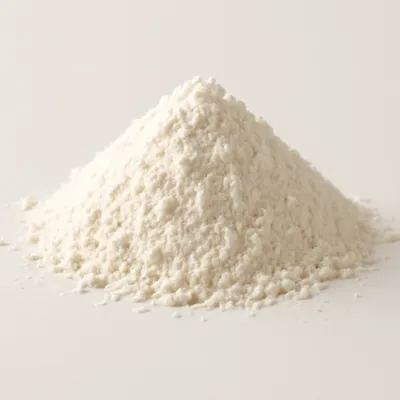
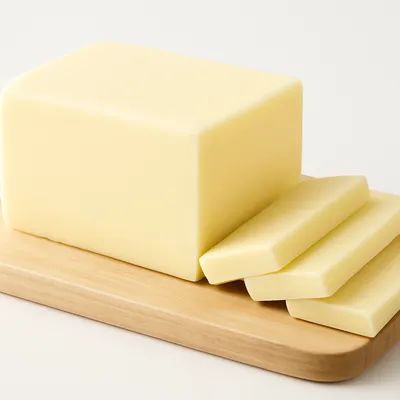
For the béchamel sauce, melt butter in a saucepan over medium heat. Whisk in flour until smooth, then gradually add milk, whisking constantly until the sauce thickens. Season with salt and a pinch of nutmeg.
Watch outWhisk constantly as the milk goes in so no lumps form; the béchamel is ready when it thickly coats the whisk and holds a trail. Off the heat, it should be stiff enough to mound, not pour like cream.
- 55 min
Layer the sautéed eggplant slices in a baking dish, followed by the meat mixture. Pour the béchamel sauce over the top, spreading it evenly. Sprinkle with grated Parmesan cheese.
Watch outBuild in order — a solid base of eggplant, then the meat, then the béchamel spread right to the edges so it seals the top — and finish with a generous scatter of grated cheese for the crust.
- 65 min
Bake in a preheated oven at 350°F (175°C) until the top is golden brown and bubbling, about 30 minutes.
Watch outBake until the top is golden brown and a bit puffed, with the edges bubbling — that color and puff mean the custard has set. Then let it rest before cutting.
Archive tool suggestions — not reviewed
These legacy suggestions have not been evidence-reviewed and are not presented as required tools.

Hand-held wire loop tool for beating eggs, whipping cream, emulsifying dressings, and incorporating air into batters. Balloon whisks (large round head) for whipping cream and meringues; French whisks (narrow tear-drop) for sauces in pots; flat whisks (gravy) for pan sauces. Stainless steel is universal; silicone-coated for non-stick pans.

Round metal pot, 14-26 cm diameter, with vertical walls and a long handle, designed for sauces, soups, oatmeal, rice, boiled vegetables. The vertical walls minimize evaporation (vs. a sauté pan). Sizes: 1 qt for melting butter, 2-3 qt for sauces, 4 qt for soups. Stainless-steel-clad aluminum or copper is best for conduction; cast-iron is too thick for delicate sauces.