Dunhuang's most iconic dish pairs alkaline hand-pulled noodles, dyed gold by desert plant ash water, with slow-braised donkey meat. The noodles — described locally as 'fine as dragon whiskers, long as golden threads' — represent a feat of sustained pulling technique unique to this oasis city at the ancient Silk Road's edge.




Dunhuang sits at the junction of the Hexi Corridor and the Silk Road's southern branch. Tang dynasty Dunhuang manuscripts document the milling of wheat into flour, and wheat had become the oasis's staple grain by the Tang–Song era; murals at the Mogao Caves depict noodle-pulling, placing the hand-pulled noodle craft here at least in the Song dynasty, roughly a thousand years ago. The alkaline technique — dissolving ash from desert steppe plants such as tumbleweed and white mugwort in water to make the kneading lye — likely descended from nomadic practice along the Silk Road, where plant-mineral alkali was used to strengthen dough for long journeys. The donkey-meat pairing is said to have solidified during the Qing dynasty, when donkeys were the primary pack animal of Hexi Corridor caravans and their lean meat fed caravanners travelling between oases. Passed down through a century of Dunhuang restaurant families, the dish evolved from a wedding banquet staple into the city's emblematic everyday food.
The noodles arrive shimmering yellow, impossibly thin yet taut as wire. They spring back against the tongue without breaking, carrying a faint mineral-alkaline warmth. Braised donkey meat, darker and leaner than beef, arrives in glistening slices; the braising gelatin coats the lips with a depth that the lean meat alone could never achieve.
Desert plant ash dissolved in water yields a lye rich in sodium carbonate, raising the dough pH to approximately 9–10. At this alkalinity, glutenin and gliadin form additional intermolecular disulfide bonds, producing a tighter, far more extensible gluten network than neutral-pH dough — the physical basis for pulling noodles to hair-width without snapping. The same alkaline environment triggers structural changes in wheat flavonoids, developing the characteristic golden color. Donkey meat is unusually lean (fat content approximately 2%) but collagen-rich in tendons; long braising at 90–95°C hydrolyzes that collagen into gelatin, creating the lip-coating richness that compensates for the minimal intramuscular fat.
Variations
A dry-tossed version omits broth and tops noodles with a shiitake-donkey mince sauce. Some vendors substitute braised pork for donkey meat. A clear-soup version floats the noodles in donkey-bone broth. Modern Dunhuang restaurants have extended the concept into a full donkey banquet, where the yellow noodles serve as the closing carbohydrate alongside multiple donkey preparations.
On the Palate
Where Dunhuang Donkey-Meat Yellow Noodles sits in the Chinese flavor cloud
Ingredients
Serves 2
How it's made
7 steps · 1 hour
- 145 min
Dissolve food-grade sodium carbonate (1 tsp per 500 ml warm water) until fully clear; pour into high-gluten wheat flour and knead vigorously for 15 minutes until the dough is smooth, elastic and slightly golden. Cover and rest 30 minutes.
Watch outKnead the alkaline dough a full fifteen minutes till it's smooth, springy and faintly golden — under-kneaded gluten snaps when you pull instead of stretching to a thread.
- 260 min
Rub donkey meat chunks with salt, five-spice powder and Shaoxing wine; marinate at room temperature for 1 hour.
- 3105 min
Heat oil in a heavy pot; brown marinated donkey meat on all sides; add soy sauce, dark soy sauce, rock sugar, star anise, bay leaves, ginger and scallion; pour in enough water to cover by 3 cm; bring to a boil then simmer gently for 90–110 minutes until fork-tender. Reserve the braising liquid.
Watch outSimmer the donkey meat gently till a fork goes through with no resistance — a low bubble, never a hard boil, or the lean muscle tightens and dries.
- 410 min
Rehydrate dried shiitake mushrooms; finely dice them and any donkey meat trimmings; saute in a spoonful of the braising fat; season with soy sauce and reduce to a thick mushroom-meat sauce.
- 515 min
Divide rested dough into hand-sized portions; roll each into a thick rope; pull by stretching both ends outward, fold and re-pull repeatedly until the noodles reach 1–2 mm diameter.
Watch outPull and fold repeatedly till the strands are down to a millimetre or two — even thickness matters most; a fat strand stays raw in the middle when the thin ones are done.
- 62 min
Drop pulled noodles into a large pot of vigorously boiling salted water; cook 60–90 seconds until just cooked through with no raw core; drain immediately.
Watch outDrop into hard-boiling water and pull them at just over a minute, the moment there's no white raw core left — they keep softening once dressed, so keep a little chew.
- 73 min
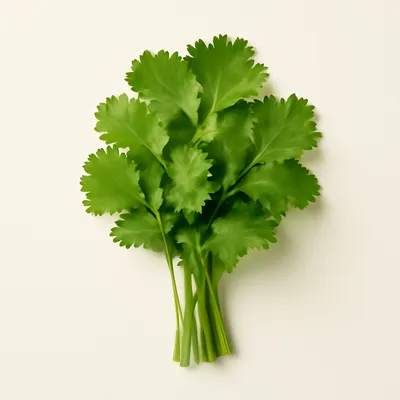
Toss drained noodles with a few drops of sesame oil to prevent clumping; divide between bowls. Arrange sliced braised donkey meat alongside; spoon mushroom sauce over the noodles; ladle warm braising liquid as the broth; garnish with cilantro and chili oil.
Archive tool suggestions — not reviewed
These legacy suggestions have not been evidence-reviewed and are not presented as required tools.


