Crisp folded crepelets the size of a child's palm — a wafer-thin rice-and-mung-bean shell topped with meringue cream and either sweet shredded coconut with foi thong egg-yolk threads, or salted shrimp with cilantro.
Khanom Buang is documented in Ayutthaya-era court manuscripts (17th century) as a refined sweet served at temple ceremonies. The egg-yolk thread topping foi thong descends from Portuguese fios de ovos, brought to Siam in the 17th century by the half-Japanese, half-Portuguese cook Maria Guyomar de Pinha at the court of King Narai. Street vendors adopted simplified versions in the 19th and 20th centuries, and modern Bangkok stalls still distinguish the salted-shrimp version (older, indigenous) from the sweet version (the court-Portuguese hybrid).
Documented in 17th-century Ayutthaya court manuscripts. The egg-yolk thread foi thong topping descends from Portuguese fios de ovos, brought to Siam by Maria Guyomar de Pinha at King Narai's court.
Each bite is the size of two fingers, almost weightless. The shell shatters between your teeth into rice-paper shards; underneath, the meringue is soft and faintly almond-scented from the egg whites. Sweet version is a layered hit — coconut chew, then the lacquered sweetness of foi thong threads. Salty version reads almost like a savoury cracker: shrimp umami pushed forward by sugar. A khanom buang that bends instead of snaps has been sitting too long — the shell needs to be fresh-eaten.
Mung-bean flour is what makes the shell shatter rather than bend — its high amylose content gelatinises into a brittle film, where pure rice flour would stay leathery. Lime water (nam pun sai) raises the pH and crisps the texture further. Critically the griddle is held at 160°C: hot enough to set, cool enough not to brown. Browning would push the shell toward toffee chew. The meringue layer is structural — it stops moisture from the toppings reaching the shell and softening it.
Variations
Salty version (older, indigenous) uses dried shrimp and pepper — found in older Bangkok markets; sweet version with foi thong is the court-Portuguese hybrid; modern fusion stalls use fruit and sweetened cream.
On the Palate
Where Khanom Buang sits in the Thai flavor cloud
Ingredients
Serves 6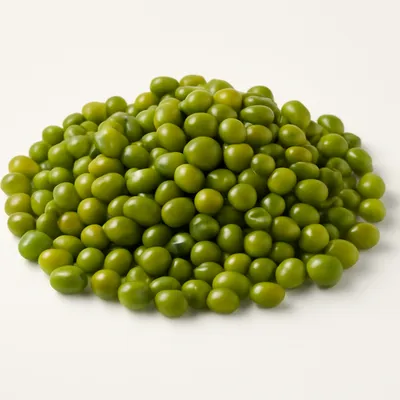







How it's made
6 steps · 50 min active + 10 min waiting
- 114 min
Toast 50g hulled mung beans dry in a wok 4 minutes until faintly aromatic. Grind to a fine powder. Combine with 100g rice flour, 30g tapioca starch, 1 tbsp lime water (nam pun sai), pinch salt. Whisk in 220ml water to a thin pourable batter. Rest 10 minutes.
- 210 min
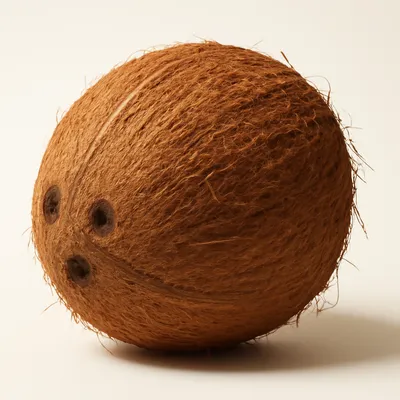
Whip 2 egg whites with 80g caster sugar to firm peaks. Sweet topping: simmer 100g grated young coconut with 50g palm sugar and 20ml water 4 minutes until sticky; cool. Salty topping: mix 80g dried shrimp floss with 40g grated coconut, 30g sugar, 1 tbsp fish sauce, then dry-toast 3 minutes.
- 32 min
Heat a flat griddle (or non-stick skillet) to 160°C — lower than you'd think. Wipe with the merest film of oil. Drag a small ladle of batter across the surface in one swipe to leave a 10cm wafer-thin smear, almost translucent.
Watch outHold the griddle at a gentle 160 degrees, lower than feels right, and wipe off nearly all the oil — hot enough to set the wafer, cool enough that it never browns.
- 42 min
Cook 90 seconds — the shell should dry from translucent to matte and lift cleanly at the edges, never browning. If it browns, the heat is too high.
Watch outCook about 90 seconds until the shell dries from see-through to matte and lifts free at the edges — the moment it browns, the heat's too high and you've lost the shatter.
- 52 min
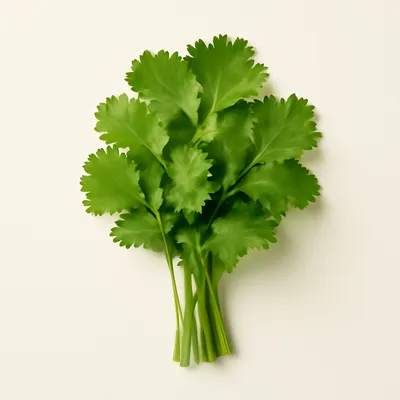
Pipe a 3cm stripe of meringue down the centre. Spoon either coconut topping with foi thong threads, or salty shrimp with cilantro leaves, on top of the meringue.
- 62 min
Lift one edge with a spatula and fold the shell into a half-moon — it should curl crisp and brittle. Slide off the griddle. Eat within 30 minutes; the shell goes soft once humidity sets in.
Watch outFold into a half-moon while it's still on the griddle — it should curl up crisp and snap-brittle; eat within half an hour before the damp softens it.
Archive tool suggestions — not reviewed
These legacy suggestions have not been evidence-reviewed and are not presented as required tools.