Translucent tapioca-pearl dumplings filled with sweet-savoury minced pork, peanut, sweet pickled radish, and palm sugar — served on lettuce with cilantro, fried garlic, and bird's-eye chile.
Sakoo Sai Moo is a Central Thai khong wang (afternoon snack) with clear Thai-Chinese cousins — the filling structure (minced pork, garlic, cilantro root, white pepper, palm sugar) is the same family as the steamed-bun fillings of Bangkok's Chinatown. The tapioca skin is purely Southeast Asian. Court/old-recipe books from the early 20th century already list it among standard reception snacks served with lettuce-and-chile garnish; today it is a market and street-stall item, often paired with its sister dish khao kriap pak mor (steamed rice-paper dumplings).
Central Thai afternoon snack with Thai-Chinese parentage — the pork-cilantro-root-white-pepper filling is the same family as Bangkok Chinatown bun fillings; the tapioca pearl skin is Southeast Asian. 15-minute soak is the make-or-break window.
A glassy, slightly slumped ball the size of a walnut — you can see the dark filling shadow through the pearls. The skin is springy-sticky, almost gelatinous; one bite cracks it and the warm pork-peanut filling spills sweet-salty-peppery into the mouth. The lettuce is the temperature pivot — cool, crisp, raw — and the bird's-eye chile is the alarm bell. A bad sakoo has uncooked pearl centres (chalky white speckles); a good one is uniformly translucent.
The 15-minute soak is the make-or-break step — pearls must absorb just enough water to be malleable but still hold shape. Too dry and they crack at the seams; too wet and they melt into porridge in the steamer. Translucent is the doneness cue, not time. The filling has to be cooked tacky-dry before chilling — any residual moisture inside steams out and bursts the wrapper. Brush oil between balls or they fuse into a single sticky lump.
Variations
Khao kriap pak mor (steamed rice-paper version) is the sister dish; Krua Apsorn runs the canonical hand-folded version; market shortcuts use peanut paste alone instead of pork; the Indonesian klepon is a related-but-sweet cousin in the same pearl family.
On the Palate
Where Sakoo Sai Moo sits in the Thai flavor cloud
Ingredients
Serves 4










How it's made
6 steps · 1 hour 10 min active + 20 min waiting
- 110 min
Toast 50g raw peanuts in a dry pan until skins darken; rub off skins and chop coarsely. Pound 4 cilantro roots, 6 garlic cloves, 1 tsp white peppercorns to a paste in a mortar.
- 215 min
Heat 2 tbsp oil. Fry the paste until fragrant, add 250g minced pork, break apart and brown 4 minutes. Add 80g grated palm sugar, 2 tbsp fish sauce, 1 tbsp dark soy, 2 tbsp water; reduce until tacky and almost dry. Off heat, fold in chopped peanuts. Cool, then roll into 2cm balls — about 16 of them.
Watch outCook the filling down until it's tacky and almost dry — any moisture left inside steams out and bursts the wrapper.
- 315 min
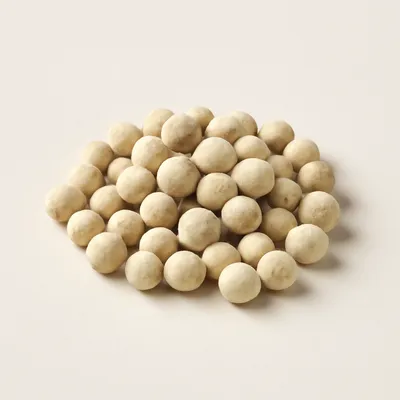
Soak 200g small white tapioca pearls in 200ml water for exactly 15 minutes — they should swell and just absorb the water. Don't oversoak or they dissolve when steamed.
Watch outSoak the pearls exactly fifteen minutes — just swollen enough to bend without cracking; oversoaked, they melt into porridge in the steamer.
- 415 min
Wet hands. Take a tablespoon of swollen pearls, flatten in palm into a 6cm disc, place a pork ball in the centre, and close the pearls around it — pinch and roll until fully sealed. Repeat for all 16.
- 515 min
Line a steamer with banana leaf or oiled parchment. Steam over high heat 12-15 minutes until pearls turn fully translucent — that is the doneness signal. Brush each ball lightly with oil so they don't stick to each other.
Watch outDone the moment the pearls turn fully see-through — that's the doneness cue, not the clock; then brush each with oil so they don't fuse.
- 65 min
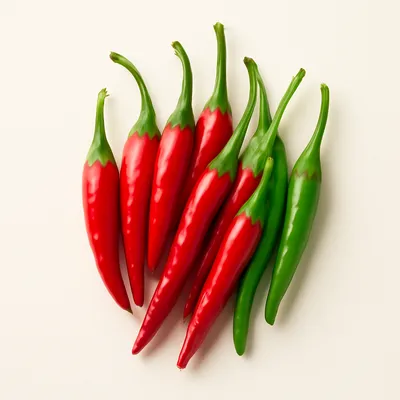
Plate on lettuce leaves. Top each ball with fried garlic, a cilantro leaf, a sliced bird's-eye chile, and a thin slice of fresh red chile. Eat by wrapping the ball in the lettuce and biting through it whole.
Archive tool suggestions — not reviewed
These legacy suggestions have not been evidence-reviewed and are not presented as required tools.