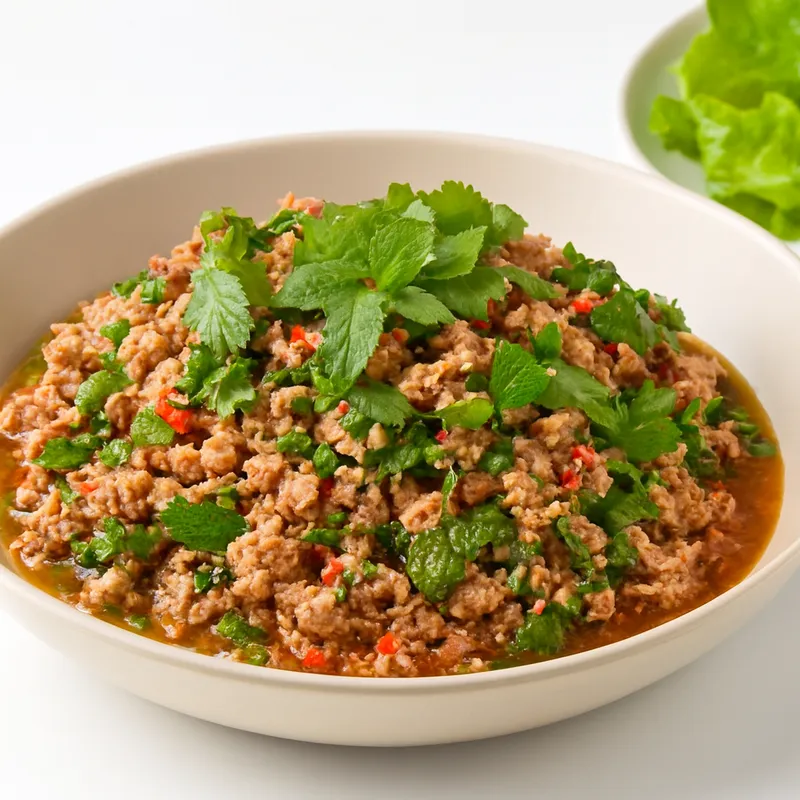
Lanna raw freshwater fish dressed with toasted rice powder, fresh lime, mint, kaffir lime leaf, and bird's eye chile — northern Thailand's answer to ceviche, eaten with sticky rice.
Sa is a Lanna preparation method that means raw and dressed — not quite the same as larb (which can be raw or cooked) and distinct from yam (which uses cooked or fermented protein). Sa pan pla uses freshwater river fish from the Mekong tributaries — historically pla taphian, pla nin, or pla khao. Eating raw freshwater fish in northeast Thailand has been linked epidemiologically to liver fluke infection; the modern Lanna restaurant version uses certified frozen fish, while traditional household preparations still risk it.
Lanna raw-fish preparation distinct from larb (which can be raw or cooked) and yam (cooked or fermented protein). Freshwater fish must be frozen at -20°C for 7 days to kill Opisthorchis viverrini fluke cysts — saltwater sashimi rules don't apply.
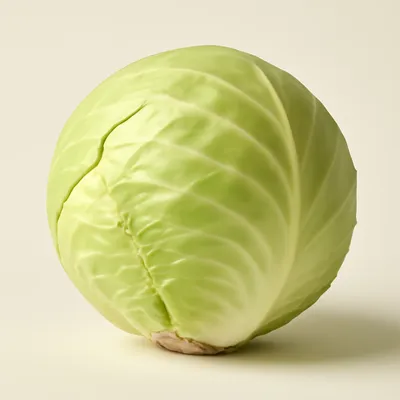
Cool, slippery fish that has been bleached opaque only at the edges — the centre still shines pink-translucent. The lime is bracing rather than dominant; the toasted rice powder grits between teeth and tastes nutty, almost like sesame; mint and kaffir lime leaf sit on top like perfume. Each bite is wrapped in a cabbage leaf with sticky rice and dipped back into the mix. If the fish smells fishy, send it back — sa pan pla is one bad batch from being a hospital trip.
The two technical loads are food-safety freezing and the lime-cure timing. Freshwater fish needs -20°C for 7 days to kill Opisthorchis viverrini cysts; saltwater sashimi rules don't apply. The lime cure is short (3 minutes) — long enough to denature surface proteins for texture, short enough to preserve the silk-soft centre. Pull the lime juice off after, or it keeps cooking and you end up with a dry, fully-cured fish that has lost the whole point.
Variations
Chiang Rai household versions still take the fluke risk with fresh river fish; restaurant versions in Chiang Mai (e.g., Huen Muan Jai) use certified frozen; Lao-side sa pa uses tilapia and adds more mint; Shan-village versions skip the toasted-rice powder.
On the Palate
Where Sa Pan Pla sits in the Thai flavor cloud
Ingredients
Serves 4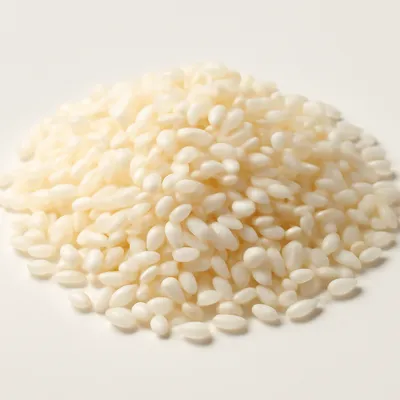





How it's made
5 steps · 20 min active + 5 min waiting
- 18 min
Source 400g sashimi-grade freshwater fish — traditionally pla taphian (Java barb) or pla nin (tilapia), but only from a trusted source that has flash-frozen the fish at -20°C for 7 days to kill liver flukes. Skin and bone; slice into 5mm strips against the grain.
Watch outOnly use freshwater fish that's been flash-frozen at -20°C for 7 full days — that's what kills the liver-fluke cysts; saltwater sashimi rules don't cover this.
- 26 min
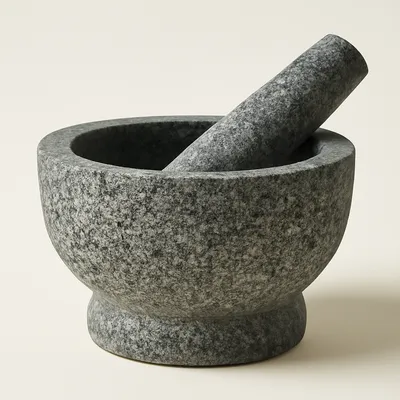
Toast 3 tbsp uncooked sticky rice in a dry wok over medium heat, stirring constantly, 5 minutes until each grain is amber and smells of popcorn. Cool fully, then pound in a mortar to coarse powder (khao khua).
Watch outToast the sticky rice, stirring nonstop, until every grain is amber and smells of popcorn — pale rice gives no fragrance, scorched grains go bitter.
- 34 min
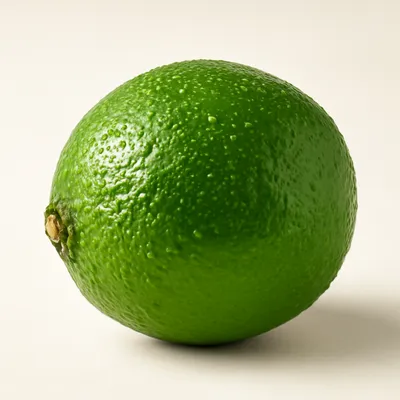
Squeeze 60ml fresh lime juice over the fish. Toss and let cure 3 minutes — the surface should turn opaque-white at the edges; centre stays translucent. Drain off most of the lime juice (it has done its job).
Watch outCure in the lime just 3 minutes — until the edges turn opaque-white but the centre stays translucent — then drain it off, or the fish keeps cooking and dries out stiff.
- 43 min
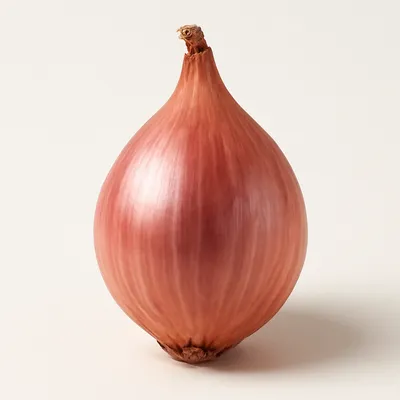
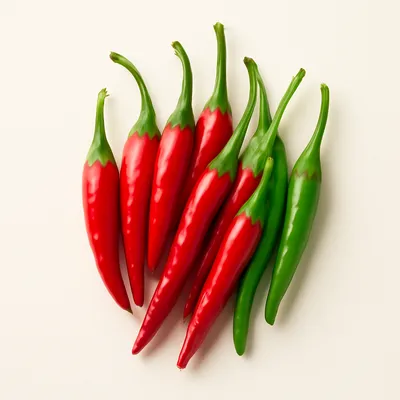
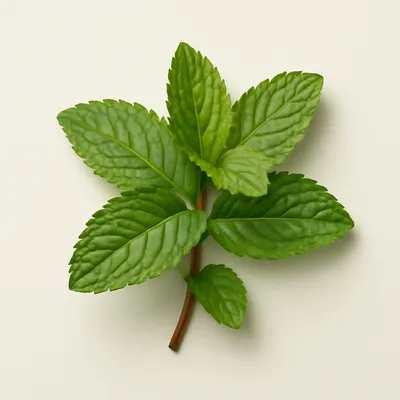
Add 4 sliced shallots, 5 sliced bird's eye chiles, 6 finely shredded kaffir lime leaves, 1 small handful mint leaves, 1 small handful sawtooth coriander chopped, 2 tbsp nam pla (fish sauce), 1 tsp sugar, the toasted rice powder. Toss with hands.
- 52 min
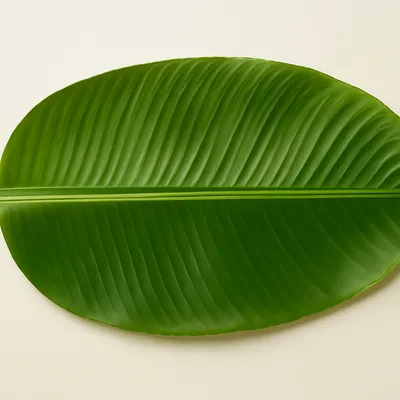
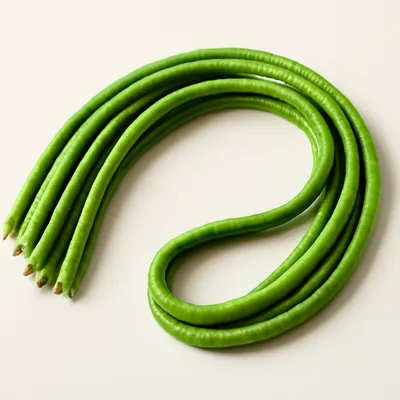
Plate immediately on a banana leaf or shallow dish. Dust extra rice powder on top; tuck a fresh chile alongside. Serve with warm sticky rice and a plate of raw vegetables (long bean, cucumber, cabbage wedges).
Archive tool suggestions — not reviewed
These legacy suggestions have not been evidence-reviewed and are not presented as required tools.