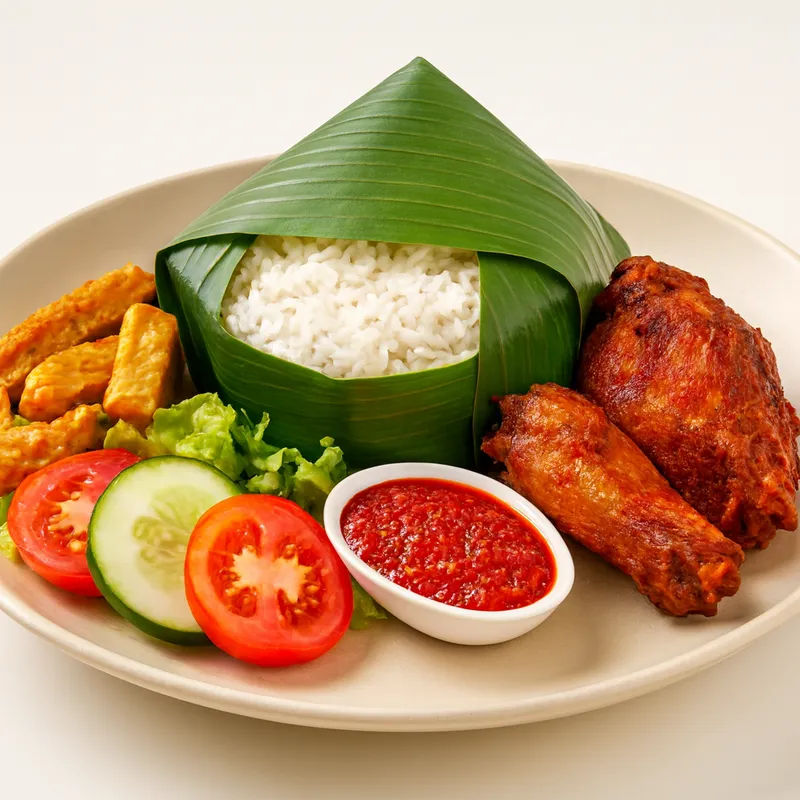
Solo (Surakarta) coconut-broth rice — long-grain rice cooked in coconut milk + chicken broth + lemongrass + salam leaves + garlic, served on banana leaf with sambal goreng krecek (sweet-spicy cattle skin), shredded chicken, opor ayam coconut chicken curry, telur pindang (brown-stained eggs), and tofu-tempe areh (in coconut sauce). The defining royal breakfast of the Surakarta kraton (palace), now sold as 'nasi liwet Wongso Lemu' at Solo street stalls.
Nasi Liwet Solo was formally adopted into the Surakarta court during the reign of Pakubuwana IX (19th century); Surakarta is ruled by a Sunan (Susuhunan), not a sultan. It traveled from palace to common kitchens in the 19th century. The 'Wongso Lemu' lineage (since 1950s, in Solo) is the most famous purveyor — the Keprabon-area stalls near the kraton open in the evening (around 5pm) and sell into the night and early morning — an evening/night street-food destination rather than a dawn-only breakfast. The dish's defining feature is the COCONUT BROTH the rice is cooked in (vs plain water for nasi goreng) + the array of accompaniments served on a banana leaf 'pincuk' (cone-shaped wrapper). Distinguished from Sundanese 'nasi liwet' (Bandung style) which is plainer.
Nasi Liwet Solo is the platonic Indonesian rice plate. Take a spoonful of the coconut-fragrant rice (the rice itself tastes finished — sweet from coconut, savory from chicken broth, herbal from lemongrass and salam), then add some shredded opor chicken (mild coconut curry), then a half telur pindang (brown shell, golden yolk, slightly tea-stained whites), then a small spoon of sambal goreng krecek (sweet-spicy crunch from cattle-skin), then sambal terasi on the side. Each bite is a different combination. The Sumber Jajanan ('source of snack') style of Solo cuisine.
The 'liwet' technique is the rice-cooking method — rice cooked in flavored liquid until fully absorbed (Indonesian equivalent of pilaf). Coconut milk + chicken broth carry fat-soluble + water-soluble flavor compounds simultaneously into the rice grain. The aromatic infusion (lemongrass + salam + galangal) is absorbed during the 18-min absorption phase. The 10-min covered rest is crucial: it lets steam redistribute moisture and finish the starch gelatinization without overcooking. Telur pindang is a Javanese coloring technique using shallot skins + tea + soy — the shell pattern reveals through after peeling.
Variations
Nasi Liwet Solo (royal Surakarta, with all accompaniments); Nasi Liwet Sunda (Bandung simpler version, just coconut rice without the full plate); modern Indonesian-American restaurants serve nasi liwet as 'Indonesian coconut rice'; rice-cooker hack uses canned coconut milk diluted with broth; festival version cooks rice in a giant 'kastrol' (clay pot) over wood fire — the bottom forms a crust called 'kerak' that's prized.
On the Palate
Where Nasi Liwet sits in the Indonesian flavor cloud
Cook the rice in coconut milk plus chicken broth, not water — that fat-and-savory liquid is what soaks into every grain and makes this dish, so let it fully absorb undisturbed then rest covered.
Ingredients
Serves 6







How it's made
8 steps · 25 min active + 35 min waiting
- 14 min
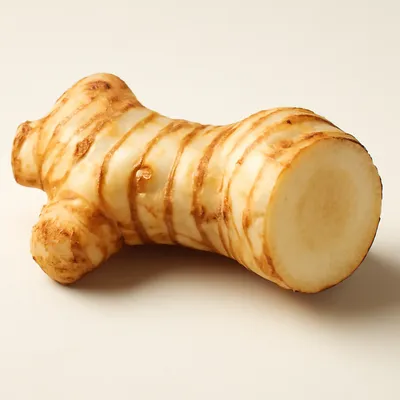
Make coconut broth: in a saucepan combine 500ml coconut milk + 500ml chicken broth + 2 stalks lemongrass (smashed) + 3 salam leaves + 4 garlic cloves (smashed) + 2cm galangal (smashed) + 1 tsp salt. Bring to a low simmer.
Watch outSmash the lemongrass, garlic and galangal before they go in so their oils leach into the simmering coconut broth.
- 22 min
Wash 400g long-grain rice; drain. Add to a heavy-bottomed pot or rice cooker.
- 318 min
Pour the coconut broth over the rice (should cover by 1cm). If using rice cooker, set to 'cook'; if using stovetop, cover and bring to boil, then reduce to lowest heat and simmer 18 min undisturbed.
Watch outThe broth should sit about a fingertip (1cm) above the rice — too little and the grains scorch, too much and they turn to porridge.
- 425 min
Make opor ayam shredded chicken: while rice cooks, simmer 500g chicken thigh in 300ml coconut milk + 5 shallots (sliced) + 3 garlic cloves + 2cm galangal + 1 tsp ground coriander + 1/2 tsp turmeric + 1 tsp palm sugar + 2 salam leaves + 1 tsp salt for 25 min until chicken is tender. Shred the chicken.
- 532 min
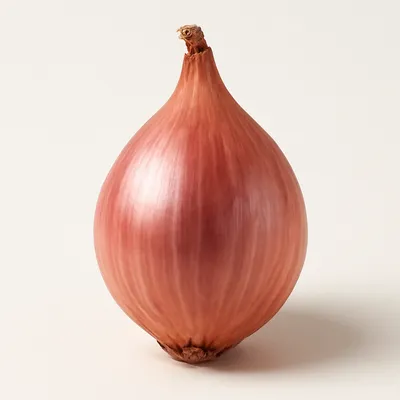
Make telur pindang: simmer 6 hard-boiled eggs (in shell) in 250ml water + 2 tbsp shallot skins + 2 tbsp tea bags + 1 tbsp dark soy + 1 tsp salt for 30 min. The shells absorb the color to make a brown marble pattern.
- 617 min
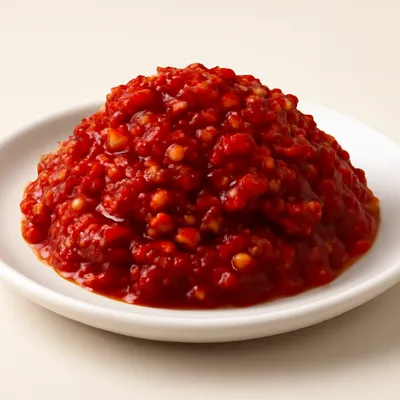
Make sambal goreng krecek: simmer 150g rehydrated pork rinds in 100ml coconut milk + 2 tbsp sambal + 1 tbsp palm sugar + 1 tsp salt for 15 min.
- 710 min
Rest the cooked rice 10 min covered (essential for texture).
Watch outResist opening the lid during the 10-minute rest; a quick peek lets out the steam that's finishing the texture.
- 88 min
Serve on banana leaf: scoop a portion of rice; arrange shredded opor chicken + halved telur pindang + sambal goreng krecek + tofu-tempe areh + thinly-sliced cucumber + sambal terasi around the rice. Eat with the hands or a spoon. The Solo-style serving is family-style: a large banana-leaf-lined platter with components arranged in sections.
Archive tool suggestions — not reviewed
These legacy suggestions have not been evidence-reviewed and are not presented as required tools.

An electric pot with a thermostat that switches off the moment internal temperature exceeds 100°C — meaning the moment all free water has boiled off. Add rinsed rice and water (1:1.2 by volume for short-grain), press start; 25 minutes later it sits in warming mode and stays at 65°C all day. The fuzzy-logic Japanese versions (Zojirushi, Tiger) cook brown rice, sushi rice, and porridge with separate algorithms for each.

Round metal pot, 14-26 cm diameter, with vertical walls and a long handle, designed for sauces, soups, oatmeal, rice, boiled vegetables. The vertical walls minimize evaporation (vs. a sauté pan). Sizes: 1 qt for melting butter, 2-3 qt for sauces, 4 qt for soups. Stainless-steel-clad aluminum or copper is best for conduction; cast-iron is too thick for delicate sauces.