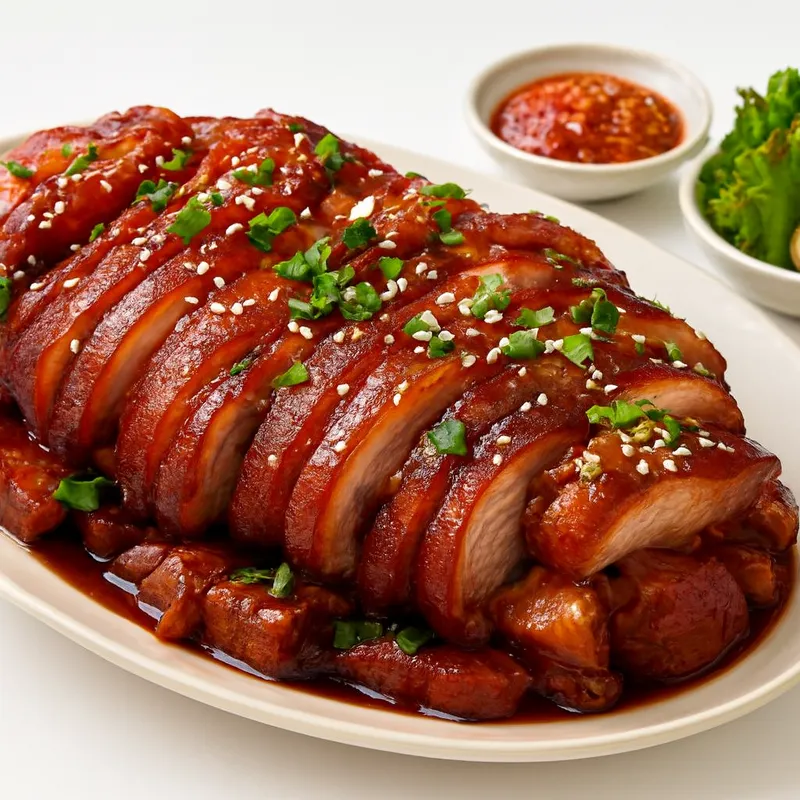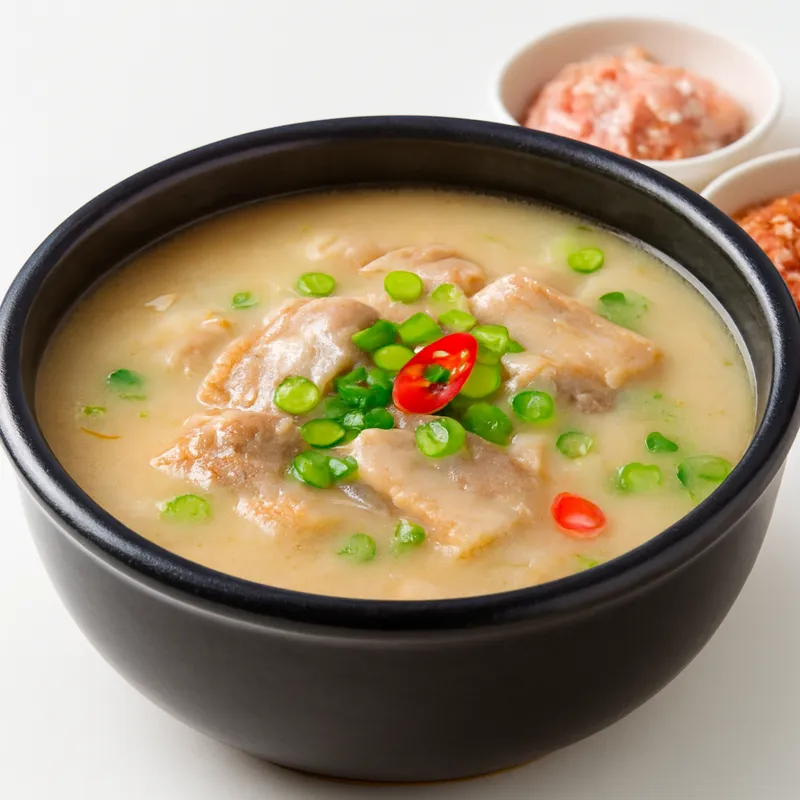
A soup of pork belly and bones simmered long and served over short-grain rice, with the umami of doenjang and a briny hit of salted shrimp.

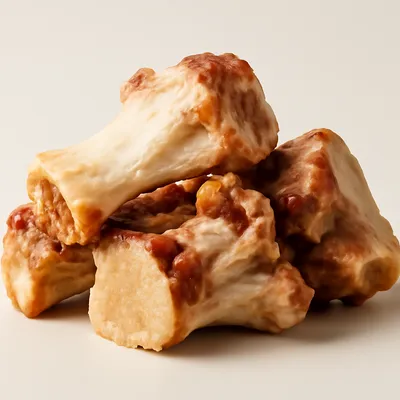




A Busan dish that took shape during and after the Korean War (1950–53), when refugees crowded into the southern port and pork scraps and bones were what was cheap. Cooks boiled bones for hours, dumped rice straight into the bowl to stretch the meal, and let each diner season at the table because tastes varied across regional refugee groups. The salted shrimp finish is Gyeongsang coastal — it wouldn't appear inland.
A Busan war-and-port dish from the early 1950s — pork bones boiled for hours, rice dumped straight in, each diner seasoning at the table. The load-bearing seasoning is saeujeot, tiny salted shrimp; without it the broth tastes flat-rich and one-note.
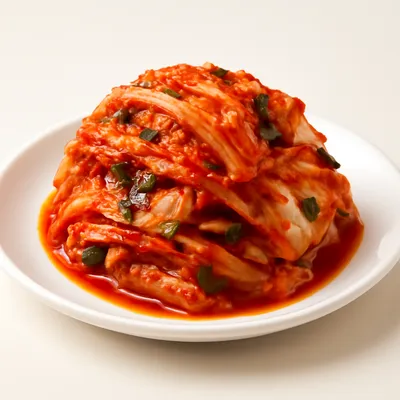
A bowl of milky-white pork-bone broth with rice already submerged, sliced boiled pork belly on top. The broth is unseasoned at the table — you build it yourself: salted shrimp (saeujeot) for salt, chopped chives, a spoon of red chili paste, raw garlic if you want it. First sip plain, to taste the bones; then season. Kimchi and yellow radish on the side.
Saeujeot — tiny salted, fermented shrimp — is the load-bearing seasoning. It supplies salt plus a marine glutamate hit that plain salt cannot, and the ferment cuts pork fat in a way soy sauce would muddy. Skip it and the broth tastes flat-rich, one-note. Coastal Busan had cheap saeujeot from the same boats; that's why this exact seasoning ritual didn't migrate to Seoul versions.
Variations
Milyang style (a clearer, darker broth built on ox bones rather than pork bones, with less belly and more shoulder); Busan Seomyeon old-stalls version (cloudy and aggressive on the saeujeot); Suyeong's sundae-gukbap uses blood sausage in place of belly; Yangsan adds soybean paste to thicken.
On the Palate
Where Dwaeji Gukbap sits in the Korean flavor cloud
Season the finished bowl with saeujeot, not just salt — the tiny fermented shrimp bring a marine glutamate hit that plain salt can't, and the ferment cuts the pork fat cleanly.
Ingredients












How it's made
5 steps · 4 hours
- 160 min
Boil pork bones with water, onion, garlic, and ginger to make a rich broth.
Watch outOnce the bones hit a boil, drop the heat immediately — a rolling boil clouds the broth for good.
- 215 min
Strain the broth and add sliced pork belly.
- 3112 min
Simmer the broth with doenjang for added depth of flavor.
Watch outStir in the doenjang and taste; it should read earthy and savoury but still under-salted, because the salt comes later from the shrimp.
- 438 min
Prepare short-grain rice in a separate pot.
- 515 min
Serve the soup over rice, garnished with chopped chives and a sprinkle of black pepper, with salted shrimp on the side.
Watch outLadle the hot broth over the rice at the table and let each bowl be seasoned by hand — that's when the shrimp goes in.
Archive tool suggestions — not reviewed
These legacy suggestions have not been evidence-reviewed and are not presented as required tools.