




Javanese in origin (Indonesia), descended from ketupat — lontong is the same idea of rice packed and boiled inside a leaf, but cylindrical and wrapped in banana leaf rather than the diamond of woven palm fronds. The Javanese tradition of eating lontong and ketupat is popularly tied to the spread of Islam in Java: folk accounts credit Sunan Kalijaga, one of the Wali Songo (Nine Saints), with introducing it as part of his preaching. From the 19th century onward Javanese migrants carried the dish to peninsular Malaysia — heaviest in Johor and Selangor, where Javanese settlement was densest. The rice-cake-in-vegetable-curry format is shared across the Indonesian-Malay world (ketupat sayur is the same idea with woven palm-leaf parcels). Common as a Hari Raya morning dish, when the savory contrast cuts through days of sweet kuih.
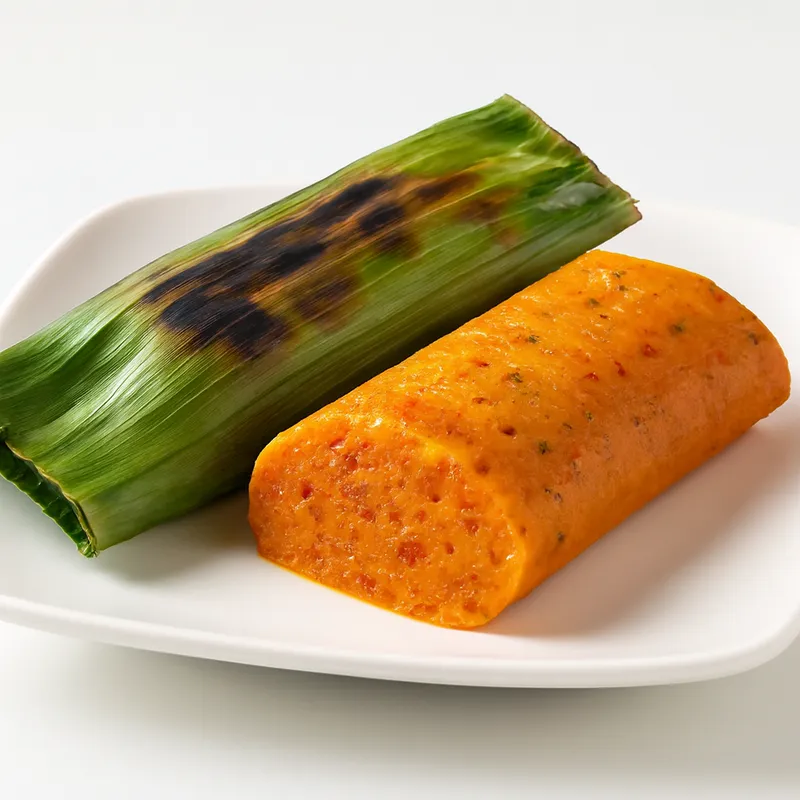
Javanese in origin, brought to the peninsula by 19th-century Javanese migrants — heaviest presence in Johor and Selangor. Lontong cakes are made by stuffing raw rice into a banana-leaf cylinder and boiling for 3-4 hours; the long boil cooks the grains into a single dense mass that slices clean. Skip the wrap or shorten the boil and you get sticky rice clumps.
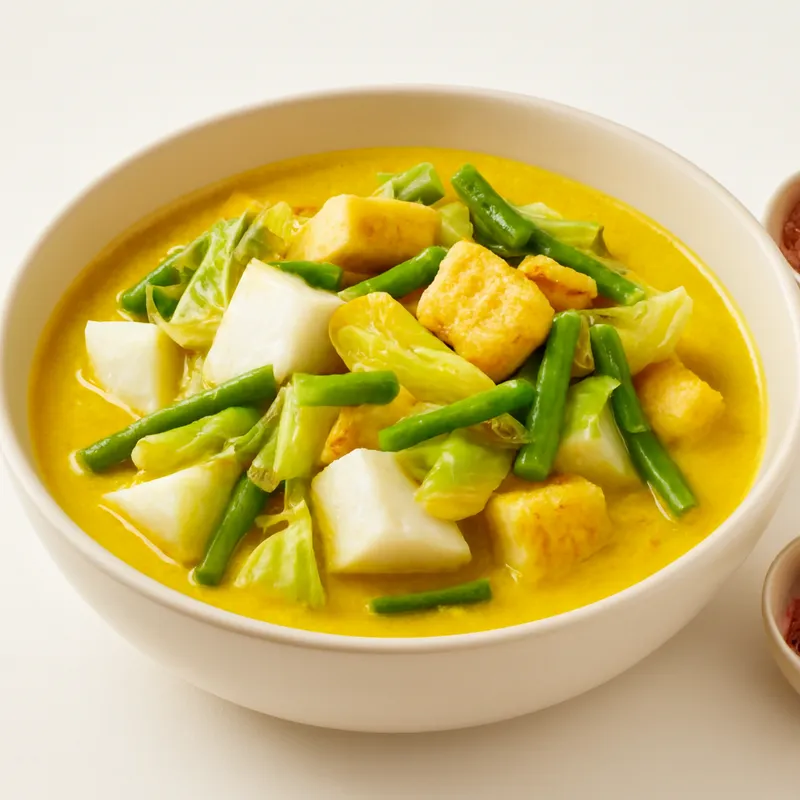
Compressed rice cakes (lontong itself), cut into white cubes, sitting in a thin yellow-orange coconut curry (sayur lodeh) with cabbage, long bean, carrot, fried tofu, and tempeh. Topped with a spoon of sambal goreng and a hard-boiled egg half. Eaten warm, often for breakfast — the rice cakes have to be firm, not mushy.
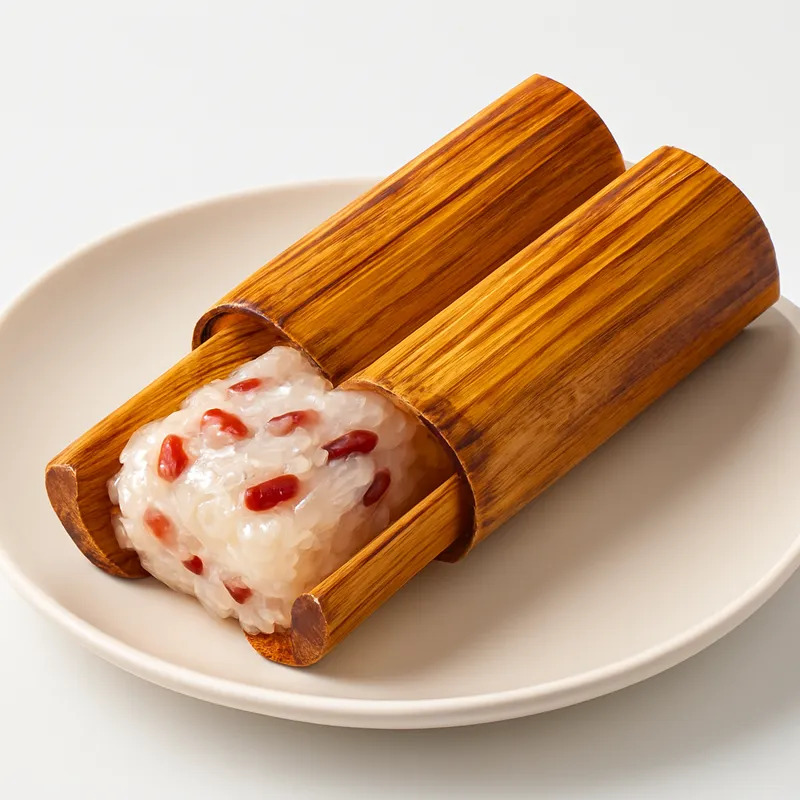
Lontong cakes are made by packing raw (or partly cooked) rice tightly into a banana-leaf cylinder, pinning the ends with slivers of coconut-leaf rib, and boiling it for around 90 minutes or more — under that tight, sealed wrap the swelling grains press into a single dense mass that slices clean. Skip the wrap or fail to pack it tight and you get sticky rice clumps, not lontong. A separate Malay method, nasi himpit, instead cooks the rice first and then compresses it for hours under heavy weights to reach the same firm slab. The sayur lodeh broth is deliberately thinner than rendang or curry laksa: just enough coconut milk to coat, so the rice cake stays the lead, not the soup.
Variations
Lontong sayur (the Hari Raya breakfast standard); lontong kering (drier Johor version, sambal-heavy, less broth); ketupat sayur (palm-leaf-woven cousin); Indonesian lontong cap go meh (Peranakan Chinese New Year, with opor ayam).
On the Palate
Where Lontong sits in the Malaysian flavor cloud
Ingredients










How it's made
5 steps · 2 hours
- 129 min
Cook rice in banana leaves to form compact cakes.
Watch outPack the rice tight in the leaf so it presses into one dense slab — loose packing gives you sticky clumps, not sliceable cakes.
- 229 min
Prepare coconut curry by simmering coconut milk with turmeric and lemongrass.
Watch outKeep the coconut broth on the thin side — sayur lodeh should pour loose, not thicken up like a curry or rendang.
- 329 min
Add chopped vegetables and tofu to the curry, cooking until tender.
Watch outAdd the tofu and veg and simmer just until the vegetables go tender but still hold their shape.
- 423 min
Cut rice cakes into pieces and add to the soup.
- 511 min
Serve hot, garnished with fried shallots.