


Lu zhu descends from the imperial dish 「苏造肉」, created in 1780 by Suzhou chef Zhang Donguan for the Qianlong Emperor (「苏」=Suzhou). After it spread beyond the palace, the costly pork belly priced out common people, so around the Guangxu era a southern-city vendor, Chen Zhao'en (ancestor of 小肠陈), substituted cheap pig head and offal and stewed the huoshao bread in the pot, turning it into the plebeian lu zhu huoshao. The Xiaochangchen shop, founded in the late 1890s, became the standard reference; the broth is a generational old pot still simmering in some shops today.
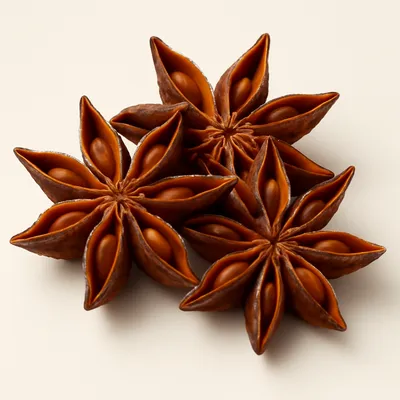
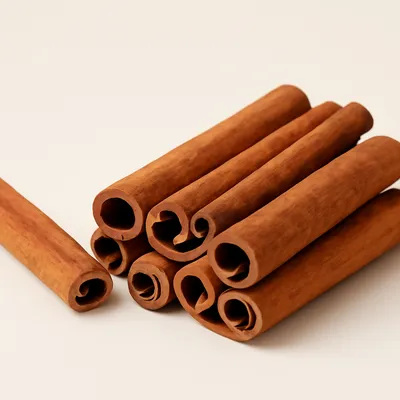
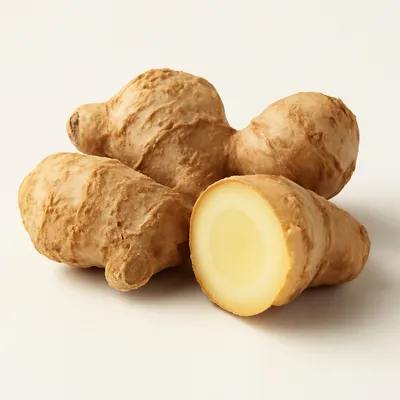
Late-Qing Beijing — when palace cooks left service after 1911, they sold cheaper offal versions of imperial 苏造肉 on the street. 小肠陈 (founded c.1890s) is the standard reference; the broth is a perpetual pot, topped daily with star anise, cinnamon, fennel, sand ginger, soy.
A bowl of pork lung, intestine, liver, and tripe, plus pressed firm tofu and old wheat bread (huoshao) cut into squares — all stewed in a brown soy-and-spice broth. Brick-red oil floats on top. Garlic-vinegar dip on the side, plus a spoon of fermented bean curd water. The bread soaks brown but doesn't dissolve; the offal is fall-soft. A working person's lunch, heavy enough to skip dinner.
The broth is the bank: a perpetual pot topped up daily with new spice (star anise, cinnamon, fennel, sand ginger, dried tangerine peel) and soy, never fully drained. The huoshao bread is purpose-made — made from unleavened (dead) dough rather than a raised flatbread — so it absorbs broth without falling apart. Eaten with raw garlic on the side, which cuts the offal funk in a way nothing else does.
Variations
小肠陈 (founded 1890s) and 北新桥卤煮 are the two Beijing references; 「卤煮火烧」 is the bread-in version, 「卤煮砂锅」 is the deeper claypot single-bowl; Tianjin 「卤煮」 swaps the bread for noodle; older versions used 五花 belly before the Republic-era cost cut switched it to mostly offal.
On the Palate
Where Beijing Lu Zhu sits in the Chinese flavor cloud
Ingredients







How it's made
5 steps · 4 hours
- 129 min
Clean and prepare pork intestines, stomach, and lung thoroughly.
- 286 min
Simmer in water with star anise until tender.
Watch outSimmer the offal low and slow until a chopstick slides through with no resistance — a hard boil toughens intestine and stomach instead of softening them.
- 329 min
Add tofu and wheat bread to soak up the rich flavors.
Watch outAdd the huoshao only near the end so it soaks broth without dissolving — it's dead unleavened dough on purpose, but leave it in too long and it turns to mush.
- 411 min
Season with soy sauce, balancing with additional spices as desired.
- 586 min
Simmer gently until all components are infused with flavor.
Watch outTaste the broth for a rounded, spiced richness before serving — thin or sharp-smelling means it needs more time or a spice top-up, and pass raw garlic to cut the funk.