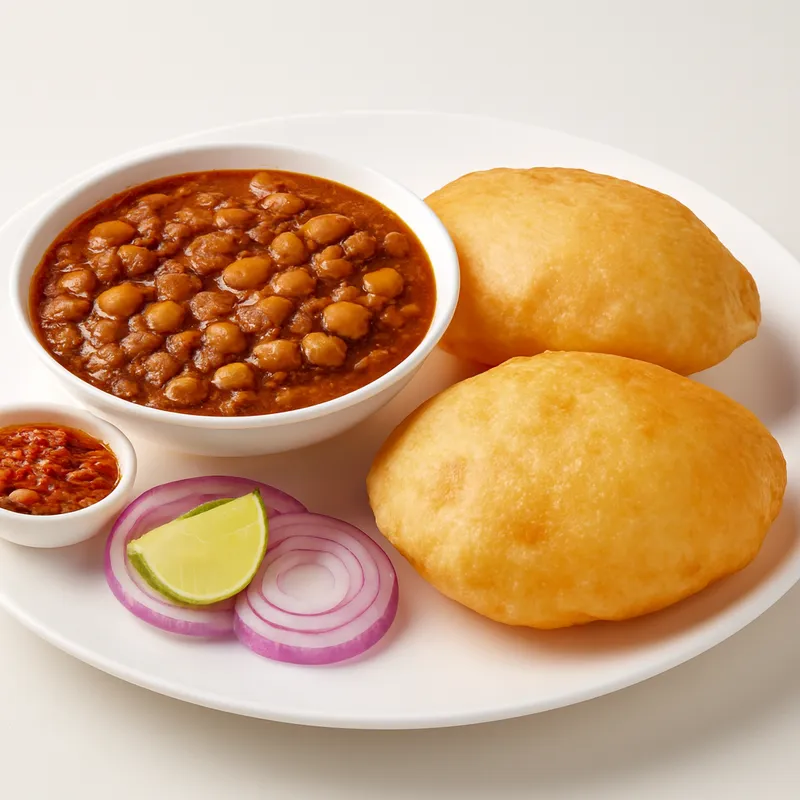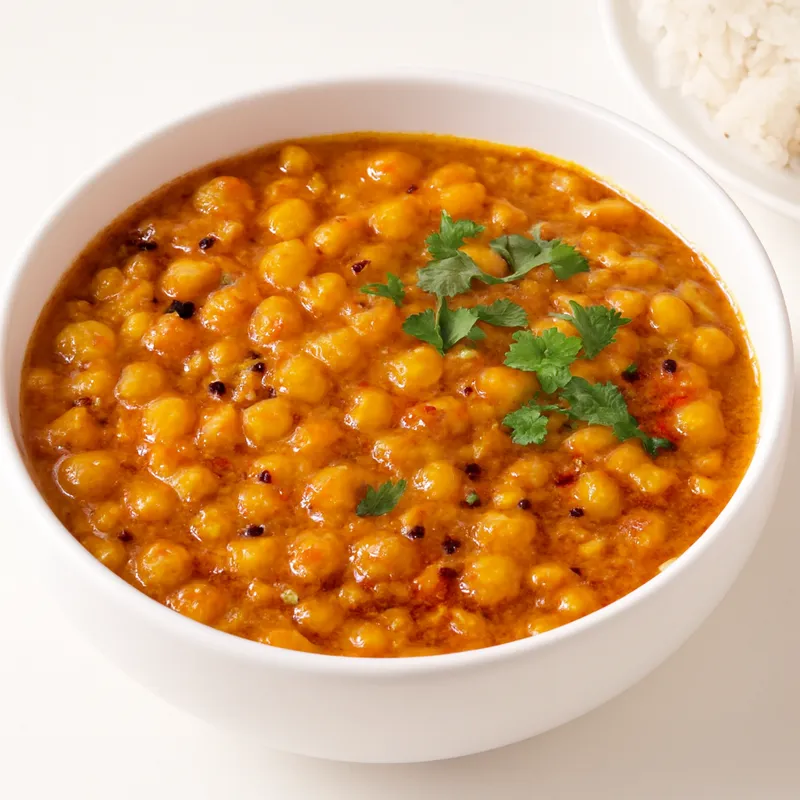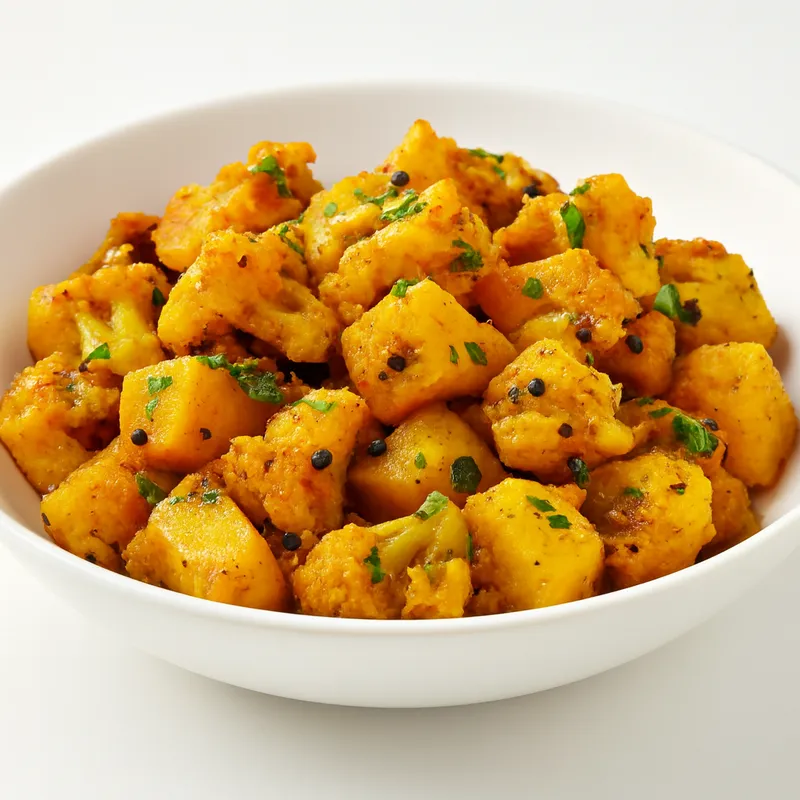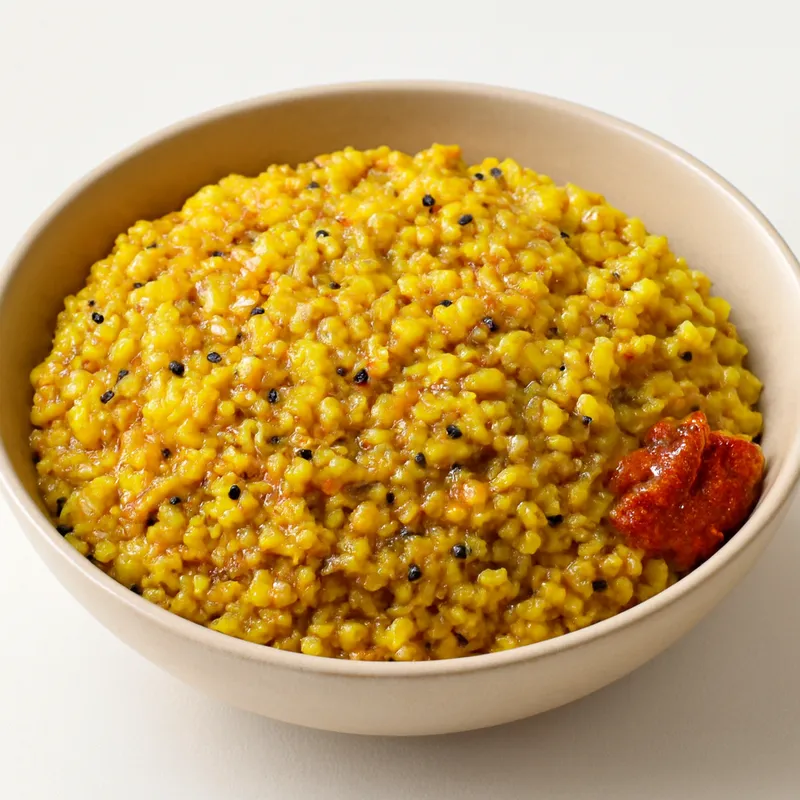





Born in 1850s–1860s Bombay as a fast lunch for textile-mill workers — a hawker dish using leftover vegetables mashed on a flat-top griddle with pav (Portuguese-derived bread already common in the city since the 16th century). The mill shifts gave it its identity: cheap, hot, eaten in ten minutes standing up. It moved from worker food to citywide street staple after the mills closed in the 1980s.
Mumbai's vibrant street food that wraps comfort and spice in every bite, with butter melting into a sea of mashed vegetables.
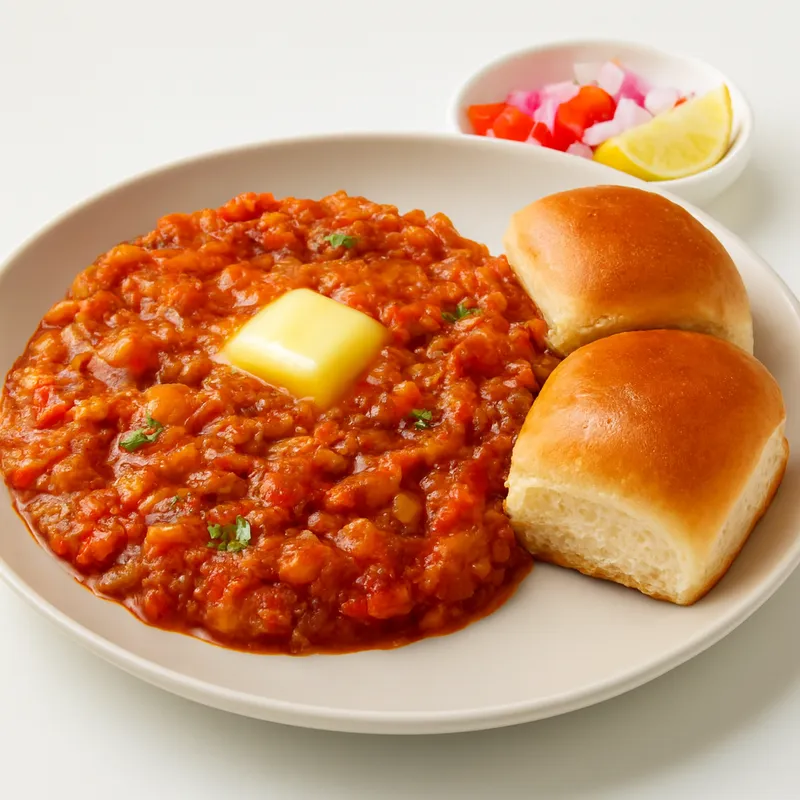
A shallow plate of glossy red-orange mash — potato, cauliflower, peas pounded together — topped with a melting cube of butter, a fistful of raw onion, and a wedge of lime. Two soft white pav buns come griddled in butter on the side. Tear, scoop, eat. The bhaji should be smooth but still streaked, not pureed; if it's homogeneous baby-food it was over-mashed.
The flat tava is the secret. Vegetables are par-boiled, then mashed directly on a buttered griddle while tomato, ginger-garlic, and pav-bhaji masala (a specific Maharashtrian blend with extra coriander, dry mango, and black salt) cook in alongside — the constant butter contact gives the Maillard depth a covered pot can't make. Restaurant griddles run all day, so the surface is seasoned with concentrated bhaji fond; home versions taste flatter.
Variations
Mumbai street version is open-mashed; khada pav bhaji uses chunkier vegetables; Jain version skips garlic-onion-potato; Schezuan pav bhaji adds Chinese chili-soy.
On the Palate
Where Pav Bhaji sits in the Indian flavor cloud
Mash the par-boiled vegetables right on the buttered griddle and let them sizzle in contact with the hot metal — that constant butter-and-tava browning is the deep flavor a covered pot can't give.
Ingredients









How it's made
6 steps · 32 min
- 110 min
Boil potatoes, cauliflower, and peas until tender. Drain and mash them together until smooth, about 10 minutes.
Watch outEnsure vegetables are fully tender to achieve a smooth mash.
- 25 min
Heat butter in a large tava or skillet over medium heat. Add chopped onions and sauté until they turn translucent and soft, about 5 minutes.
Watch outCook the onion until it turns glossy and translucent — no raw crunch left before the spices go in.
- 32 min
Add garlic, ginger, and chili pepper to the pan, stirring until fragrant, about 2 minutes. The mixture should sizzle and release a spicy aroma.
Watch outThe garlic-ginger should sizzle hard and smell sharp within seconds; the moment the raw edge lifts, move on before it scorches.
- 48 min
Add chopped tomatoes and cook until they break down into a thick sauce, about 8 minutes. Stir occasionally to prevent sticking.
Watch outCook the tomato down until it collapses into a thick jammy sauce and the butter separates at the edges — that's when it's ready for the mash.
- 55 min
Stir in the mashed vegetables, season with salt and pav bhaji masala, and cook for another 5 minutes. The bhaji should be thick and well-mixed.
Watch outKeep mashing and folding until it's thick enough to hold a scrape-line across the pan; loose and soupy means keep going.
- 62 min
Serve hot with buttered bread rolls, garnished with fresh cilantro and a squeeze of lemon.
Archive tool suggestions — not reviewed
These legacy suggestions have not been evidence-reviewed and are not presented as required tools.
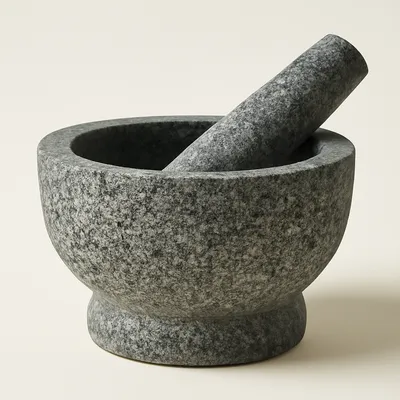
The simplest tool in any kitchen: a heavy bowl and a club to bash things in it. Different cuisines use different stones — Thai cooks pound green papaya in a tall granite mortar (krok hin); pesto Genovese requires the soft-pored Carrara marble; Indian masalas grind down on rough basalt. The bash-don't-cut motion releases volatile oils that a blade keeps sealed in the cell wall.
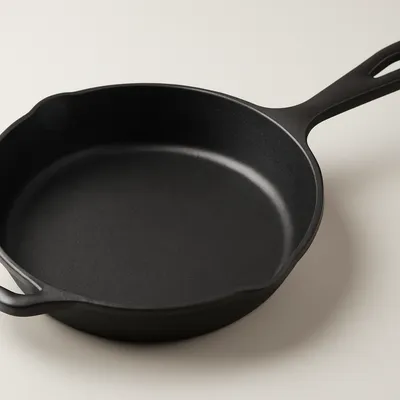
A heavy, single-piece cast iron pan, 25-30 cm across, weighing 1.5-2.5 kg. Once preheated, the thick mass holds 230°C+ even when a cold steak hits the surface — that's the secret to a deep crust. A well-seasoned skillet (multiple thin layers of polymerized oil baked into the iron) is essentially nonstick, gets better with use, and lasts a century. Lodge skillets from Tennessee have been in continuous production since 1896.